

Reflections around the concept of utopia, on the 500th anniversary of Thomas Moore’s Utopia, reflections that echo earlier thoughts on the time and space of revolution.
In revolution, everything happens incredibly quickly, just like in dreams in which people seem to be freed from gravity.
Gustav Landauer
I
“It’s not so easy writing about nothing.” (1) And utopias are nothing. We of course owe the name to Thomas Moore, who combined the general negative Greek ou, transliterated into the Latin u, with the Greek topos, place, to construct utopia. In early correspondence with Erasmus, both had referred to it as nusquama, from the Latin adverb meaning “nowhere”. (2) And Guillame Budé, another of Moore’s contemporaries, and addressing himself to Moore in a letter, had understood “utopia” to be called udetopia, or “neverland”, from the Greek for “never”, a temporal reference that would be captured in the 19th century term uchronia, meaning no-time. (3) Beyond both place and time, how then could “utopia” be any-thing? And what is this no-thing that can be imagined, spoken of, celebrated and vilipended, belonging to some to the very nature of the human,(4) and at the same time, to others, being the source of our greatest modern political tragedies (totalitarianism, death camps, gulags and the like). (5) And in this last instance, it is utopia’s very nothingness that is held responsible: “All the evil comes, whether it has to do with the classical forms of utopia or its contemporary manifestations, from utopia’s refusal of the human condition, its flight beyond history, its negation of time.” (6)
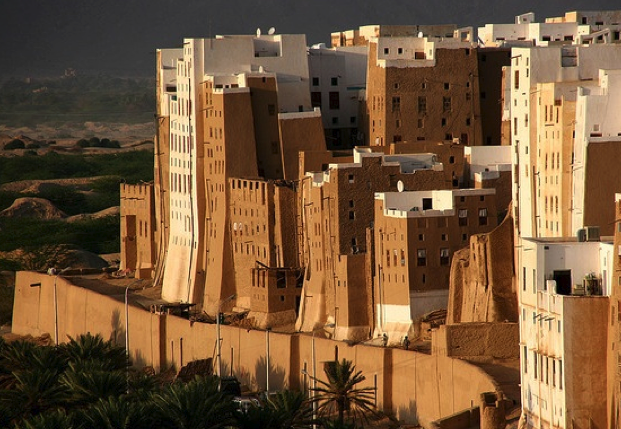




Struggles for space: Architecture Without Architects—Another Anarchist Approach (3)
Le Corbusier. Structural skeleton of Maison Dom-ino, 1914-15.
In essence, Modern city planning has always been bound to colonialism and imperialism—many large-scale technical developments were even tested and realized on colonial ground. Colonial modernity not only created global political and economic structures, pressing for the adoption of the nation state and capitalist forms of production, accompanied by oppression, exploitation, and the systematization of racial divisions, but it also produced … the aesthetical and infrastructural basis for a globalized world, for the global modernity we live in …
We share below an excellent essay by Marion von Osten, “Architecture Without Architects—Another Anarchist Approach”, that addresses the complex and contradictory relations of power between modern architecture, colonialism and subaltern colonised subjects. The essay was originally published in the journal e-flux, number 6, May 2009 …
Continue reading →