

If Occupy Wall Street began with the occupation of Zuccotti Park in New York City on September 17th, 2011, it quickly spread to other cities in north america and beyond, making it the largest “anti-capitalist” protest movement on the continent since the 1960s.
To describe Occupy as anti-capitalist is of course already to invite criticism, for the movement was and remains the subject of considerable criticism from more traditional “leftist” organisations who saw in it little more than the expression of a middle class discomfort before its own growing impoverishment. At best, the movement could inspire a renewal of reformist, social-democratic politics (e.g. the Bernie Sanders campaign within the Democratic Party), or disappear into self-satisfied irrelevance, due to a lack of political program and organisation (e.g. Slavoj Žižek’s criticism of Occupy).
Such readings of Occupy are however caricatural, for they rest upon a number of rather grotesque assumptions: that the notion of the “middle class” as a social agent is clear, when it is far from being so; that sociologically and/or economically, those who occupied public squares throughout the united states were all from the middle class, and that this class identity was the dominant political force shaping the course of the movement, when this is anything but obvious, if not patently false; that Occupy was a movement, and not a plurality of agents, movements, singular and collective, with very different aspirations, aims, methods, etc.; that what is an anti-capitalist politics is itself unambiguous, an idea that usually presupposes and suggests a rather mechanistic, linear understanding of social relations/processes, when any social formation is complex, including capitalism, with no single foundation or cause, and which cannot thus be contested and challenged by focusing upon one dimension of those relations (e.g. to address exclusively the relation between labour and capital as definitive of capitalism leaves aside all of the many social relations necessary for commodity/spectacle production and the reproduction of that supposedly central relation); that the distinction between reform and revolution is clear, both theoretically and practically, when it is not …





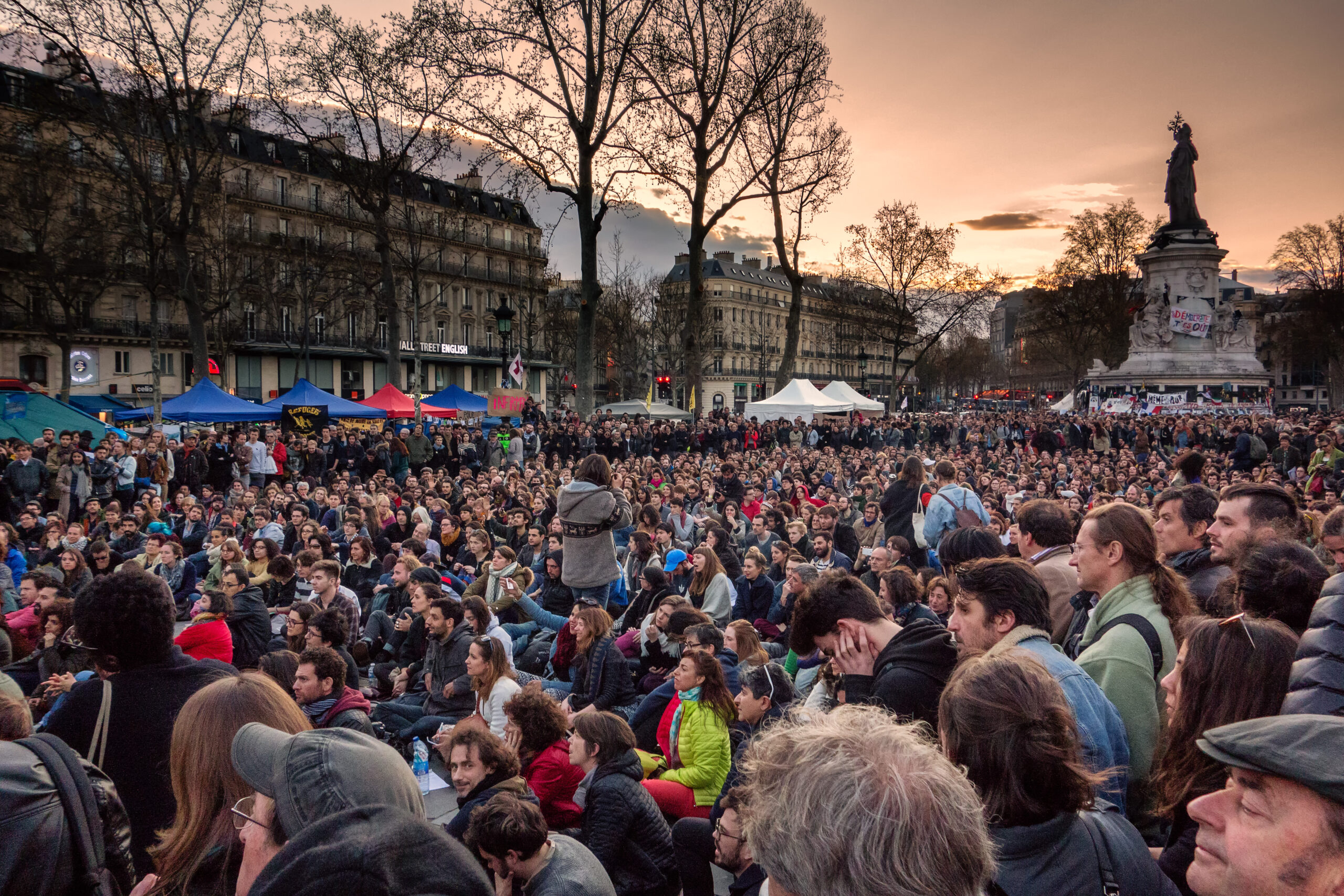
Occupy Wall Street: Sharing reflections on a fifth anniversary (2)
Text from a flier produced by US anarchist group Crimethinc (07/10/2011), for participants of the Occupy movement.
Support and solidarity! We’re inspired by the occupations on Wall Street and elsewhere around the country. Finally, people are taking to the streets again! The momentum around these actions has the potential to reinvigorate protest and resistance in this country. We hope these occupations will increase both in numbers and in substance, and we’ll do our best to contribute to that.
Continue reading →