The theater-goer in conventional dramatic theater says: Yes, I’ve felt that way, too. That’s the way I am. That’s life. That’s the way it will always be. The suffering of this or that person grips me because there is no escape for him. That’s great art — Everything is self-evident. I am made to cry with those who cry, and laugh with those who laugh. But the theater-goer in the epic theater says: I would never have thought that. You can’t do that. That’s very strange, practically unbelievable. That has to stop. The suffering of this or that person grips me because there is an escape for him. That’s great art — nothing is self-evident. I am made to laugh about those who cry, and cry about those who laugh.
Bertold Brecht, On Theatre
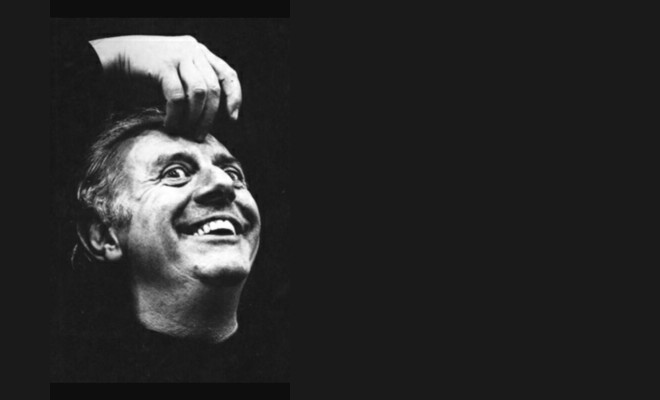
I am the jongleur. I leap and pirouette, and make you laugh. I make fun of those in power, and I show you how puffed up and conceited are the big shots who go around making wars in which we are the ones who get slaughtered. I reveal them for what they are. I pull out the plug, and… pssss… they deflate.
Dario Fo
Dario Fo’s theatre was a popular theatre of resistance. For over a half a century, his theatre drank from from the roots of italian popular culture to mock and ridicule the ways of the powerful. In the everyday lives of the people whose labour and creativity sustain the well being of the few, Fo and the different theatre companies with which he worked, found stories of rebellion, of dignity, which could animate different forms of life beyond oppression. And as a storyteller, through his body, gestures, words, through the grotesque and the absurd, he would give life to the stories of rebellion of our time.
Continue reading →




A revolution remembered: Hungary 1956
Notre heritage n’est précédé d’aucun testament.
René Char
It is a strange and sad story that remains to be told and remembered.
What the councils challenged was the party system as such, in all its forms, and this conflict was emphasized whenever the councils, born of revolution, turned against the party or parties whose sole aim had always been the revolution. Seen from the
vanguard point of a true Soviet Republic, the Bolshevik party was merely more dangerous but no less reactionary than all the other parties of the defunct regime. As far as the form of government is concerned – and the councils everywhere, in contradistinction to the revolutionary parties, were infinitely more interested in the political than in the social aspect of revolution – the one-party dictatorship is only the last stage in the development of the nation-state in general and of the multi-party system in particular.
Hannah Arendt, On Revolution
The hungarian revolution of 1956, as with so many other revolutionary events of our recent and not so recent past, seems to have fallen to the fate of indifference, forgetfulness and oblivion. If the past is a field of political struggle, then that oblivion may be judged as in part a consequence of an intentional politics of erasure. But if capitalism engineers time as part of its very functioning, obliterating both past and future in a present of trance inducing flows of spectacular commodities and a “timeless” morality of work and debt, of responsibility and guilt, then the intentionality becomes secondary to the internal logic of the production and reproduction of capitalist social relations, in which we all participate.
Continue reading →