All acts of terrorism, all the attacks that have struck and that strike the imagination of men and women, have been and are either offensive or defensive actions. Experience has long since shown that, if they are part of a strategic offensive, they are always doomed to failure. On the other hand, experience has also shown that, if they are part of a defensive strategy, such actions can hope for some success, which is nevertheless momentary and precarious. The attacks by the Palestinians and the Irish, for example, are acts of offensive terrorism, while the bombing of the Piazza Fontana and the kidnapping of Aldo Moro, for example, are defensive acts.
However, it is not only the strategy that differs depending on whether the act in question is an instance of offensive or defensive terrorism, but also the strategists. The desperate and those suffering from illusions have recourse to offensive terrorism, while it is always and only States that have recourse to defensive terrorism, either because they have been thrust into some serious social crisis, as the Italian State has been, or because they fear such a crisis, as does the German State.
Gianfranco Sanguinetti, On Terrorism and the State
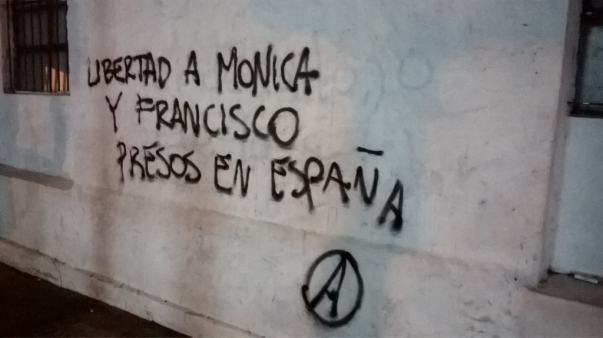
The National Court (La Audiencia Nacional) in spain has condemned Mónica Caballero and Francisco Solar, each, to 12 years in prison for the detonation of an explosive in October of 2013 in the Basílica de El Pilar of Zaragoza. The legal sentence held the two responsible for the explosion, on the basis of video images in which two persons are seen with covered faces, in a bar near the basilica. No images were recorded inside the church and there were no witnessses for the prosecution.
Continue reading →




To be without destiny: For Imre Kertész
Man, when reduced to nothing, or in other words a survivor, is not tragic but comic, because he has no fate.
Imre Kertész, Liquidation
Imre Kertész’s literary work is inseparable from his life as a survivor of the nazi death camps; inseparable from the search for an ethics beyond mass political murder.
Continue reading →