From lundimatin, #522, 01/02/2026and translated from the french
only the olive tree, only the bread, only the thyme, only the oil, only the vine, only the word, only the dance, only the radiance, only the song, only the grain, only the earth, only the branch, only the clay, only the breeze, only the maquis, only the image, only a cry, only the dawn, only our footsteps, only the shadow, only the downpour, only the shore, only the net, only the beating, only the word, only the fables, only the salt, only the vile, only the deluge, only the statues, only the altar, only the unpunished, only our weapons, only the impure, only the crows, only the thistles only the ogive, only the whistle, only the mortals, only the lair, only the hours, only the stone, only the pages, only the dregs, only the ink, only the sap, only the child, only the mother, only the cord, only the needle, only the steel, only the powder, only the smell, only the stretchers, only the corridors, only the mortuary, only the hands, only the drapes, only the wounds, only the beams, only the glass, only the sound, only the lamb only the pollen, only the plum, only the drone, only the ash, only the clearing, only the phosphorus, only the dusk, only the skin, only the ties, only the caterpillars, only the seed, only the wings only our entrails, only our guts, only our roses only the screen, only the voice, only the clouds, only your absence
Ghassan Salhab
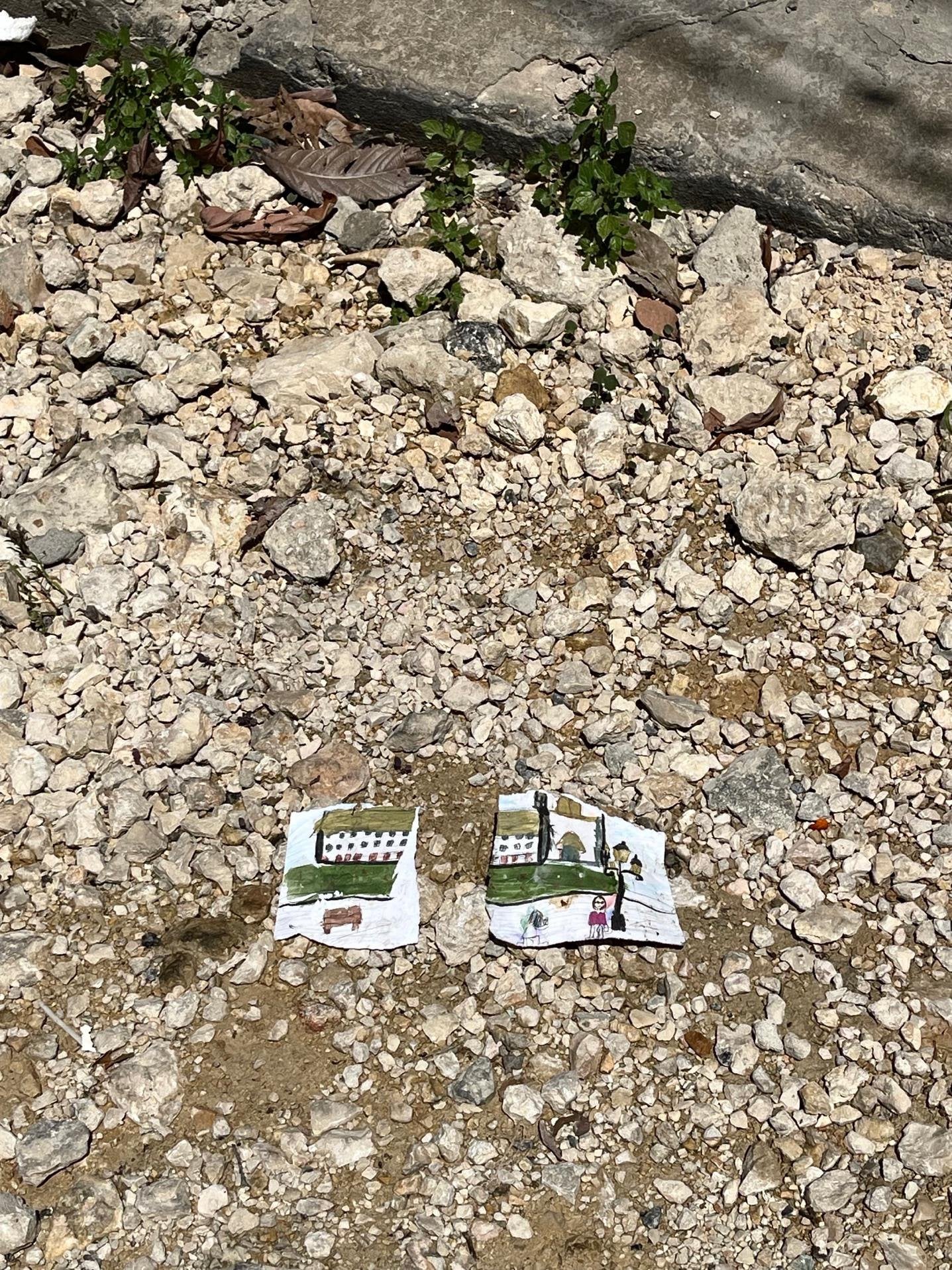
(photograph taken in an alleyway in Nabatiyeh, southern Lebanon)
Ghassan Salhab Ghassan Salhab is a filmmaker. From Beirut, he keeps us informed about the situation in Lebanon and beyond.
Socrates: At the Egyptian city of Naucratis, there was a famous old god, whose name was Theuth; the bird which is called the Ibis is sacred to him, and he was the inventor of many arts, such as arithmetic and calculation and geometry and astronomy and draughts and dice, but his great discovery was the use of letters. Now in those days the god Thamus was the king of the whole country of Egypt; and he dwelt in that great city of Upper Egypt which the Hellenes call Egyptian Thebes, and the god himself is called by them Ammon. To him came Theuth and showed his inventions, desiring that the other Egyptians might be allowed to have the benefit of them; he enumerated them, and Thamus enquired about their several uses, and praised some of them and censured others, as he approved or disapproved of them. It would take a long time to repeat all that Thamus said to Theuth in praise or blame of the various arts. But when they came to letters, This, said Theuth, will make the Egyptians wiser and give them better memories; it is a specific both for the memory and for the wit. Thamus replied: O most ingenious Theuth, the parent or inventor of an art is not always the best judge of the utility or inutility of his own inventions to the users of them. And in this instance, you who are the father of letters, from a paternal love of your own children have been led to attribute to them a quality which they cannot have; for this discovery of yours will create forgetfulness in the learners’ souls, because they will not use their memories; they will trust to the external written characters and not remember of themselves. The specific which you have discovered is an aid not to memory, but to reminiscence, and you give your disciples not truth, but only the semblance of truth; they will be hearers of many things and will have learned nothing; they will appear to be omniscient and will generally know nothing; they will be tiresome company, having the show of wisdom without the reality.
Plato, Phaedrus
The figure of “Socrates”, after all, can go wherever he pleases, with his trial and his death, with the democratic Athens of 399 BC and the White House administration of 1989 AD, and the string of historical trifles with which executives and their wives, gossiping in front of the television or on their screens, amuse themselves on their journey towards death: who really loses sleep over the figure of Socrates and the political mechanisms of his execution? But Socrates’ voice—that which, thanks to and yet in spite of Plato and Xenophon, rises from the writings and resounds time and again—that is what captivates the young and the less educated time and again, opening their eyes and making their hearts beat with a passion for living reason. For the fact is that, at the very moment when the world expects them to accept the reality principle, to submit for their own future good to the ideas that their elders instil in them, a voice rings out which asks “What is it?” of each of those domineering ideas, and, reasoning gently, uncovers the contradictions and lies of which they are made, and that is like a breath of liberation in which their hearts flutter, even if only for a brief moment; and so it happens to them as described by Plato’s Alcibiades (Symposium 215 d–216 b), when he arrives at the banquet of Love at the end, half-drunk, saying that every time he heard Socrates, or Socrates’ arguments as recounted by someone else, his heart would dance and tears would spring to his eyes, and it seemed to him that he could not go on living as he was for a moment longer. Then the young men usually grow up, and in turn begin to believe in things—in the National-Syndicalist ideal or in Democracy, for example—and to take up their posts and destinies; and then that business with Socrates gets in their way, just as it did for that Alcibiades, whom Plato depicts at a juncture in his life when he is holding high office in the Democratic Administration of Athens, and who goes on in his speech to declare that what he must do now is to flee from Socrates and, like Ulysses with the sirens, cover his ears to his arguments, because he knows that, if he listens to them, what happened to him as a boy will happen again, and he will remain there until old age listening to them. Only, men do not usually admit so plainly to this necessary flight and deafness to Socrates that their adult state compels them; the usual thing is that they quickly stifle their contradictions, firmly believe in certain ideals or principles (in case the memory of Socrates continues to gnaw at them, they may, like Plato and Xenophon, attribute to Socrates the ideas they themselves hold, which they, in their old age, have come to believe), or rather do not even remember what Socrates sounded like, at least until one of the boys or girls they have raised for Heaven should by chance come to hear him and remind them of it bitterly. It is a pity that Socrates’ listeners must, for the most part, always be so inexperienced and young; and certainly, this business of successive generations—and the fact that, even though the voice continues to ring out, those young people must be different ones at every turn—is by no means a satisfactory arrangement, nor one with which one can be entirely content; but the system dictates it; and until something happens to disrupt it and put an end to these conditions, what we should note is that the main trick for nullifying or drowning out reason is to confuse the voice of Socrates with the historical figure of Socrates, and, in order not to hear it, to talk at length about the anecdotes of his trial, his conviction and his death under the pebbles of the black votes of the democratic majority of a jury in ancient Athens. Remember that this reduction of Socrates’ arguments to the historical and personal mask of Socrates and to his troubles with the political regime of the people to whom he happened to belong—that is the true process by which he is judged and condemned, time and again, to death.
Agustín García Calvo, “¡Viva Sócrates!”, El País, 10/04/1989
Socrates’ despair for us
Agustín García Calvo (Universidad de Barcelona. Facultad de Filosofía, 03/12/2007)
In history, the man sentenced to death by the Athenian jury in 399 BC, at the age of 70, accused of corrupting the youth and introducing gods other than those of the state.
Beware: All too often, We say What we hear others say. We think What we’re told that we think. We see What we’re permitted to see. Worse! We see what we’re told that we see.
Repetition and pride are the keys to this. To hear and to see Even an obvious lie Again And again and again May be to say it, Almost by reflex Then to defend it Because we’ve said it And at last to embrace it Because we’ve defended it And because we cannot admit
That we’ve embraced and defended An obvious lie. Thus, without thought, Without intent,
We make Mere echoes Of ourselves— And we say What we hear others say.
Octavia E. Butler, Parable of the Talents
Hannah Arendt, reflecting on personal responsibility under Nazi totalitarianism, asked two interrelated questions: “First, in what way were those few different who in all walks of life did not collaborate and refused to participate in public life, though they could not and did not rise in rebellion? And second, if we agree that those who did serve on whatever level and in whatever capacity were not simply monsters, what was it that made them behave as they did?” And for her, what finally distinguishes the former from the latter, was not that they held to the law or any specific morality, but that they thought, judged, engaged in a conversation with themselves, kept open a possibility of self-dialogue, that rendered any simple identification with the political regime difficult, if not impossible. As she would say elsewhere, Adolf Eichmann’s participation in the Holocaust was born of “thoughtlessness”, rather than of monstrous evil. And it is from this “banality” that so many of the war crimes and crimes against humanity of our own time continue.
If we can, with Terry Eagleton, distinguish between wickedness and evil – thankfully – and admit that the evil carried out by political regimes works at very different levels – because of the different roles played by individuals in such regimes, then reliable moral judgements of such instances are difficult, for functions, duties and degrees of responsibility vary widely. (Terry Eagleton, On Evil, 2010 )
What Arendt then offers us is not a/the moral vantage point from which to judge those who participated, or did not, to whatever degree, in Nazi totalitarianism, but the underlying failure that made it possible, and which can always make totalitarianism possible.
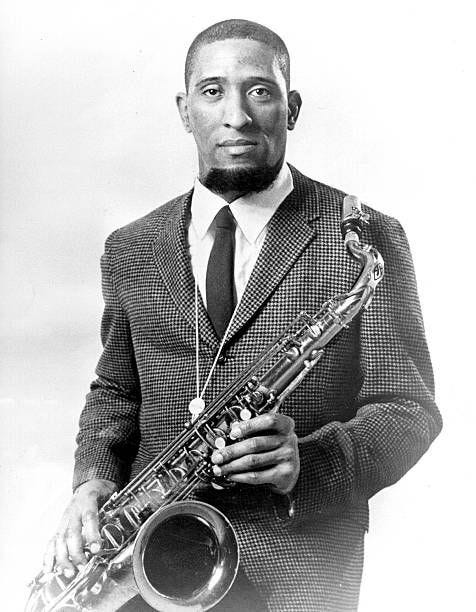
It’s not about your music—it’s about what makes your music your music. You’ve got to have a feeling like that. You have to have a reason for your music. Have something besides the technical. Make it for something. Make it for kindness, make it for peace, whatever it is. You know what I mean?
Sonny Rollins
Paul Holdengräber:He [Sun Ra] said something that I think you could expand on, and I’d love you to. He said, “Jazz, in all stages of its development, had to do with freedom. Otherwise it wouldn’t be jazz.”
Sonny Rollins: Absolutely. Absolutely. That’s so true. Wow, that’s very profound. And that’s why jazz is so different in a sense. Because when I think about jazz, you have to think about the social aspect of jazz being played in a society in which it was reviled and looked down upon. And the guys who played it broke through so many of the barriers of the day. You know, the blues guys, they played and everybody accepted them. Jazz, we had to break through things that were already set up. Where you’re not supposed to play this technical. We had to do that. You say think about the great blues players, well, they played what they played and everybody accepted them for that and that was it. They didn’t have to break through anything. They did what they did.
Jazz is a music of freedom, as Sun Ra said, because we had to create. We had to fight. We had to struggle. We had to break down barriers. And that’s why jazz has something special. Something quite a bit different about jazz than there is in some of these other black music. It encompasses all of them, of course, but it has that element too of bravery and struggle and freedom as you’re playing and having to do that. That was freedom. That entailed freedom, to even attempt to do what the jazz people were doing.
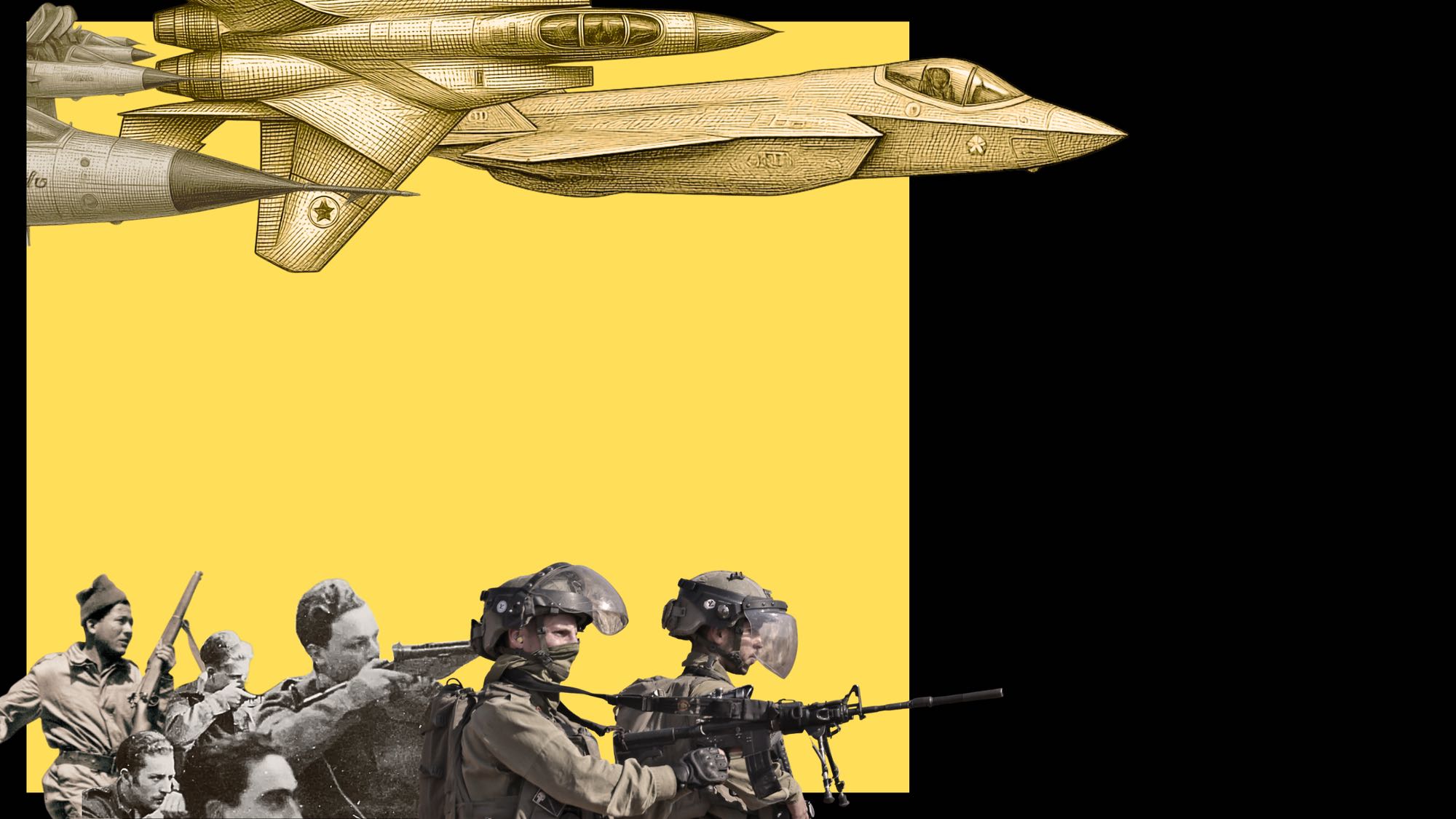
A Joint History of the Zionist and Lebanese Entities
In the following analysis, Ayman Makarem of the From the Periphery media collective reviews a century of colonial violence in Palestine and Lebanon to illuminate the current Israeli occupation and what it would take to resist it.
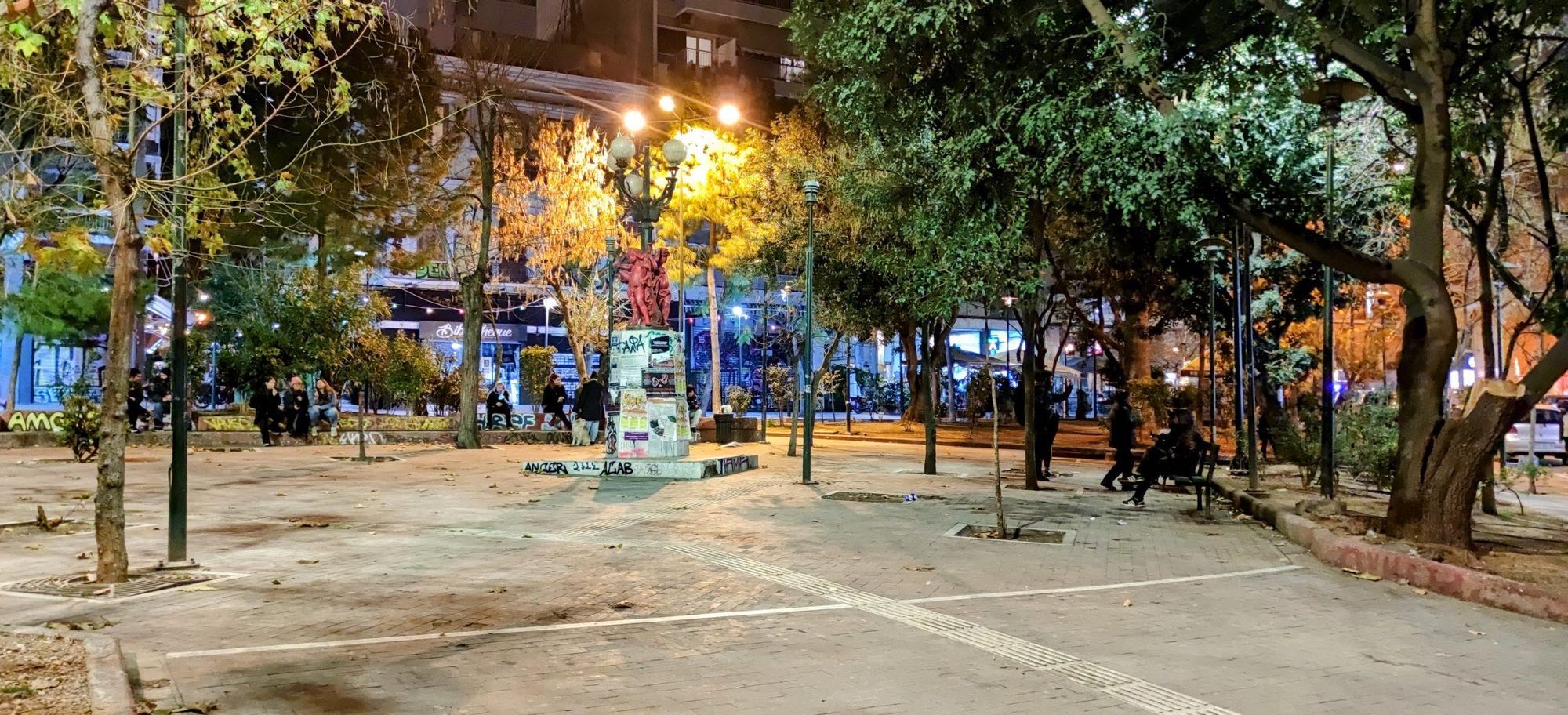
Ben Morea has passed away. Known for his participation in Up Against the Wall Motherfucker, the self-styled “street gang with an analysis” active in the Lower East Side of Manhattan in the late 1960s, he withdrew from the city and pursued a path into revolutionary animism. In the following eulogy, Tasos Sagris of Void Network recounts Ben’s subsequent visit to Exarchia, the Athenian neighborhood famed as a hotbed of anarchism.
Today, the Exarchia that Tasos describes has also changed. To mourn a person is to mourn an entire vanished world. Yet, as Tasos explores, there is a silver thread that connects Ben’s life and the legacy of Exarchia to our own present and possible future.
I have identified myself as an anarchist since 1969 when I met Martin Sostre, a well-known Black political prisoner and “jailhouse lawyer” in the New York state prison system. He was in the Federal House of Detention, I had been chased down and arrested in Eastern Europe (Czechoslovakia and East Germany) when I was on the run from American authorities for hijacking a plane to Cuba, thrown in there too.
I am not the animal that stays silent for a meal I am not that animal because I have within me a discontent that nourishes me.
The sea boasts of its depth and time of its wisdom the wind, of its power the sea boasts of its depth the earth of its stature and man, I don’t know of what.
They call me the black sheep I’ve always been called the black sheep in the flock for not sharing the mess with others in the filth when the common lands are so clean.
My homeland is Freedom the Universe my god my homeland is Freedom my flag, reason my path, truth that’s how I think.
I’ve sung about almost everything that has given me pause I’ve sung about almost everything and now I’m going to sing to the one that never existed The Dove of Peace.
Sheep leave wool on the wires when they pass by, sheep leave wool on the wires, and men, when they hunt, leave indelible marks on those of their own kind.
I’ve spent half my life arguing with my donkey, and the animal would say to me, “Look at the world, you’re always riding on top of me.”
I’m looking around and I don’t see the shepherd of the flock, I only see the dogs that silently lead them to the slaughterhouse.
Andalusia is my mother, and I love her like a son. Andalusia is my mother, I venerate her with all my heart, but I am like the air, my homeland is the whole world.
From here, to those who wage wars, I’m going to say one thing: go underground so the world can smell like roses because it smells so much like shit.
Don’t try to lull me to sleep with stories don’t try to lull me to sleep with time I’ve learned where the winds blow from and I don’t even trust the wind.
Many get annoyed when they hear me sing they still get annoyed they’re falling behind me because I’m climbing the hill of discontent.
The man with a mace tried to stop the wind the man with a mace also tried to stop time and it was no use that’s where talents crash.
I grab hold of the soleá and shout with the seguiriya I grab hold of the soleá but when I get to the fandango I’m a squashed ant that has to die accusing.
El Cabrero, Una disconformidad
Flamenco singer José Domínguez, known as El Cabrero, passed away in Seville on Tuesday morning at the age of 81. A charismatic, free-spirited figure, he was admired in the world of flamenco for decades.
From childhood and for much of his adult life, he was a goat herder, having only acquired a presence on social media in the final phase of his artistic career. Herding gave him ample time to “think and look to the future,” serving as “a refuge.”
To be led by a coward is to be controlled by all that the coward fears.
To be led by a fool is to be led by the opportunists who control the fool.
To be led by a thief is to offer up your most precious treasures to be stolen.
To be led by a liar is to ask to be told lies.
To be led by a tyrant is to sell yourself and those you love into slavery.
Octavia E. Butler, Parable of the Talents
“… this is not a golden calf”; or, so said pastor Mark Burns, a member of Pastors for Trump, at the May 6th inauguration of the over 6 metre tall, gilded statue dedicated to Donald Trump, at his Doral, Florida golf course.
Commissioned by a collective of crypto investors, created by sculptor Alan Cottrill, the pastor also informed those attending the event that the statue “stands as a reminder of the hand of God and His protection over President Trump’s life”. (Independent, 07/05/2026)
Never wishing to think the worst of people, we imagined the pastor engaged in some form of irony, perhaps as a master of paradoxical or even antiphrastic speech. But, no, it would seem that idolatry and cynical self-interest continue to weave their grotesque tapestries.
We avoid commenting on Trump, in general, for his public stupidity and buffonery only serves to cover over the terrible violence that his government is meting out to so many. And the pastor’s words only made the spectacle even more ridiculous.
But what Bertolt Brecht said of “The Resistible Rise of Arturo Ui” – written in 1941 and a satire of Hitler – we perhaps should say of Trump: that he is neither an idiot nor a great leader, but someone who permits “great political crimes”. And the “great political criminals must be exposed and exposed especially to laughter”. (“Laughing at Criminals”, HAC, 06/01/2024)
Trump’s “Don Colosus” deserves to be mocked, laughed at, graffitied, shat upon, and then placed in some new Washington DC monument building for posterity. Or, on this occasion, let us more modestly borrow the poetry of June Jordan, in an exercise of Juvenalian satire, when she indignately derided John Ashcroft, a former Attorney General under President George W. Bush; a man given over to both religious zealotry and the seductions of “gold”.
On Saturday May 2, 2026, our friend and comrade Ben Morea (1941-2026) — animist, artist, and lifelong revolutionary — passed away near his home in Colorado.
The following text forms the preface to the Japanese translation of Full Circle: A Life in Rebellion (Detritus, 2025; Kawade Shobo, forthcoming), an autobiographical dialogic account of Morea’s life. Coauthored by Morea and 1000 voices, the book was a labor of love by many. While leaving behind a trace of Morea’s extraordinary life, it asks what is possible and necessary for revolutionary change in the world today.


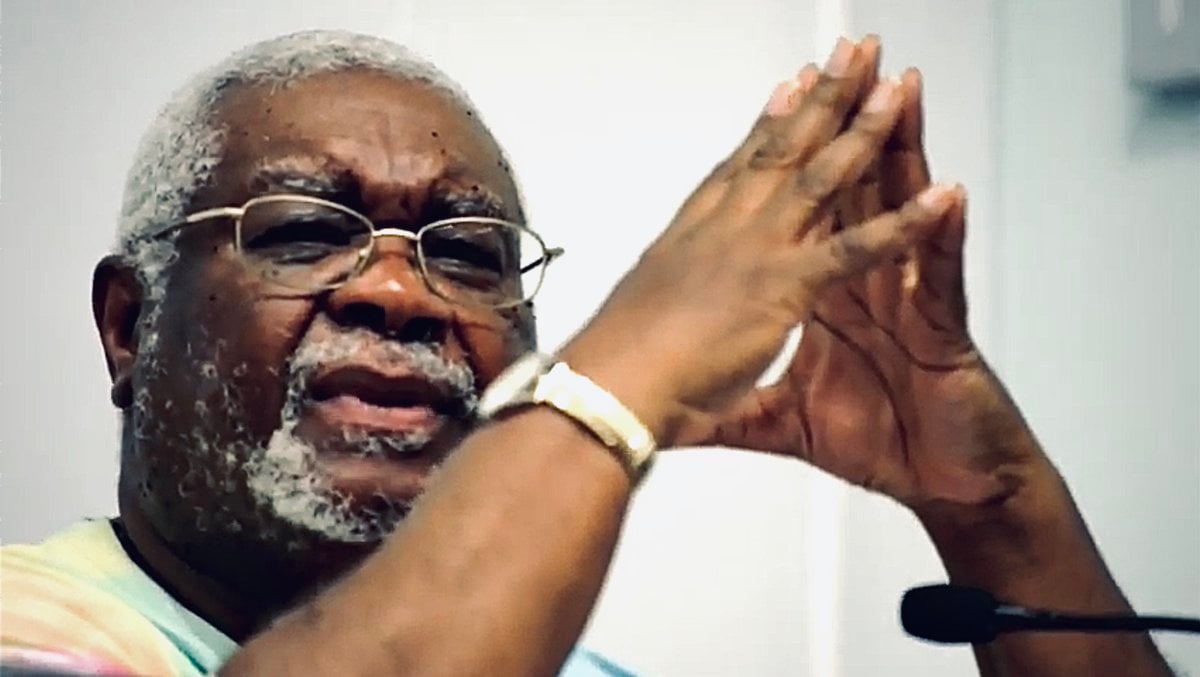



Agustín García Calvo: Socrates’ despair for us
Socrates: At the Egyptian city of Naucratis, there was a famous old god, whose name was Theuth; the bird which is called the Ibis is sacred to him, and he was the inventor of many arts, such as arithmetic and calculation and geometry and astronomy and draughts and dice, but his great discovery was the use of letters. Now in those days the god Thamus was the king of the whole country of Egypt; and he dwelt in that great city of Upper Egypt which the Hellenes call Egyptian Thebes, and the god himself is called by them Ammon. To him came Theuth and showed his inventions, desiring that the other Egyptians might be allowed to have the benefit of them; he enumerated them, and Thamus enquired about their several uses, and praised some of them and censured others, as he approved or disapproved of them. It would take a long time to repeat all that Thamus said to Theuth in praise or blame of the various arts. But when they came to letters, This, said Theuth, will make the Egyptians wiser and give them better memories; it is a specific both for the memory and for the wit. Thamus replied: O most ingenious Theuth, the parent or inventor of an art is not always the best judge of the utility or inutility of his own inventions to the users of them. And in this instance, you who are the father of letters, from a paternal love of your own children have been led to attribute to them a quality which they cannot have; for this discovery of yours will create forgetfulness in the learners’ souls, because they will not use their memories; they will trust to the external written characters and not remember of themselves. The specific which you have discovered is an aid not to memory, but to reminiscence, and you give your disciples not truth, but only the semblance of truth; they will be hearers of many things and will have learned nothing; they will appear to be omniscient and will generally know nothing; they will be tiresome company, having the show of wisdom without the reality.
Plato, Phaedrus
The figure of “Socrates”, after all, can go wherever he pleases, with his trial and his death, with the democratic Athens of 399 BC and the White House administration of 1989 AD, and the string of historical trifles with which executives and their wives, gossiping in front of the television or on their screens, amuse themselves on their journey towards death: who really loses sleep over the figure of Socrates and the political mechanisms of his execution? But Socrates’ voice—that which, thanks to and yet in spite of Plato and Xenophon, rises from the writings and resounds time and again—that is what captivates the young and the less educated time and again, opening their eyes and making their hearts beat with a passion for living reason. For the fact is that, at the very moment when the world expects them to accept the reality principle, to submit for their own future good to the ideas that their elders instil in them, a voice rings out which asks “What is it?” of each of those domineering ideas, and, reasoning gently, uncovers the contradictions and lies of which they are made, and that is like a breath of liberation in which their hearts flutter, even if only for a brief moment; and so it happens to them as described by Plato’s Alcibiades (Symposium 215 d–216 b), when he arrives at the banquet of Love at the end, half-drunk, saying that every time he heard Socrates, or Socrates’ arguments as recounted by someone else, his heart would dance and tears would spring to his eyes, and it seemed to him that he could not go on living as he was for a moment longer. Then the young men usually grow up, and in turn begin to believe in things—in the National-Syndicalist ideal or in Democracy, for example—and to take up their posts and destinies; and then that business with Socrates gets in their way, just as it did for that Alcibiades, whom Plato depicts at a juncture in his life when he is holding high office in the Democratic Administration of Athens, and who goes on in his speech to declare that what he must do now is to flee from Socrates and, like Ulysses with the sirens, cover his ears to his arguments, because he knows that, if he listens to them, what happened to him as a boy will happen again, and he will remain there until old age listening to them. Only, men do not usually admit so plainly to this necessary flight and deafness to Socrates that their adult state compels them; the usual thing is that they quickly stifle their contradictions, firmly believe in certain ideals or principles (in case the memory of Socrates continues to gnaw at them, they may, like Plato and Xenophon, attribute to Socrates the ideas they themselves hold, which they, in their old age, have come to believe), or rather do not even remember what Socrates sounded like, at least until one of the boys or girls they have raised for Heaven should by chance come to hear him and remind them of it bitterly. It is a pity that Socrates’ listeners must, for the most part, always be so inexperienced and young; and certainly, this business of successive generations—and the fact that, even though the voice continues to ring out, those young people must be different ones at every turn—is by no means a satisfactory arrangement, nor one with which one can be entirely content; but the system dictates it; and until something happens to disrupt it and put an end to these conditions, what we should note is that the main trick for nullifying or drowning out reason is to confuse the voice of Socrates with the historical figure of Socrates, and, in order not to hear it, to talk at length about the anecdotes of his trial, his conviction and his death under the pebbles of the black votes of the democratic majority of a jury in ancient Athens. Remember that this reduction of Socrates’ arguments to the historical and personal mask of Socrates and to his troubles with the political regime of the people to whom he happened to belong—that is the true process by which he is judged and condemned, time and again, to death.
Agustín García Calvo, “¡Viva Sócrates!”, El País, 10/04/1989
Socrates’ despair for us
Agustín García Calvo (Universidad de Barcelona. Facultad de Filosofía, 03/12/2007)
In history, the man sentenced to death by the Athenian jury in 399 BC, at the age of 70, accused of corrupting the youth and introducing gods other than those of the state.
Continue reading →