
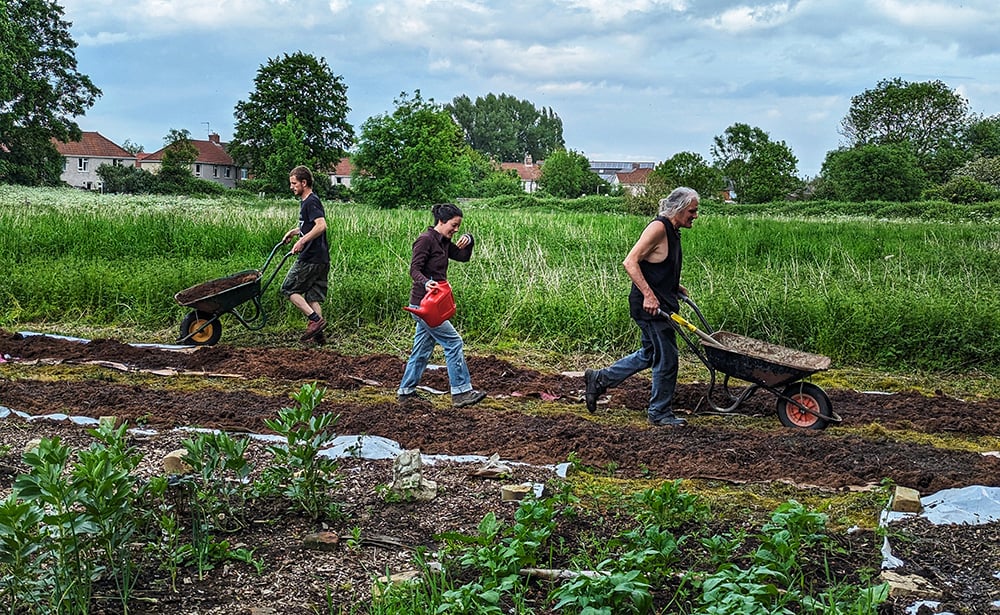
From Freedom News (09/07/2026)
Our strategy for 2027 has been about visible grassroots initiatives which announce our presence
Wren Albion
At the end of 2026 A Commune in the North (ACitN… pronounced “a kitten”) became the focus of a ‘Live Project’, where masters students from the School of Architecture at the University of Sheffield work with charities and community groups. The students helped us to stop worrying about how to get to 150-200 people, and focus on getting to the first 15. They made us think more seriously about our local engagement, which has also made us think more strategically about how we share anarchist principles in the place where we live.
Our strategy for 2027 has been to create or join a wide spectrum of visible grassroots initiatives which announce our presence, which provide a diversity of ways for people to engage with the commune, and which offer various forms of political, co-operative and social education. This is just a brief overview of what we have been doing so far and why.
First up we created the BUMS (Bentley Urban Morris Side), who had their first dance out at the Doncaster Day of Dance back in April, and who ‘danced up the sun’ at the memorial on the site of what was Bentley Pit Top on May Day. Morris costumes are based on traditional workwear, so we wear high-vis jackets and G4S security caps to reflect modern labour. The BUMS have also created a form of ‘protest Morris’ which we put into play at the launch of Powerful South Yorkshire (PSY).
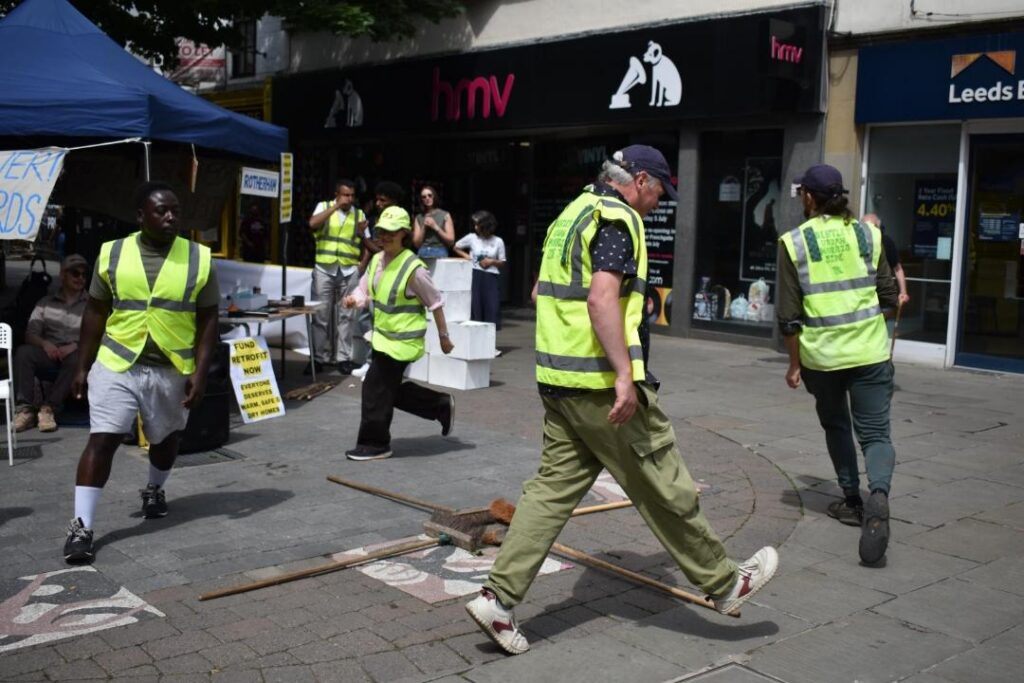
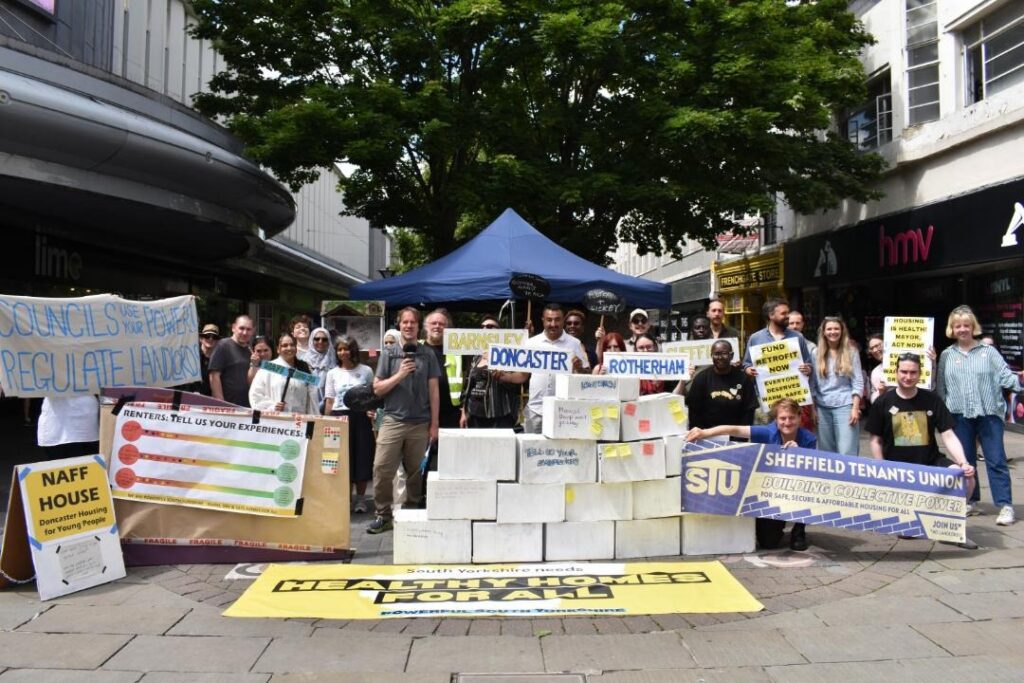
ACitN has been instrumental in the development of PSY, a network of grassroots community groups from across South Yorkshire who have come together to create a collective voice around the issues that matter to our communities. In solidarity with Big Power For Little London, a community group from Maltby near Rotherham who are fighting the absentee landlords who are ruining their estate, our launch event in Doncaster focused on the simple ask of telling the authorities to use the powers they already have to protect residents from scummy landlords and unhealthy homes. It isn’t the most anarchist of protests, but it was the first taste of direct action for many of PSY’s members and it was great for getting to talk first-hand to people on the streets of Doncaster about issues that the far-right have tried to monopolise by blaming immigration. There were hard conversations, but they are conversations that we need to have if we want to bring about real change… the BUM’s broom dance was also greatly appreciated.
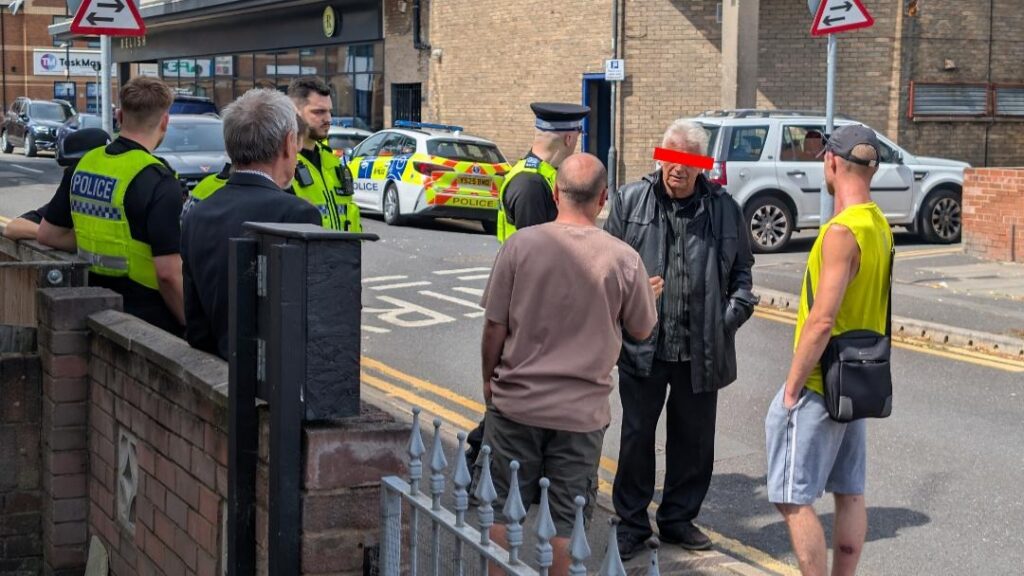
Our connection through PSY to the Sheffield Tenants Union (STU) also helped us to get some breathing space for a vulnerable woman who was due to be evicted from the flat where she had lived for the past 30 years. Members of ACitN and STU turned up in the morning of her scheduled eviction to find that the landlord had sent the rent-collector and his heavies along with a locksmith and they were attempting an illegal eviction ahead of the bailiffs, which we successfully stopped. The rent-collector looked like an extra from Snatch and he did a great job of convincing the police that he was a bit of a ‘wankster’ (wannabe gangster) who shouldn’t be taken seriously. Two of our group accompanied the tenant to the local court to file an N244 form which helped stop the eviction for a few days.
In June we hosted a talk by Emma Cardwell entitled ‘TRUE BRIT: A History of British Values’ at the West End Working Men’s Club in Bentley. Again, this event was designed to reach out beyond the political ghetto to attract anyone interested in British history. It is an anti-fascist talk disguised as a history lesson, and explains the unique class division in Britain which led to the development of both capitalism and global colonialism. It also describes the trans-Atlantic resistance which united working class people in Britain, Ireland and the Caribbean and fueled a revolutionary fervor which terrified the rich and powerful. Emma’s plan is to bypass social media and deliver this talk straight into the heart of working-class communities. If you can help facilitate a talk in your area please get in touch.
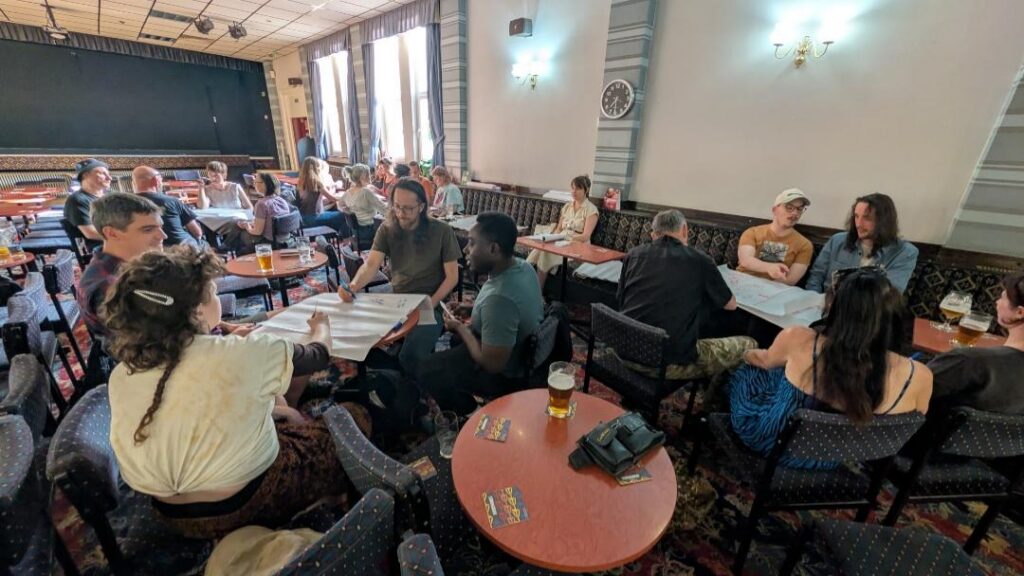
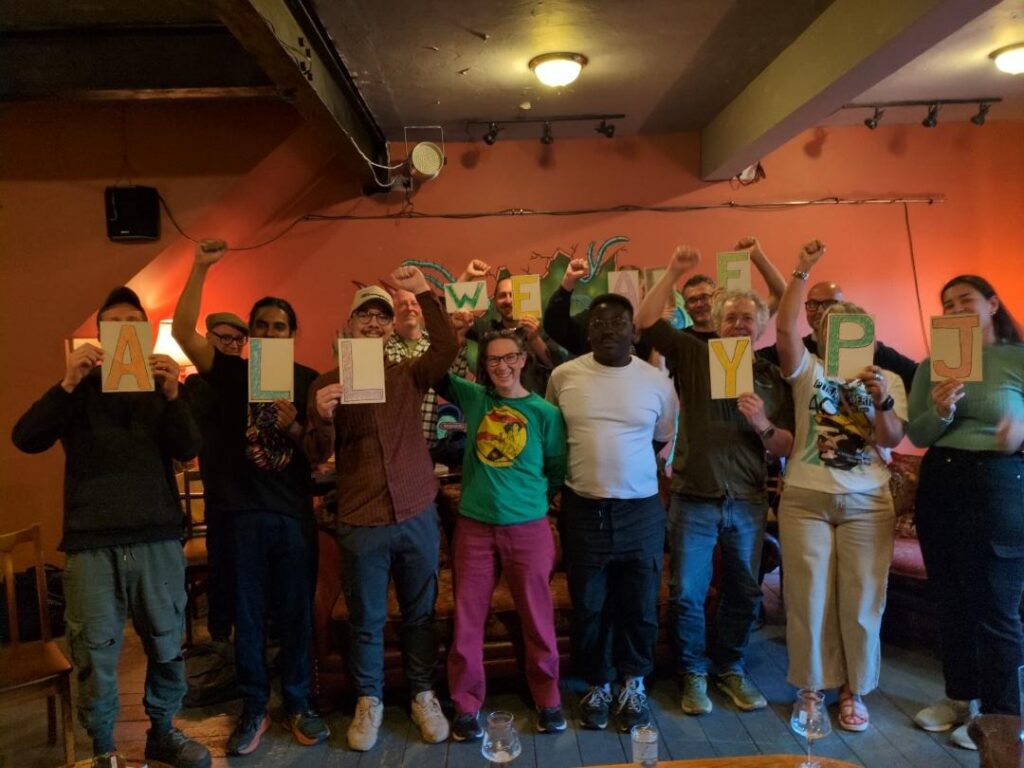
We have also helped to launch the Worth Fighting For Book Club, a reading group which shares ideas which are worth fighting for. Named after Jenni Keasden and Natalia Szarek’s honest, yet hopeful Worth Fighting For, which is the first book that we decided to read together. Books were made available on a Pay As You Feel basis, with free access to the audiobook. Natalia attended the launch event and everyone who attended sent a message of solidarity to the YPG.
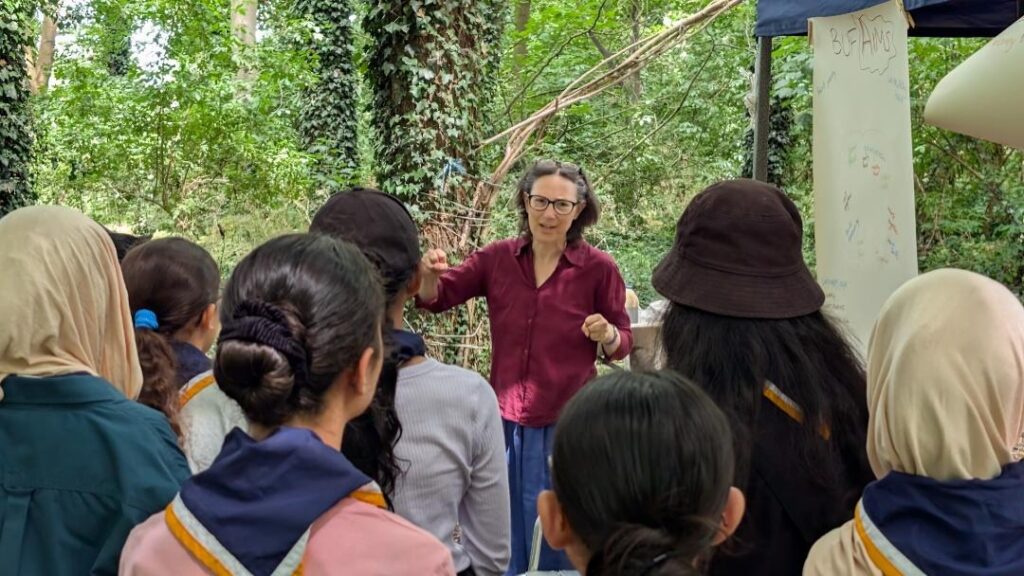
We are involved with a host of community engagement, from building compost bays with the Hunafa Scouts, to samba band workshops, from a slowly developing food co-op to a grassroots promenade theatre production.
ACitN is becoming ever more visible on the streets of Doncaster. The only way to fight the swing to the right and the rise of fascism is to meet the people where they are, have the hard conversations, fight injustice, and also have some fun while we’re doing it. This is anarchy in action. And you’re welcome to come and join us.
The aims and principles of A Commune in the North – ACitN: Our Jorney to Autonomy
Every member has an equal voice and equal access to resources
We are ‘egalitarian’: Collectivising resources (income, wealth, food, shelter, etc) so they are equally accessible, and sharing collective responsibilities equitably (work, care, tasks, debt, etc).
Unlearning individualism, while respecting individuality (needs, creativity, talents), and acting with the commune’s needs in mind.
To do this fairly:
– Challenging / unlearning behaviours which are oppressive to oneself or others- Recognising and minimising existing power imbalances.
– Having equal opportunity to take part in / help make decisions that affect oneself and recognising the effects of our decisions on others.
Passion for the project is the priority for involvement, not levels of ability or need.
Celebrating our food as the heart of our culture
Growing, harvesting, preparing and eating together. And then tidying up together. Radical hospitality and open, shared meals as a tool for building relationships and a wider community.
We are what we eat, and for each person food is deeply personal and complex. Reducing our reliance on industrially-produced, over-processed, over-packaged food that enriches shareholders while destroying spirits, bodies, communities and landscapes. Holding aims focusing on food also focuses on care. Rebuilding a deep relationship with the land, our health and each other, through food – we build these relationships together.
Learning together
Being on a continuing collective and personal learning journey, to explore, understand & act strategically on:
– our social, political, economic, ecological and cultural context and history
– theories of change, stories of change and lives of change-makers
– the skills and knowledge we need to survive and thrive within our ecology
Ensuring everyone in our community is able to access the information they need to contribute well to decision-making and the culture of the community, and that our community has a pool of skilled-up members to carry out all tasks well.
Spreading our knowledge widely, empowering those around us and acting as a resource for radical change-making and more holistic living.
A belief in personal change
Observing and growing out of our personal sub-conscious judgements and misunderstandings, knowing that individual change is bound together with change in wider society. Embracing healthy conflict as a gift of opportunity for revolutionary change. Assuming goodwill when in conflict with others.
Having faith that community members have a will to change themselves for the good, supporting each other in that journey, knowing mistakes are OK. It’s not where someone is on their journey that is important, it’s the recognition that they are on a journey.
Taking care of ourselves and each other
Learning a rich variety of ways of nourishing and taking care of our bodies, minds, spirits, for each of us to live a good communal life, build strength in the wider social ecology, and enable ourselves to bear our share of the collective workload and responsibilities for radical social change – each according to their ability. Investing in relationships, fostering a culture of trust and committing to the health of the community and its members as the backbone of the project. Transforming dynamics around the labour of care that has been gendered, classed, and racialised, and seeing injury to one as injury to all.
Neither work nor leisure
Finding joy and meaning in collective activity. Finding satisfaction in doing a good job and serving the community and our aims and principles.
We recommend reading Bob Black’s The Abolition of Work for some interesting thoughts on work.
Living like we are part of nature
Recognising that we as humans in highly technological & mass society have unwarranted, casually destructive power. Working always to minimize ecological harm and maximise life. Working to close the loop of consumption – reducing inputs brought in for us to consume, and waste thrown ‘away’. Realising that there is no such thing as ‘away’ as we remain responsible for what we create.
Eating & living, reflecting & changing in rhythm with the seasons and the daylight. Sharing a community which spans all generations. Rediscovering our collective instincts.
Regaining traditional cultures through music, craft, foods, medicines, stories, ritual, and learning to embody a direct relationship with the land. All of this to replace a reliance on screen time, mood-altering substances, easy fixes and consumerist comfort and convenience. Re-learning intuitive, emotional, and sensory life, recognising the limits of logic and analysis. Being mindful of how all our actions have impacts.
Solidarity economy
Reviving a local economy with short supply chains, able to withstand economic and currency instability, resilient to environmental shocks and promoting mutual inter-dependence rather than dependence on money, national infrastructures and the state. Using our collective economic power strategically (recognising the social & ecological impact of our consumption), in solidarity with like-minded communities around the world and with our local community.
Autonomy from the state, resilience to a chaotic and uncertain world
The socioeconomic system we live in is not ‘broken’, it is working perfectly for the small minority of people which it was designed to serve. If we want a fairer, more caring system for ourselves, each other, non-human life and the planet, we must build it ourselves. Nobody is coming to save us. Engaging with political models and movements (local, national and international) which are actively building alternatives to the dominant model, becoming part of a working class community and encouraging local engagement with emancipatory ideas and economic practices.