Because we want ourselves alive, together we are disrupting everything: Notes for thinking about the paths of social transformation today
Raquel Gutiérrez Aguilar, March 7, 2018
For Carla, because I share the life that continues in her.
For Miztli, Deva, and Luna, because in them beats the future that we construct with their mothers today
On March 8, 2017, a diverse group of many women produced an extraordinary moment. 1 That day something ruptured and something was (re)started. Several million women mobilized in at least fifty countries and in hundreds of cities to repudiate the violence that permeates everyday life, projecting it on public life. Their steps and voices made it clear that from below, from the most denied and silenced sites of social life, a magma-like force of transformation is brewing, the scope of which we can hardly glimpse. March 8 was a day of joy and of struggle, and also of pain turned into anger that, when it was collectively expressed on the streets, made the whole world shake. Above all, it made the most intimate structures of domination tremble: those that organize the reproduction of social life according to variants of the heteropatriarchal pattern of conjugality 2 that is thoroughly enmeshed with capital accumulation and its violence.
Mujeres Libres was born from a genealogy that came from the First International, but it fully flourished at a time of social revolution and civil war. Marginalised from the social revolution modeled and monopolised by men, they were able to build a revolution “in their own way”, in the rear.
Our purpose in this text is to talk about the activists of Mujeres Libres (magazine and organisation) and their mission. It is moving to learn how these women, mostly workers, created feminist and anarchist spaces, how they took advantage of the circumstances of the Civil War and how they launched a “revolution of existence” forgotten by all. We want to make them visible, show how they suffered sexism from their own colleagues and how the experience of revolution and war changed their lives.
What is the “body” under capitalism? When we speak of the body, how has our sense of “self” in relation to our bodies been redefined, reduced, and mutilated under the logic of capital and the impositions of the state? While the answers to these questions are relevant to anybody that labors under capitalism, they have a particular weight and resonance for those that have suffered most under this global system — women.
In her highly influential work Caliban and the Witch, feminist writer and teacher Silvia Federici uncovered the brutal transformation European populations were forced to endure under the emerging social order of capitalism, the consequences of which inevitably extended outward to the rest of the world population, both human and more-than-human alike. Her most recent book, Beyond the Periphery of the Skin, extends this exploration into how these forces continue to impose their logic on the body, from the role the social sciences and medical establishment have played in this process, to the lack of imagination in institutional politics in addressing the root of the problem.
In this interview, Federici elaborates on how this ongoing transformation of the body extends inward just as much outward. Our modern conception of the “self” is, without a doubt, impoverished, but as her book titled suggests, reconnecting with what lies beyond the periphery of the skin is essential in reclaiming what was lost on this long and violent path to our present moment, with all its beautiful acts of solidarity and resistance, to the ongoing brutal repression of human and more-than-human life in all its forms.
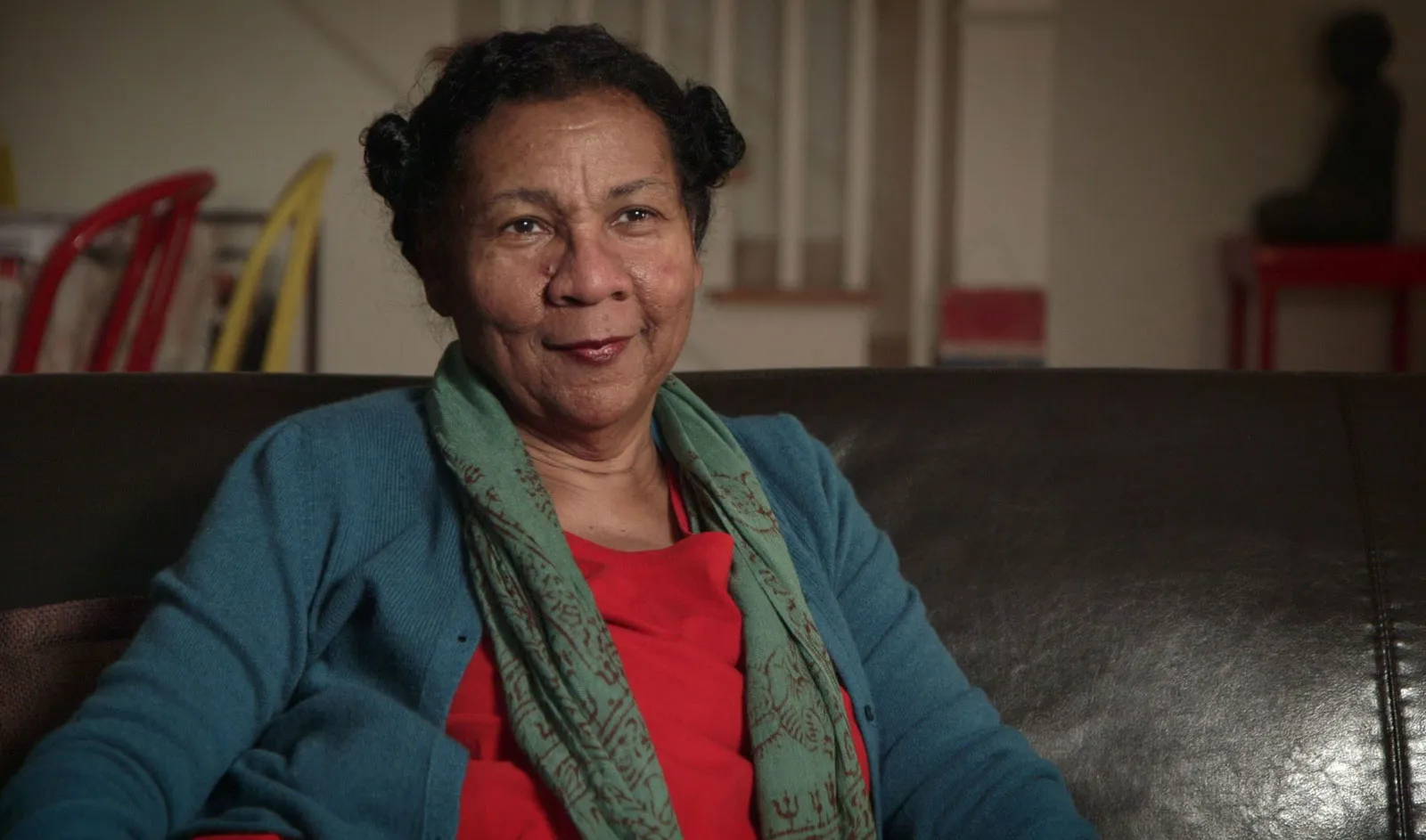
Patriarchy is the single most life-threatening social disease assaulting the male body and spirit in our nation. Yet most men do not use the word “patriarchy” in everyday life. Most men never think about patriarchy—what it means, how it is created and sustained. Many men in our nation would not be able to spell the word or pronounce it correctly. The word “patriarchy” just is not a part of their normal everyday thought or speech. Men who have heard and know the word usually associate it with women’s liberation, with feminism, and therefore dismiss it as irrelevant to their own experiences. I have been standing at podiums talking about patriarchy for more than thirty years. It is a word I use daily, and men who hear me use it often ask me what I mean by it.
My struggle against 41 bis is the individual struggle of an anarchist, I don’t give or receive orders. I simply cannot live in an inhuman regime like 41 bis, where I cannot freely read what I want, books, newspapers, anarchist periodicals, art and science magazines, as well as literature and history. The only possibility for me to get out is to renounce my anarchy and sell someone to take my place.
This is a regime where I can’t have any human contact, where I can’t even see or touch a blade of grass, or hug a loved one. A regime where photos of your parents are sequestered. A regime where you are buried alive in a grave in a position of death. I will carry on my struggle to the end, not for “duty” but because this is not life.
If the aim of the Italian state is to make me “dissociate” myself from the actions of anarchists outside these walls, then I will reject these demands, as a good anarchist. I believe that everyone is responsible for their own actions, and as a member of the anti-organisational current, I am not “associated” with anyone and therefore I cannot “dissociate” myself from anyone. Affinity is another matter. A coherent anarchist does not distance himself from other anarchists out of opportunism or convenience.
I have always proudly defended my actions (even in court, that’s why I am here) and I have never criticised those of other comrades, much less when there is a situation like the one I find myself in.
The biggest insult for an anarchist is to be accused of giving or receiving orders.
When I was in the High Security regime, I also had censorship and I didn’t issue any “pizzini” but articles to anarchist newspapers and magazines. And above all, I was free to receive books and magazines and write books, to read what I wanted, I was even allowed to evolve, to live.
Today I am ready to die to make the world understand what 41 bis really is. 750 people suffer it without protest, continuously vilified by the mass media. Now it is my turn: you have vilified me as the bloodthirsty terrorist; then you have sanctified me as the anarchist martyr who sacrifices himself for others; then you have vilified me again, like a terrible spectre. When it is all over, I shall no doubt be raised to the altars of martyrdom. No, thank you, I am not in the mood, I do not lend myself to your dirty political games.
In reality, the real problem for the Italian state is that all the human rights that are violated by this 41 bis regime, in the name of a “security” for which everything is sacrificed, will come to light. Good! You will have to think twice before putting an anarchist in here. I don’t know what real motivations and political manoeuvres are behind it. And because someone has used me as a “poisoned apple” in this regime. It was quite difficult not to foresee what my reactions to this “non-life” would be. The Italian state is a worthy representative of the hypocrisy of a West that continually gives lessons in “morality” to the rest of the world. The 41 bis has given lessons that have been well taken up by “democratic” states such as Turkey (fellow Kurdish people know something about this) and Poland.
I am convinced that my death will be an obstacle to this regime and that the 750 who have been suffering from it for decades will be able to live a life worth living, whatever they have done. I love life, I am a happy man, I wouldn’t trade my life for anyone else’s life. And it is because I love it that I cannot accept this hopeless non-life.
Thank you comrades for your love. Always for Anarchy. Never submit.
The potential cannot be given or rehearsed, it has to be found. And the thing is, to find the potential of anything, all these musicians have to be courageous and humble enough to not want to flaunt their musical credentials. Sometimes you put on display things that you have learned in packages and the packages are supposed to be consumed by applause and sales, and there has to be an expectant with this package, but if no one knows what’s coming, it’s going to take as much courage for the audience to seek the unexpected as we are, thinking we are finding it, finding, finding the way to use potential.
Wayne Shorter
Words can never capture or exhaust great artistic creation, and more often than not, they distract, or worse, distort.
And what can we possibly say to add to the beauty of Wayne Shorter’s music?
If we mourn and celebrate his passing, it is because his extraordinary body of work will live on, and in some sense, through it, he will as well, along with the many musicians that created and played with him. Shorter often said that there is no beginning or end to things; they rather emerge from the cosmos, from life, only to return to it in death, in a perpetual flow of metamorphoses. In some sense, his musical life was one such journey as he moved through different jazz styles and genres, learning and playing with some of the most renowned jazz musicians of his time, while mentoring those who came after.
Without straining or forcing the analogy too much, there is a freedom to the way jazz music is played, or that it can be played by artists such as Wayne Shorter, that speaks perhaps to what anarchism could or should be – not as an ideology, but as a way of life.
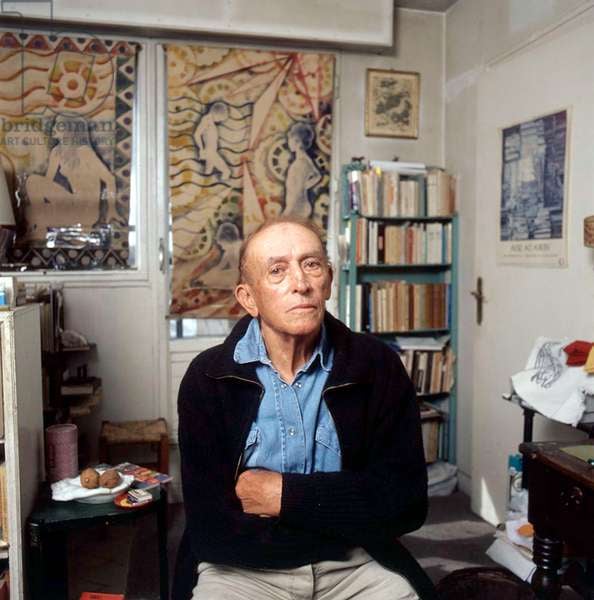
Réne Schérer photographed in September 2004, by Louis Monier
For René Schérer, who died this last February 1st.
The work of René Schérer, anarchist and philosopher of anarchy, is sadly little known in the english speaking world. In a modest effort to fill this lacunae, we publish below an excellent essay by Diane Morgan, generously shared with us by the author, preceded by a short tribute to Schérer by Patrick Schindler published with Le Monde Libertaire (16/02/2023), with an english language translation available at the anarchistnews.org website (26/02/2023).
Diane Morgan’s essay, “Anarchism, Utopianism and Hospitality: The Work of René Schérer”, was originally published in the journal, Modern and Contemporary France, Volume 24 (2), 2016.
After Supreme Court Confirmed 41Bis, Anarchist Comrade Alfredo Cospito Returned to Opera Prison in Milan
We have learned that the anarchist comrade Alfredo Cospito, who has been on hunger strike for 131 days, today, on February 27, was moved by the medical department of the San Paolo hospital to the intensive care unit of the Milan Opera prison, where he was located before he was moved to San Paolo on February 11th.
The hearing before the Supreme Court on February 24, in which the detention regulation in 41BIs was confirmed, finally confirmed the will of the state to destroy our companions – a will that already emerged in December with the result of the hearing before the surveillance court in Rome. The latest relocation from San Paolo to Opera is all about this will to exterminate. You intend to destroy a comrade and believe that it is a warning to the revolutionary struggle in this country. However, the intention is in vain: the need to fight against the state and the capital is insatiable, the desire to overthrow this authoritarian social reality is insatiable.
They decided to kill Alfredo with the coldness of executioners. Democracy is simply this: inquests, media spectacles, death sentences.
If all this had passed in silence or in the ruthless dehumanized staging of the opinion makers of the day, it would have been grave and unforgivable. But that was not what happened. In all these months, and well before, the molecules of this heterogeneous anarchist body have never stopped, despite the weight that was already bearing down on many of them. But that’s the way of things.
These seconds and minutes following the death sentence passed by the Supreme Court against Alfredo are interminable. But pain is different from surprise. We feel pain now, tremendous pain. But not surprise. And the pain that permeates our every cell is piercing, total.
Total pain.
Who can now feel that tomorrow will be a day they could already have imagined? For months we have been sounding out hypotheses, scenarios, possibilities, but who really had a clear idea of what they would feel?
Nothing will ever be the same again.
In the face of all this, the silence created by such raw clarity almost clouds the mind, overwhelms everything. It is right that we shed tears, it is human that we clench each other and take time to let go of the tension that has been mounting for months.
We need time for the pain because, if nothing will ever be the same again, tomorrow’s lucidity will have to be greater than yesterday’s.
Call for solidarity to prevent the incarceration of the Fraguas 6
In 2013, the Fraguas Revive project was born in a town abandoned since 1968, expropriated (forcibly and fraudulently) by the Franco regime and destroyed with military practices. The project has tried to rebuild the town of Fraguas around values such as self-sufficiency, ecology, the recovery of heritage and community life. Despite being a project with a positive impact on demography and the local economy (since it is located in one of the most unpopulated areas in Europe), despite having the support and help of the former inhabitants and despite being strongly backed by civil society, the Castilla la Mancha government, which owns the land, does not see it favorably.
For these reasons, 6 people were sentenced as real estate speculators, even though the requirements for the judgement were not met: they had not built anything new, it has not been urbanised and everything is susceptible to being authorised. In addition, we were not allowed to appeal the sentence to the Supreme Court, thus violating our right of defense. Nor has the scientific community been heard, which has alerted on several occasions, both to the administration and the judge, the illegality of the sentence, which seeks to demolish Fraguas, assuming it as an irrecoverable loss of heritage.
A woman standing outside the maternity hospital in Mariupol after it was shelled by Russia. Photograph: Evgeniy Maloletka/AP
It is one year today that Russia invaded Ukraine, with all of the horror and barbarism that follows any war.
Over this time, we have sought to understand the conflict as best we can from a distance, without premade judgements.
What we have not been able to understand is how “leftists”, from a distance and of many different colours, have been able to defend “realist” political interpretations of the conflict – e.g., that NATO is responsible for the Russian invasion or that Ukraine is merely a proxy of U.S. imperialism –, and/or abstract “revolutionary defeatism”, opposing “class war” to “inter-state” war, when Ukrainians are faced with the immediacy of an invasion by an authoritarian state, and/or an equally abstract anti-militarism and anti-nationalism, when the invasion is a military invasion and when the immediate frame of the war is nationalism, with the invasion justified in nationalist terms, something which however does not and never exhausts the motivations and aims of those who take up arms to defend themselves as a community – nationally identified or not – against imperialist conquest.
Would a pacifist response, a strategy of passive resistance, to the invasion have been possible? Who can categorically say, yes? And what could this have possibly looked like, when pacifist responses to war in Russia to Russian wars is repressed?
Anarchists historically have been overwhelmingly anti-militarists and internationalists. Yet, equally, historically, for reasons that may be judged – usually in hindsight – as good or bad, anarchists have participated in military engagements and in what have often been national contexts, without thereby feeling themselves to be “traitors to the cause”.
Judgements come easy. To listen is much more difficult. And to act from what one hears is inevitably fraught with uncertainty, regardless of what “our ideologies” may suggest.
We share below a video report by Enguerran Carrier entitled Ukraine: Revolutionaries at war, along with two published interviews with Carrier.






Raquel Gutiérrez Aguilar: Feminism in defence of life
Celebrating March 8, International Women’s Day …
Because we want ourselves alive, together we are disrupting everything: Notes for thinking about the paths of social transformation today
Raquel Gutiérrez Aguilar, March 7, 2018
For Carla, because I share the life that continues in her.
For Miztli, Deva, and Luna, because in them beats the future that we construct with their mothers today
On March 8, 2017, a diverse group of many women produced an extraordinary moment. 1 That day something ruptured and something was (re)started. Several million women mobilized in at least fifty countries and in hundreds of cities to repudiate the violence that permeates everyday life, projecting it on public life. Their steps and voices made it clear that from below, from the most denied and silenced sites of social life, a magma-like force of transformation is brewing, the scope of which we can hardly glimpse. March 8 was a day of joy and of struggle, and also of pain turned into anger that, when it was collectively expressed on the streets, made the whole world shake. Above all, it made the most intimate structures of domination tremble: those that organize the reproduction of social life according to variants of the heteropatriarchal pattern of conjugality 2 that is thoroughly enmeshed with capital accumulation and its violence.
Continue reading →