Remembering septembers past: Victor Jara

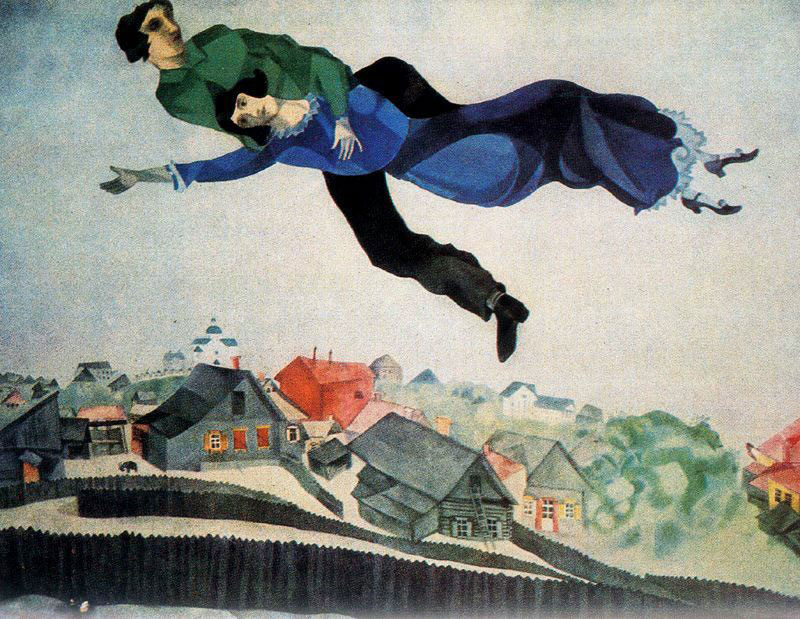
On September 16th, Victor Jara was killed five days after the 1973 coup d’état that brought to an end the government of Salvador Allende. He was among the thousands that died at the hands of Augusto Pinochet’s violent authority. But Jara’s death is a testimony also to the need of any such authority to murder beauty, the beauty of Jara’s art. He was musician, poet, director of theatre and political militant. Before falling before a hail of bullets fired by machine gun, he would be tortured daily, his fingers crushed with rifle buts, and his hands cut off, to the words of his torturers, “Play guitar now”. His body would then be dumped by the side of a railway, identified latter by his wife Joan.

Continue reading

Posted in Poiesis | Tagged , | Leave a comment

From Espai en Blanc: El Pressentiment

Born in 2002 in Barcelona, walking between critical thought and activism, the Espai en Blanc collective has elaborated creative forms of political intervention that we have been late to share.  Below is the ongoing El Pressentiment …

Continue reading

Posted in Commentary, Poiesis | Tagged , , | Leave a comment

Morocco: Racist Attacks in Boukhalef

http://s.libertaddigital.com/fotos/noticias/frontera-melilla-23112013.jpg

… totalitarianism makes people superfluous as human beings.

Hannah Arendt

Originally posted on No Borders Morocco.

The violence in Boukhalef, a quarter of Tangier in the North of Morocco, has reached a new dimension. Friday night, the 29th of August, a racist group armed with knives and bats attacked migrants and killed at least one person – a Senegalese – by cutting his throat with a knife, several others were badly injured and were brought to a hospital. Some of them are still in critical conditions. People talk about up to 3 more deaths which is not yet confirmed.

Continue reading

Posted in News blog | Tagged , , | Leave a comment

Anti-fascism in spain: Tetuán, Madrid

As well as the fascism of concentration camps …, new forms of molecular fascism are developing: the crematoria of Belsen can be satisfactorily replaced with the small furnaces of the family, the school, racism, ghettos of all sorts. All over the world the totalitarian machine is experimenting to find the structures best suited to the situation, in other words, best fitted to capture desire and harness it to the profit economy. Once and for all we must refuse to be taken in by such slogans as ‘Fascism will not happen again’ – it already has happened, and is still happening. It infiltrates through even our most intricate defences, and continues to change and develop. It appears to come from outside, but its energy comes from the core of desire within each one of us. In apparently tranquil situations, disaster can strike from one day to the next. Fascism, like desire, is disseminated in fragments throughout the social spectrum; the form it takes in any one place will depend on the prevailing relations of power.

Félix Guattari, The Micro-Politics of Fascism

The image is telling: dozens of riot police and police vehicles protecting an illegal, neo-nazi squat in Madrid’s Tetuán neighbourhood against a thousand strong anti-fascist march seeking their expulsion.

Continue reading

Posted in Commentary, News blog | Tagged , , | Leave a comment

Anti-capitalist economies in post-15M spain: Mondragón, Cooperatives and Okupations

… I am bound to suppose that the realisation of Socialism will tend to make men happy.  What is it then that makes people happy?  Free and full life and the consciousness of life.

William Morris

In spain, there are those who speak of three moments, in the country´s modern history, of “self-managed economies”: the period of the civil war, during which, in Republican zones, millions of people were involved in the collectivisation of social relations; after the death of Franco, in the transition, during which time land and factories were occupied and the first expressions of the post-fascist labour movement were often of syndicalist inspiration; the wave of cooperative and self-management initiatives that emerged in the wake of the 2007-8 crisis and the 15th of May movement. (Periódico Diagonal 08/15/2014)

Continue reading
Posted in Commentary | Tagged , , , , | Leave a comment

Creating through resistance: The ZAD in Notre-Dame-des-Landes

Since the winter of 2012-2013, the Notre-Dame-des Landes resistance/okupation against the french government’s plan to build an airport in the midst of agricultural and forest lands has met with ongoing opposition.  We chronicle here some of that continuing creativity, since we last celebrated the ZAD – Zone à Défendre.

Continue reading

Posted in Commentary, News blog | Tagged , , , | Leave a comment

Tomás Ibáñez: “One never takes power, it is power which takes us”

On the occasion of the publication of Tomás Ibáñez’ book, Anarquismo es movimiento, we republish below, in translation, an interview with him that appeared in La Marea (29/06/2014): a reading of contemporary anarchism.

Continue reading

Posted in Commentary | Tagged , , , | 3 Comments

The dark tidings of Uri Gordon

Published in 2009 as part of an anthology of contemporary anarchism, Uri Gordon’s essay, “Dark tidings: Anarchist politics in the age of collapse”, remains an important reflection on anarchist theory and practice, which we endeavour to share and diffuse in this post.

Continue reading

Posted in Commentary | Tagged , , | Leave a comment

The artistic disobedience of Nina Paley: For Gaza

Calling both a grassy field and ideas a “commons” is interesting, because one of them, the grassy field, is tangible and scarce, whereas the other one is not actually limited. A lot of the conversation that happens around imaginary property is that people think that it is real. The “enclosure of the commons” metaphor definitely works for both, but a grassy field is very different from culture in that there’s only so much grassy field. A grassy field is actually real; if, for example, you take a bulldozer to your grassy field, then the grassy field is ruined. But if you take your bulldozer to a copy of your work, then there are all these other copies. It doesn’t affect the idea. It only affects one copy. So the concept of the “tragedy of the commons” doesn’t really apply to intellectual/cultural works at all. 

Real things are limited. If you don’t take care of the field, or if you overgraze it, then there’s not enough grass for the other sheep. With cultural works, it’s the exact opposite. The more they’re shared, the more valuable they become. People apply these ideas about scarcity to culture, and culture is not scarce. People are thinking of the “problem of abundance”: the idea that people don’t know what to do with abundance. But there is no tragedy of the cultural commons. I’ve read justifications of copyright where people say that if culture is shared too much the value of the work is diluted. Who came up with that idea? The opposite is true: works do not become less valuable the more they’re shared; they become more valuable the more they’re shared. What on earth are they talking about when they say that sharing dilutes the value of the work?

Nina Paley

Artist of comic strips, animation films and free culture activist, Nina Paley defends through her creative work the right to a commons, a cultural commons that embraces all dimensions of human life; a commons constantly threatened by all manner of violent possession and exclusion.

Continue reading

Posted in Film, Poiesis | Tagged | Leave a comment

Scenes from the class war in spain: suicide

By chosing voluntary death we cast off the burden of our existence and refuse to simply survive.

Jean Amery, On Suicide: A Discourse On Voluntary Death

From the Stop Desahucios (Stop Evictions) of 15M Granada, comes the news of the suicide of Gustavo Arguellas Calvo (25/07/2014), member of the city’s Maracena Assembly.

Continue reading

Posted in News blog | Tagged | Leave a comment