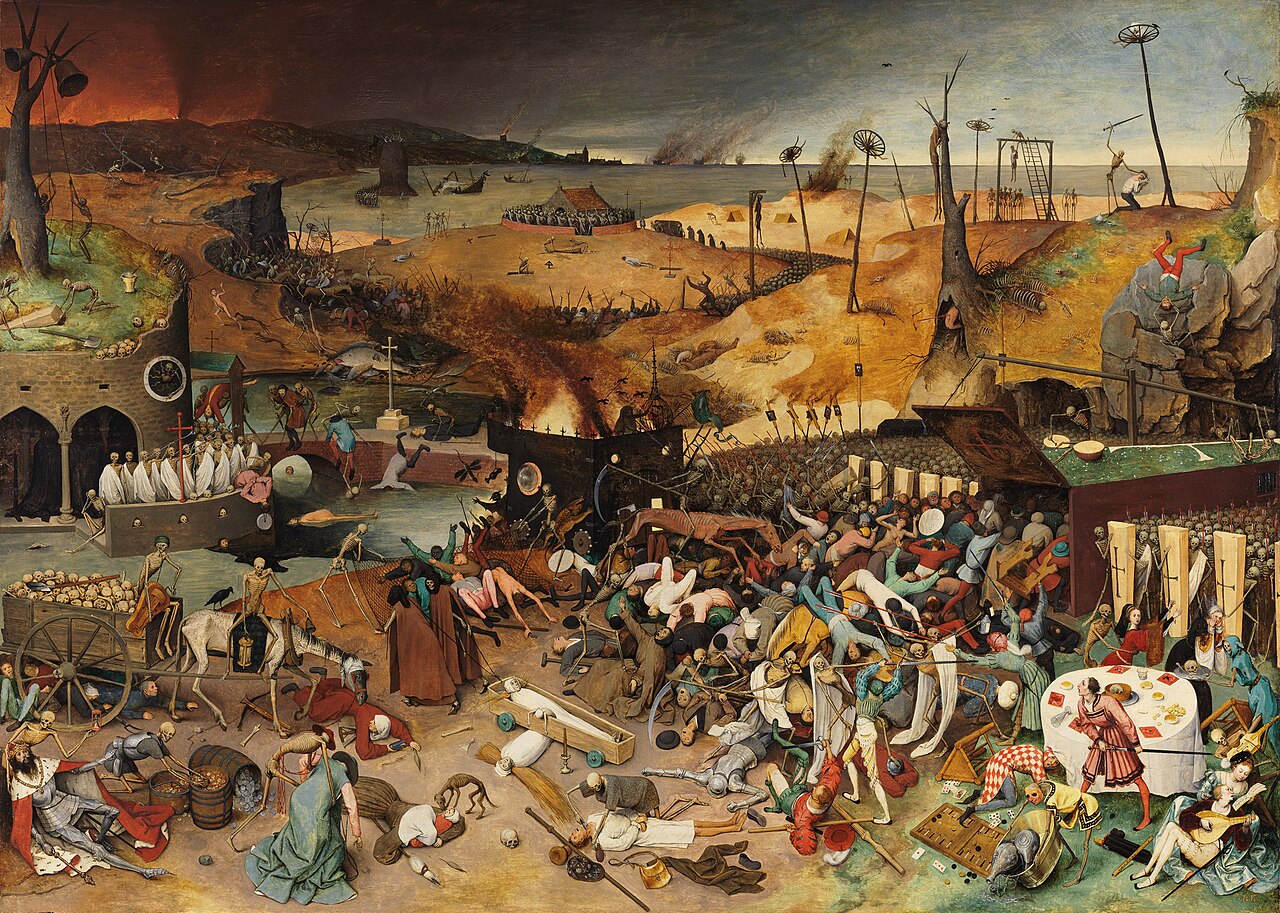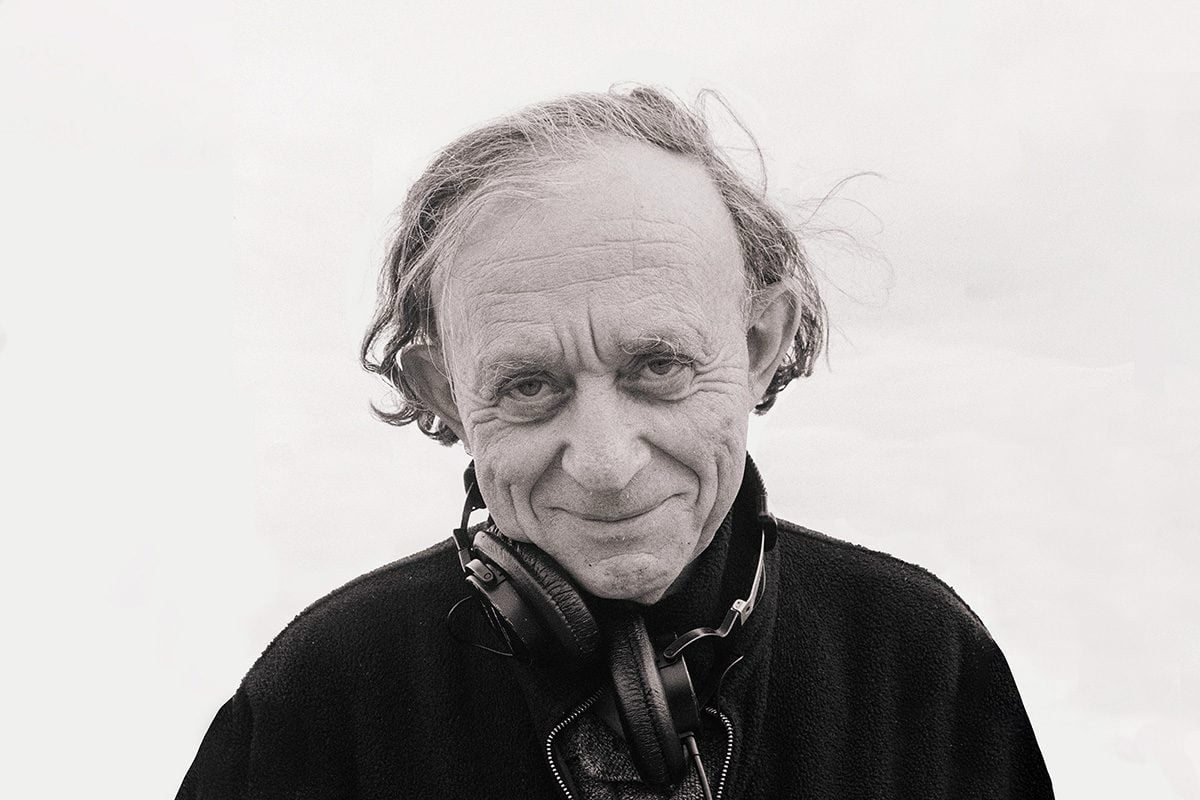
William Morris: The Society of the Future

The only way forward is for all those targeted to gather themselves more effectively than their enemies have, to recognize their alliance, and to fight the phantasms prepared for them with a powerful and regenerative imaginary that can distinguish between the destruction of life and a collective life affirmation defined by struggle and even irresolution.

When we say I want to be free or I want you to be free, we are speaking about these distinct selves but also about social freedoms that should be accorded to everyone as long as no real harm is done. And for that caveat to work, we have to expose the fearmongering that would recast fundamental freedoms as harms, and make freedom into a new and vital object of desire. To live according to such a maxim means that we must distinguish between actual harms and those that grip the imagination as imminent possibilities, manufactured by those in the business of inciting hatred. But we cannot learn how not to cause harm if freedom itself is regarded as a harm, or if we become convinced that struggles for equality, freedom, and justice are hurting the world. Let us show instead that the world, the earth, depends upon our freedoms, and that freedom makes no sense when it fails to be collective, no matter how difficult staying in emancipatory collectivities might be.

Judith Butler, Who’s Afraid of Gender?


Note: Published in three parts in Commonweal, March-April 1889. For full details of publication and deliveries, see below.
Transcribed: by Graham Seaman, June 2022

(Source: marxists.org)


In making our claims for the changes in Society which we believe would set labour free and thus bring about a new Society, we Socialists are satisfied with demanding what we think necessary for that Society to form itself, which we are sure it is getting ready to do; this we think better than putting forward elaborate utopian schemes for the future. We assert that monopoly must come to an end, and that those who can use the means of the production of wealth should have all opportunity of doing so, without being forced to surrender a great part of the wealth which they have created to an irresponsible owner of the necessaries to production; and we have faith in the regenerative qualities of this elementary piece of honesty, and believe that the world thus set free will enter on a new eycle of progress. We are prepared to face whatever drawbacks may accompany this new development with equanimity, being convinced that it will at any rate be a great gain to have got rid of a system which has at last become nearly all drawbacks. The extintion of the disabilities of an effete system of production will not, we are convinced, destroy the gains which the world has already won, but will, on the contrary, make those gains available to the whole population instead of confining their enjoyment to a few. In short, considering the present condition of the world, we have come to the conclusion that the function of the reformers now alive is not so much prophecy as action. It is our business to use the means ready to our hands to remedy the immediate evils which oppress us; to the coming generations we must leave the task of safeguarding and of using the freedom which our efforts shall have won them.

Continue reading
Posted in Commentary | Tagged , | Leave a comment

Morocco: The Gen Z 212 Uprising

An interview, from Crimethinc. (13/10/2025)


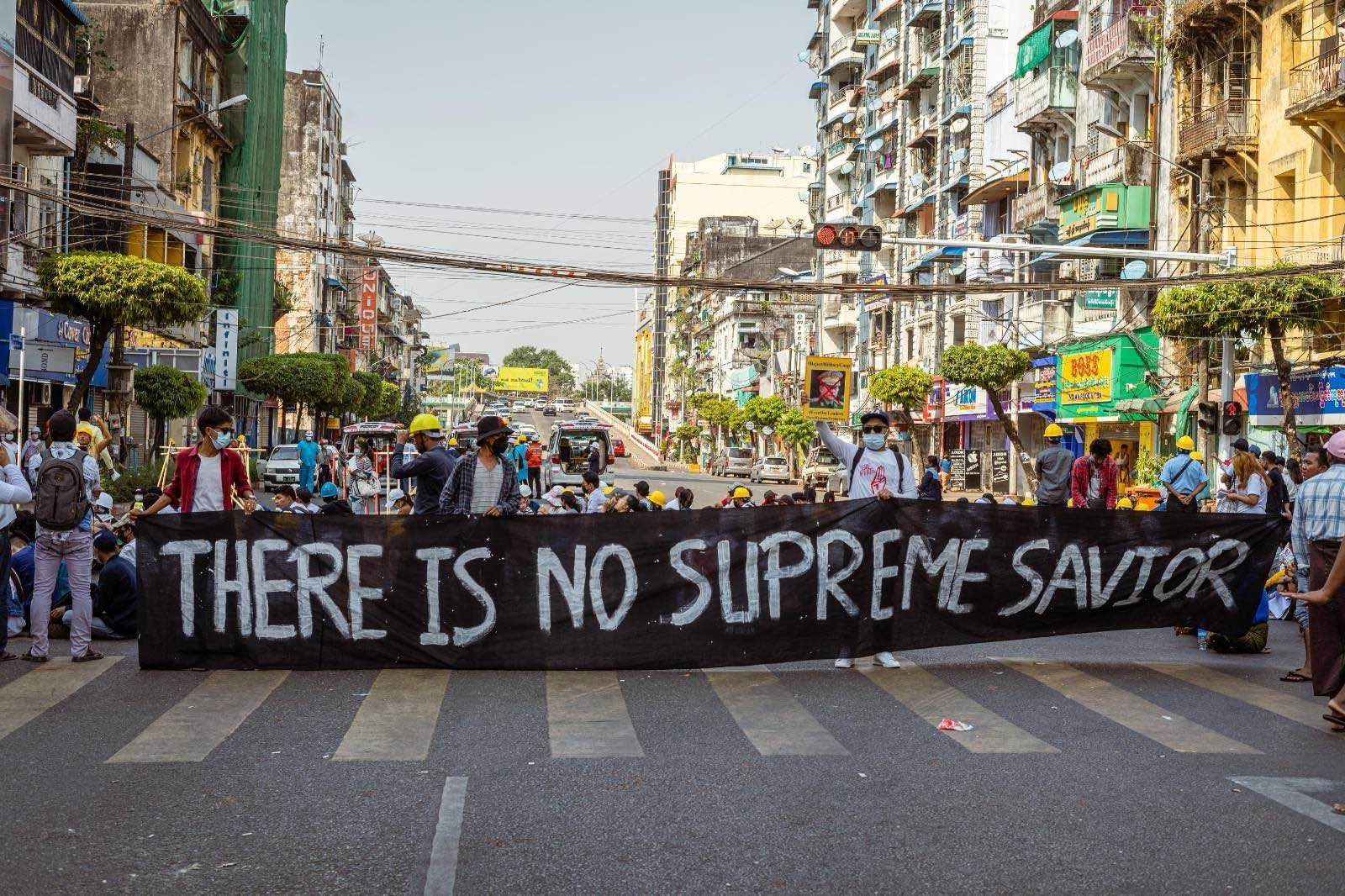
Beginning with the toppling of the president of Sri Lanka in 2022 and the 2024 uprising in Bangladesh, a new revolutionary ferment has begun to spread around the world, gaining momentum with the uprising in Indonesia in August 2025 and the insurrection in Nepal in September. Since then, fierce protests have broken out in Peru, the Philippines, Madagascar, Morocco, and elsewhere. For more insight into the different forms that this wave of activity is assuming in different parts of the world, we spoke with two participants in the Gen Z 212 movement in Morocco.

Continue reading
Posted in Interview | Tagged , , | Leave a comment

Tariq Ali: Unending War

Donald Trump talks with Benjamin Netanyahu at the Knesset, Israel’s parliament, on Monday, 13/10/2025. Evan Vucci (REUTERS)

From Sidecar/New Left Review (16/10/2025)


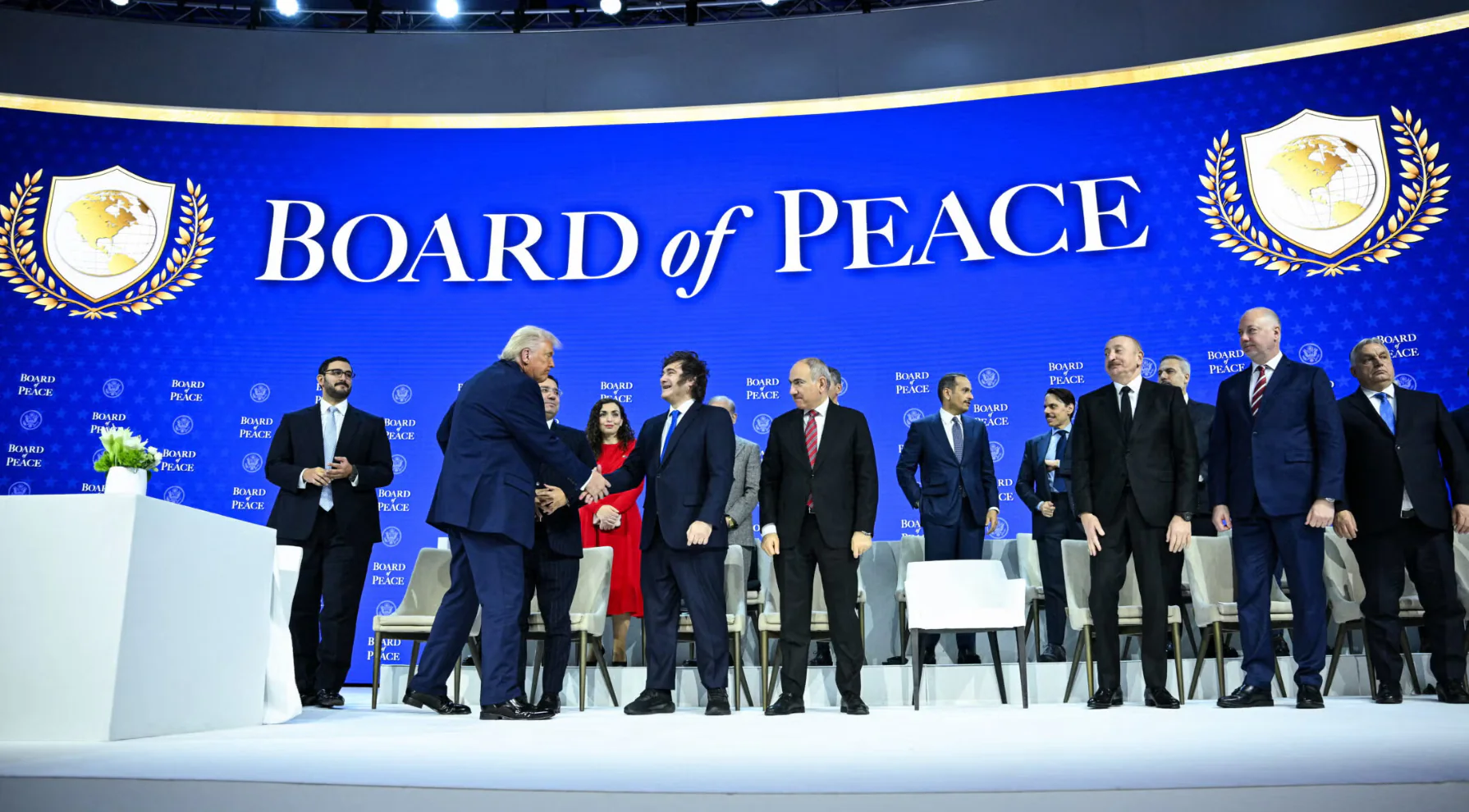
The gallery of grotesques assembled by Trump – only the toga was missing in his rendering of the Roman Emperor Nero – at Sharm-el-Sheikh, the Egyptian resort synonymous with luxury and despotism, dutifully celebrated ‘Peace in the Middle East’. What ‘peace’? Earlier that day in Jerusalem, Nero had declared ‘victory’ while addressing his cheering barbarian auxiliaries and donors in the Knesset:

We make the best weapons in the world, and we’ve got a lot of them. And we’ve given a lot to Israel, frankly. Bibi would call me so many times, ‘Can you get me this weapon, that weapon, that weapon?’ Some of ‘em I never heard of, Bibi, and I made ‘em! [Laughter] But we’d get ‘em here, wouldn’t we, huh? And they are the best. They are the best. And you used them well. It also takes people that know how to use them, and you obviously used them very well.

Continue reading
Posted in Commentary, News blog | Tagged , , | Leave a comment

Giorgio Agamben: On artificial intelligence and natural stupidity

“An age of barbarism is beginning, and science will be at its service.” The age of barbarism is not yet over, and Nietzsche’s diagnosis is now being confirmed. The sciences are so attentive to satisfying and even anticipating every demand of the age that, when it decided it had neither the desire nor the capacity to think, they immediately provided it with a device called “artificial intelligence” (abbreviated to AI). The name is not transparent, because the problem with AI is not that it is artificial (thought, insofar as it is inseparable from language, always involves art or a degree of artifice), but that it is located outside the mind of the subject who thinks or should think. In this respect, it resembles Averroes’ separate intellect, which, according to the brilliant Andalusian philosopher, was unique to all men. For Averroes, the problem was therefore that of the relationship between the separate intellect and the individual. If intelligence is separate from individuals, how can they unite with it in order to think? Averroes’ answer is that individuals communicated with the separate intellect through the imagination, which remains individual. It is undoubtedly a symptom of the barbarism of the time, as well as its absolute lack of imagination, that this problem is not raised with regard to artificial intelligence. If it were simply an instrument, like mechanical calculators, the problem would indeed not exist. If, on the other hand, it is assumed, as is in fact the case, that, like Averroes’ separate intellect, AI thinks, then the problem of the relationship with the thinking subject cannot be avoided. Roberto Bazlen once said that in our time intelligence has ended up in the hands of the stupid. It is possible that the crucial problem of our time then takes this form: how can a stupid person—that is, a non-thinker—enter into a relationship with an intelligence that claims to think outside of him?

Quodlibet, October 12, 2025

Posted in Commentary | Tagged , | Leave a comment

Maurizio Lazzarato: The United States and “Fascistic Capitalism”

From Ill Will (07/10/2025)


Continuing the reflections begun in “Why War?,” “Political Conditions of a New World Order,” and “The Impasses of Western Critical Thought,” philosopher Maurizio Lazzarato argues that the shape of the next phase of history will not be determined economically, like an exchange between contractors, but only by forces capable of entering the strategic plane of the friend-enemy relation. To clarify the stakes of this decision, the present article returns to the bloody process through which neoliberalism was “imposed” globally, especially in Latin America, which exceeds any superficial opposition between democracy and fascism.

Continue reading
Posted in Commentary | Tagged , , | Leave a comment

Michel Foucault: Grotesque Power

Ah ! saleté ! le mauvais droit ne vaut-il pas le bon?/Ah, crap! Isn’t Wrong worth the same as Right?

Alfred Jarry, Ubu roi

We fascists are the only true anarchists, naturally, once we’re masters of the state. In fact, the one true anarchy is that of power.

Pier Paolo Pasolini, Salo, or the 120 Days of Sodom


From

Michel Foucault, Abnormal; Lectures at the College de France 1974-1975

(Verso Books, 2003 [first published as, Les Anormaux, Editions de Seuil/Gallimard, 1999])

I would like to dwell for a moment on this truth-justice relationship because it is, of course, one of the fundamental themes of Western philosophy.[19] It is, after all, one of the most immediate and fundamental presuppositions of all judicial, political, and critical discourse that there is an essential affiliation between stating the truth and the practice of justice. Where the institution appointed to govern justice and the institutions qualified to express the truth encounter each other, or more concisely, where the court and the expert encounter each other, where judicial institutions and medical knowledge, or scientific knowledge in general, intersect, statements are formulated having the status of true discourses with considerable judicial effects. However, these statements also have the curious property of being foreign to all, even the most elementary, rules for the formation of scientific discourse, as well as being foreign to the rules of law and of being, in the strict sense, grotesque, like the texts I have just read.

Continue reading
Posted in Commentary | Tagged | Leave a comment

For Gianfranco Sanguinetti (1948-2025)

The theory of the revolution certainly does not depend on the sole area of properly scientific ideas, and still less on the construction of a speculative achievement, or on the aesthetic of that fiery manner of speech that contemplates itself in its own lyrical glimmers and finds that it’s already getting too hot to take. This theory only has an effective existence through its practical victory: here, “great thoughts must be followed up by great deeds; they must be like sunlight, which produces what it lights up.” Revolutionary theory is the domain of danger and uncertainty: it is forbidden to people who want the narcotic certainties of ideology, including even the official certitude of being the unswerving enemies of all ideology. The revolution that it concerns is a form of human relations. Revolutionary theory is part of social existence. It is a conflict between the universal interests concerning the totality of social practice, and only thus does it differ from other conflicts. Its laws are the laws of conflict, war is its path, and its deeds are more comparable to an art than to a scientific research or an inventory of good intentions. The theory of the revolution is judged by the sole criterion that its knowing must become a power.

Guy Debord and Gianfranco Sanguinetti, The real split in the International : theses on the Situationist International and its time (1972)

All States have always been terroristic, but they are more violently so during their births and when they face the imminence of their deaths. And those today who, either due to despair or because they are victims of the propaganda that the regime creates in favor of terrorism as the best example [Latin in original] of subversion, and who thus contemplate artificial terrorism with an uncritical admiration (and even try to practice it on occasion), do not know that they are only competing with the State on its own terrain and that, on this terrain, not only is the State stronger, but it will always have the last word. Everything that does not destroy the spectacle reinforces it, and the incredible reinforcement of all the governmental powers of control that has taken place thanks to the pretext of [fighting again] spectacular terrorism has already been used against the entire Italian proletarian movement, which is the most advanced and most radical in Europe today.

Gianfranco Sanguinetti, On Terrorism and the State (1979)


We only recently learned of Gianfranco Sanguinetti’s death, on October 3rd of this year. In a modest gesture of homage to this late member of the Italian Section of the Situationist International, we share below his classic text, On Terrorism and the State, in a translation by Bill Brown.

Continue reading
Posted in Commentary | Tagged , , , | Leave a comment

“Magical thinking”: Beyond the violence of the two state solution for Palestine-Israel

From Checkpont 300 (2017)

Reaching for a Palestine-Israel beyond the nation state, with Mohammed A. Bamyeh.


From the early 1990s, global applause for peace talks abounded. But what ultimately happened is that endless calls for a “two-state solution” that evaded explicit realization of Palestinian self-determination and freedom replaced calls for an end to Israel’s military occupation. The “peace process” became a magic pill rendering the occupation invisible to the west, disguising its metastisizing, omnipresent and ever more violent form. Palestine was now reduced to a subject of “negotiation” requiring concessions, with the 1948 ethnic cleansing of Palestine swept under the rug to be forgotten.

With this magic pill swallowed, Israel used the cover of the “peace process” to build and expand Israeli settlements, correctly believing that these facts on the ground would strengthen their position at the negotiating table. And with the settlements came settlers and checkpoints and an expanding Kafkaesque system of military control. By 2000, the West Bank became unrecognizable: Palestinians were navigating a maze that erratically changed on a daily basis as the West Bank was now divided into tiny islands, with some areas administered by the Palestinian Authority but with Israel retaining overall control.

… Israel’s successive bombing campaigns in Gaza did not break the west’s unshakable faith in the magic pill of the “two-state solution” or their unwavering support for Israel’s “security concerns”. As Israelis were boasting that they were bombing Gaza back to the stone age, diplomats barely uttered a word.

But for Palestinians, there is no magic pill.

Diana Buttu, “A ‘magic pill’ made Israeli violence invisible. We need to stop swallowing it”, The Guardian, 05/10/2025


The No-State Solution: Histories and Realities (2025)

Mohammed A. Bamyeh

This text presents the most realistic solution for the Palestinian conundrum. To many the no-state true solution put forward by the author will appear utopistic or, even, absurd. To them we could remind the statement by Arthur Schopenhauer: “All truth passes through three stages. First, it is ridiculed. Second, it is violently opposed. Third, it is accepted as being self-evident.”

Continue reading
Posted in Commentary | Tagged , , , , , | Leave a comment

Ghassan Salhab: The Alter

From lundimatin #490, 01/10/2025


I am nothing
and my words are fleeting
like me,
among people but passing through,

that is why
I speak of you.

Bassam Hajjar

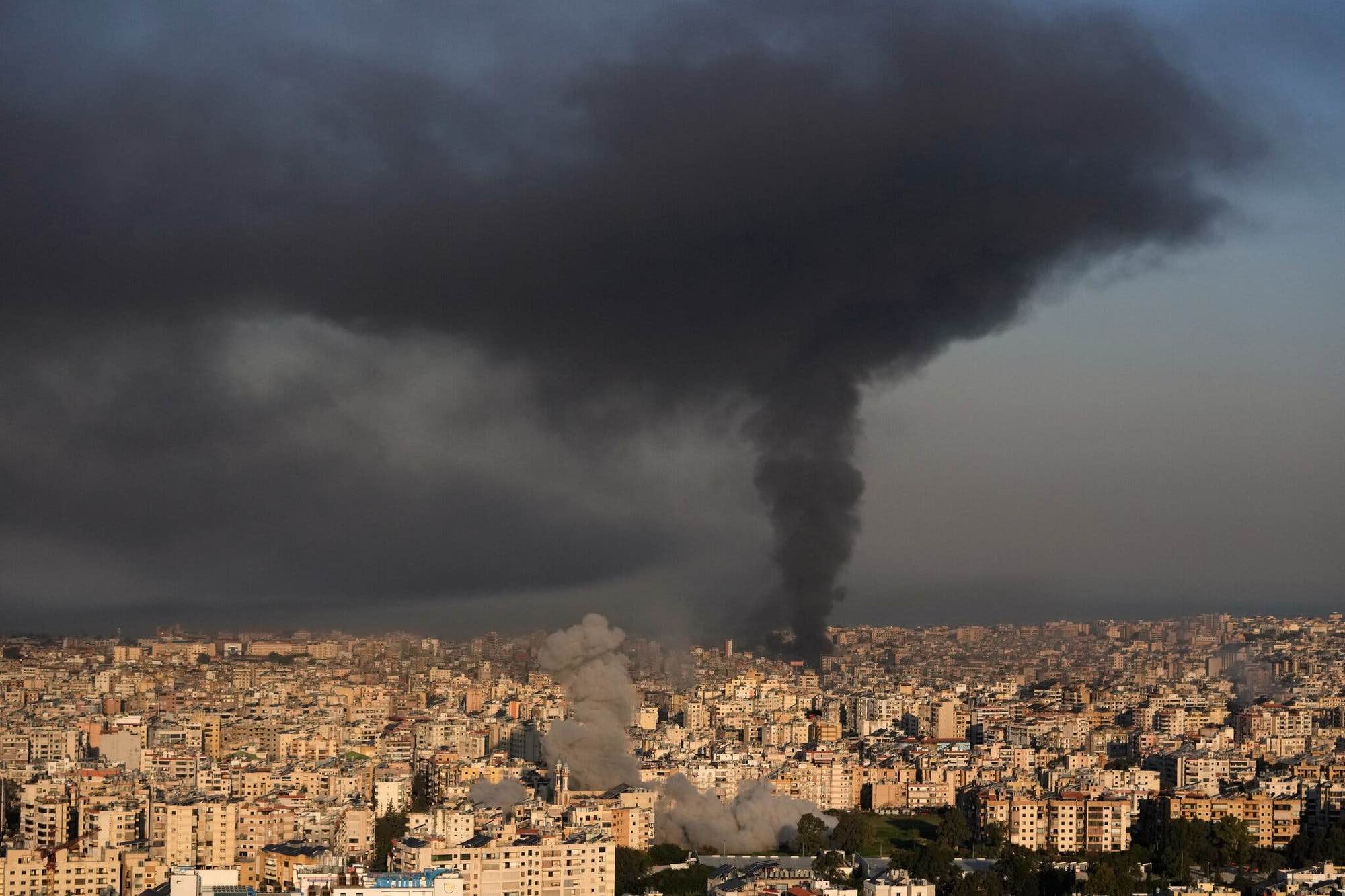
Is it absolute madness that has taken hold of Zionism, driving this ideology born in the heart of European nationalism that emerged in the nineteenth century, through massacres and counter-massacres, and fabricated “founding myths”, even before the two terrible so-called world wars, when European colonies were at their peak, three continents had already been definitively “conquered”, and the various indigenous populations had been either decimated or reduced to a mere fraction of their former numbers? Is it therefore absolute madness that drives this ideology to believe so firmly in its own mystical-mythical delusion, which it has long been able to use and manipulate, and which now overwhelms it on all sides, merging completely with the other great Zionist delusion that preceded it shortly before, Christian Zionism, which emerged from evangelical Christianity, first appearing in Great Britain before flourishing in the United States, each driving the other further and further into this genocidal headlong rush?

Continue reading
Posted in Commentary | Tagged , , , , | Leave a comment

Sébastien Charbonnier: Power and potentiality

The Pleasures of Fishes, 1291, by Zhou Dongqing, Yuan Dynasty (1260-1368).

Pouvoir et puissance – Refuser de parvenir: une joie pure/Power and potentiality – To refuse to reach for a goal: a pure joy[1]

Sébastien Charbonnier

lundi matin #487, 09/09/2025

The philosopher Sébastien Charbonnier has just published his remarkable book Pouvoir et puissance (Vrin), in which he raises and explores an absolutely crucial and decisive question: how can we refute power and domination while exercising our power [puissance] to act? We will discuss this with him at the next lundi soir evening event. In the meantime, here is a preview of some excerpts from the book.

Continue reading
Posted in Commentary | Tagged | 1 Comment