The Road to Prairieland

From the CrimethInc. collective (13/02/2026)


The Crackdown on Anti-ICE Activists in Texas Reflects a Pattern of Intensifying Repression

On July 4, roughly a dozen people participated in a demonstration at the Prairieland Detention Center, a facility imprisoning immigrants facing deportation proceedings. When the police responded, gunfire erupted, with one officer reportedly being injured. Today, nineteen people—some of whom apparently neither participated in the demonstration nor set foot anywhere near the Prairieland Detention Center—are accused of “providing material support for terrorism” as well as rioting, carrying an explosive, firearms, attempted murder of a federal employee, and other charges. Eighteen of them remain in jail.

Continue reading
Posted in Commentary, News blog | Tagged , , , | Leave a comment

Nate Holdren: Against The Border Power

The article that follows was originally posted here, at buttondown.com (05/02/2026) and subsequently here, at libcom.org (10/02/2026).


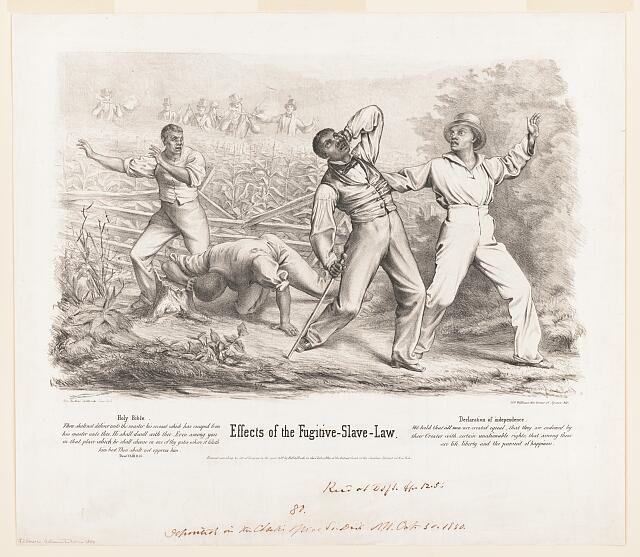
As I’ve mentioned a while back I wrote a letter to Little Village saying deportation as such is wrong, that we should think of it as something like slavery and think of those of us opposing deportation as something like 19th century abolitionists. I talked about this a bit last time I was on Death Panel. If anything, I’ve only gotten more convinced that we in the US should think of ourselves as in a position analogous to the US in the 1850s, and think of the border and slavery as similar institutions. Among other things, I think it’s clarifying if we take things said about border enforcement and translate them into statements about slavery in the 1850s. Suppporting ICE is like supporting slave-catchers. Calling for opposition to stay civil is like saying be polite to slavers. And so on. I’ve written a short pamphlet getting into this in more detail and trying to explain how the border is a racist and racializing institution. The text of that is below. If anyone’s interested in a printable version, I made a primitive one using my very rudimentary abilities. That’s at this link tinyurl.com/borderpower along with the text as a text only file.

Continue reading
Posted in Commentary | Tagged , , , , , | Leave a comment

Tomás Ibáñez: Some contributions to anarchism from contemporary critical thought

Holding to critical thinking in the turbulent waters of anarchism


From Redes Libertarias, 27/01/2026


From the moment that political anarchism took its first steps in the second half of the 19th century, it has always been open to incorporating contributions from critical thought that were attuned to its own tenets and that were susceptible to nourish its theoretical and practical work. It was precisely this openness towards was elaborated around it, along with what emanated from its own struggle against domination, that prevented it from stagnating in petrified forms and allowed it to remain in permanent movement.

Continue reading
Posted in Commentary | Tagged , , , , | Leave a comment

For Philippe Gaulier (1943–2026): The anarchy of clowning

There is no pool … which has not some dead leaves floating on its surface, no human soul upon which there do not settle habits that make it rigid against itself by making it rigid against others …

Henri Bergson, Laughter: An Essay on the Meaning of the Comic (1900)

Indeed, form-of-life, properly human life, is that which renders inoperative the specific works and functions of the living thing and causes them to, so to speak, idle, and in this way opens them up to possibility.

Giorgio Agamben, Pulcinella or, Entertainment for Kids in Four Scenes (2015)

What does it mean to you to be an anarchist?

It means, fuck you! To say, fuck you, to every authority.

from an interview with Philippe Gaulier


In Plato’s dialogue, the Symposium, we are presented with an image of Socrates as the absentminded philosopher, as someone who ignores social decorum by stopping to think, to reflect, seemingly oblivious to those about him, when etiquette presses.

Continue reading
Posted in Commentary, News blog, Poiesis | Tagged , , , , , , , , , , | Leave a comment

Basic Banalities Concerning the January 31 Demonstration in Turin

From the CrimethInc. collective (07/02/2026)


Reflections on Conflict Following a Night of Street Fighting in Italy

On December 18, 2025, police evicted the historic Askatasuna social center in Turin, which had been squatted since 1996. After an initial demonstration called immediately after the eviction, a call circulated for a second major demonstration on January 31.

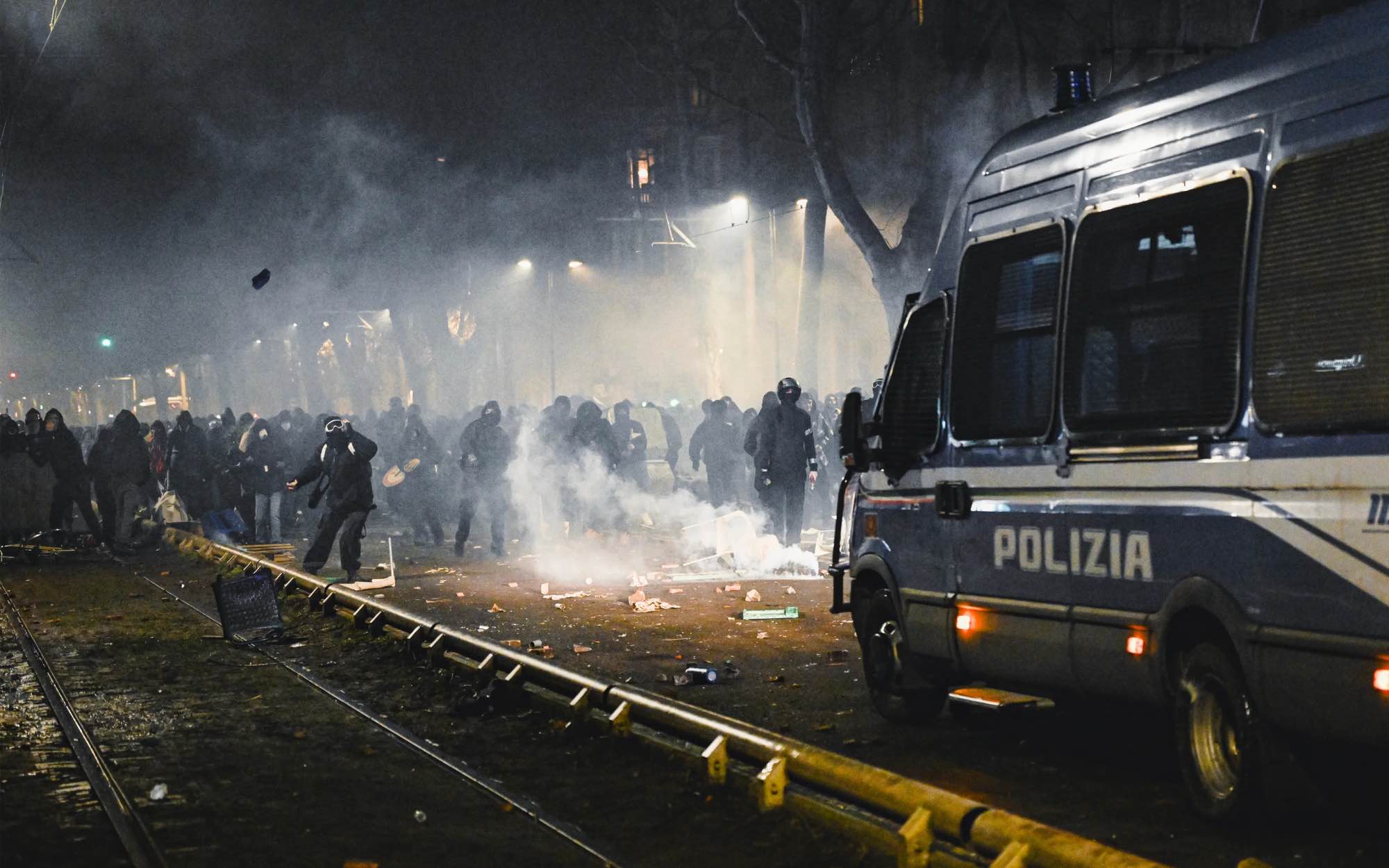
Newspapers report that 50,000 people took the streets. In Corso Regina Margherita, the street where the social center was located, clashes with the police continued for several hours. An armored vehicle went up in flames; videos circulated on social media showing a policeman who, left alone, was beaten by participants in the demonstration. In general, the march was characterized by an intensity of confrontation that is extraordinary in Italy today.

Something is changing in the Italian landscape. The pro-Palestinian movement that erupted in support of the flotillas that sailed for Gaza in fall 2025 drew millions of participants into the streets, including a new generation that had not previously participated in direct action. The events in Turin last month show that this momentum has not abated. While authoritarianism is gaining power all around the world, we are also seeing signs of ungovernable rage in the general population.

Here, we present a reflection on the demonstration of January 31 that recently appeared in Italian.

Continue reading
Posted in Commentary, News blog | Tagged , , | Leave a comment

Rodrigo Karmy Bolton: The law of fire

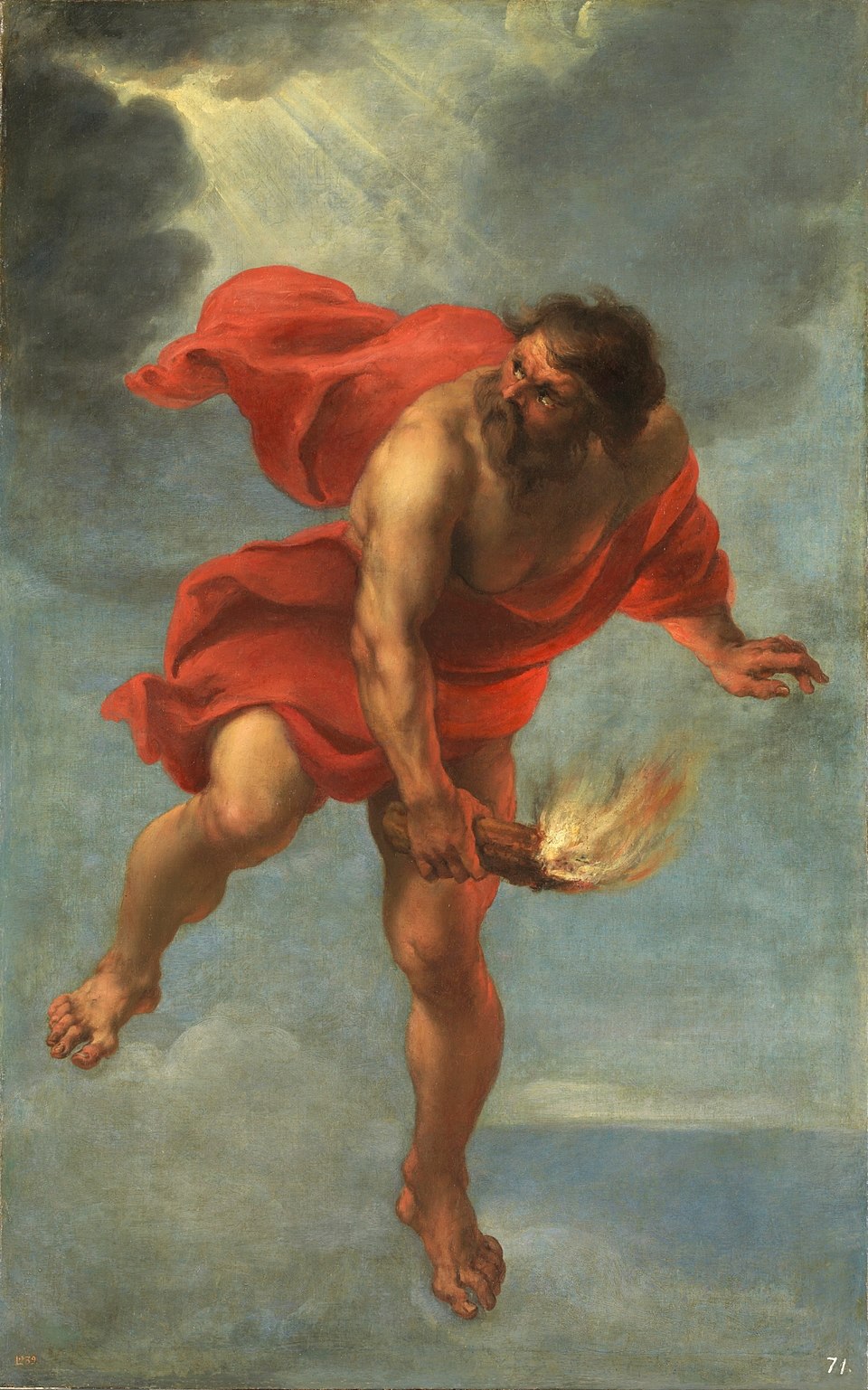
Jan Cossiers, Prometheus Carrying Fire (1636 – 1638)

From Ficción de la razón (21/01/2026)


1. In a short text dedicated to his daughter Anima entitled Land and Sea, the German jurist Carl Schmitt proposed the term nomos of the land to refer to the “original appropriation of space” upon which a specific legal and political order is built. According to Schmitt, who interpreted the Greek term nomos (Law) as a “land seizure”, the history of the nomos coincides, era after era, with that of the natural elements identified by Aristotle to explain the order of the cosmos. Thus, for a long time, the nomos of the land would predominate, based not only on “land seizure” but also on the configuration of the legal and political order over terrestrial space, leaving maritime space as res nullus. For Schmitt, from the Roman Empire to the Hispanic Empire opened up by the “discovery of the New World,” both were built upon the foundation of the terrestrial element.

Continue reading
Posted in Commentary | Tagged , , , , , | Leave a comment

The anarchic culture of the commons

Pieter Bruegel the Elder, The Dutch Proverbs, 1559.

By Regino Martínez, of the Montevideo based magazine, Anarquía


The ground of a subversive collective imagination

Let us begin with the obvious: in capitalism, common issues are rarely resolved by the people directly involved. While the hegemonic relationships in our society—those that shape the dominant social models—are structured on the basis of political domination, they are not, however, the majority relationships. The majority relationships are what we could call, in broad political terms, anarchist relationships; that is, relationships not mediated by command and obedience.

Continue reading
Posted in Commentary | Tagged , | Leave a comment

For Frank Fernández (1932–2026)

Cuba and the anarchists have a long history of the pursuit of freedom. The early labour struggles, the important contributions to Cuban independence from Spain, their protest against U.S. interventions, their critical attitudes toward social problems during the two republics, their spirit of combat and sacrifice against the dictatorships and disorders of Machado, Batista and Castro. Finally, the unbreakable faith that unites us in the present sinister moment of our destiny, serve as a powerful spur to continue the struggle until the end.

Frank Fernández

Of history, the social history of Cuba. “Not the history of wars, not the history of patriots, but the history of slaves, the history of women, the history of Cuban society. We must write history by eliminating epics, leaders and divas enshrined in statues. History is not made by them, but by the people. A tobacco worker did more for the Republic than many soldiers did for independence.”

Frank Fernández – Blázquez, M.G. y, Martín, F. “Entrevista con el historiador cubano Frank Fernández2, CNT, November 2004.


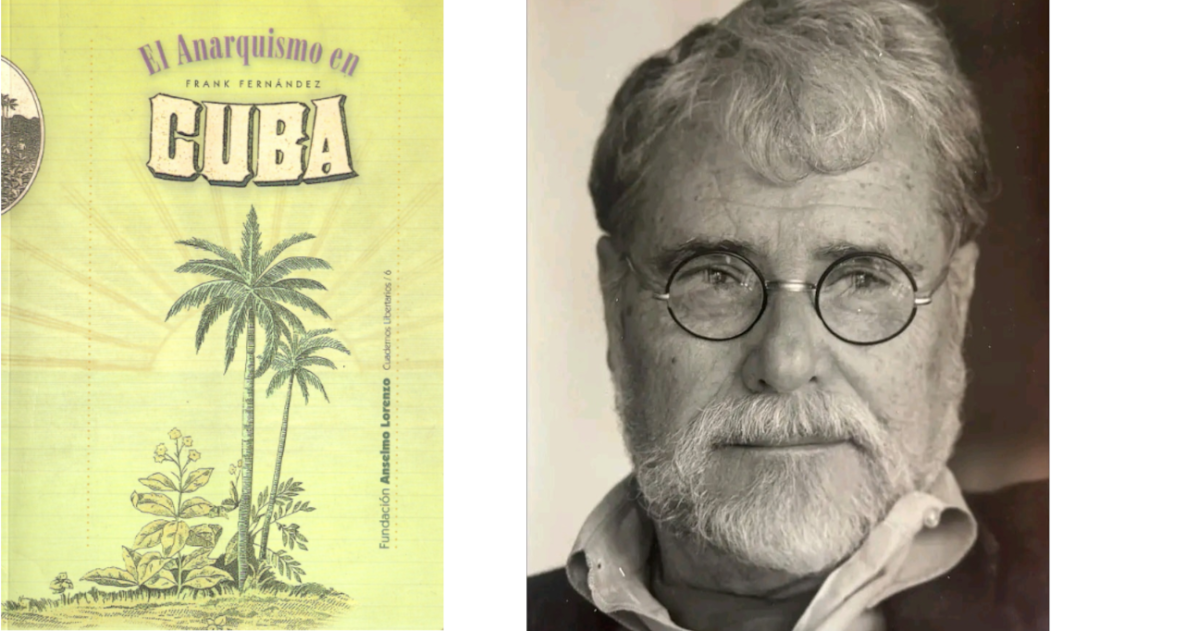
Frank Fernández (1932–2026). Historian of Cuban anarchism, libertarian activist and intellectual in exile.

Daniel Pinós, Redes libertarias (26/01/20269

Francisco Fernández, known in activist and intellectual circles as Frank Fernández, died in Miami, Florida, on January 18, 2026, at the age of 92, from infectious complications following his hospitalisation in intensive care. His death marks a significant loss for the historiography of Cuban anarchism and, more generally, for the social and political history of the Caribbean.

Continue reading
Posted in Commentary, Interview, News blog | Tagged , , , | Leave a comment

Phil A. Neel: Lies You Will Be Told

From Ill Will (25/01/2026)


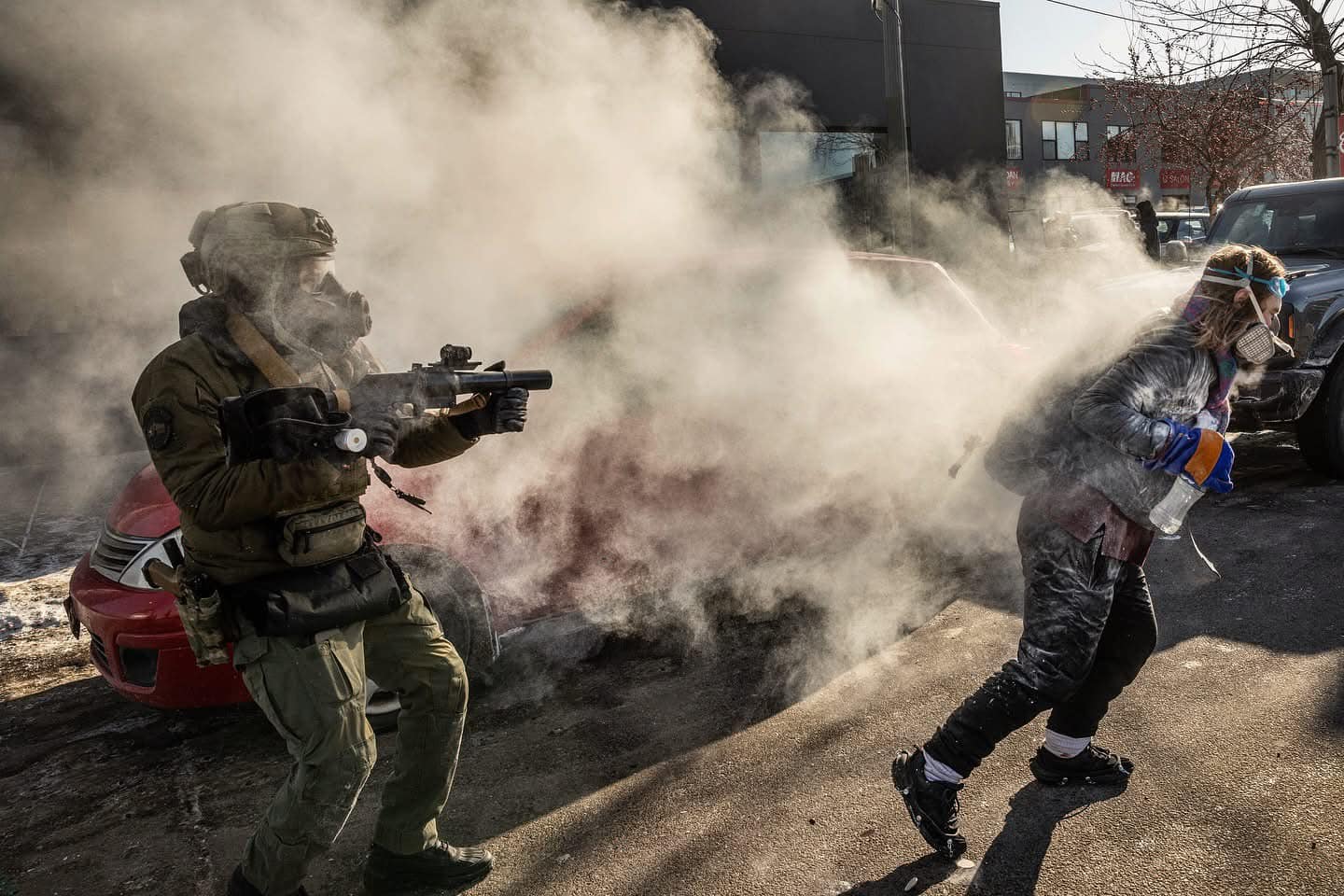
The frozen city is under siege. In the long cold winters at the heart of the Midwest the air can get so cold it hurts to breathe. Masked mercenaries in unmarked vehicles rove through the snowbanks, snatching people off the street and shuttling them to detention centers for indefinite periods of time. Each of the mercenaries is paid tens of thousands in a “signing bonus” (up to 50k, and 60k in student loan forgiveness) simply to take up arms on behalf of the embattled regime. Faced with a slow-motion economic crisis in which a surreal, state-backed stock market boom is paired with persistent stagflation in the everyday economy, bootlicking is one of the few industries seeing any real growth. As the streets freeze in Minneapolis, the S&P reaches record highs. Meanwhile, the last year’s employment growth was so dismal that, after the numbers were released, the regime moved quickly to fire the head of the Bureau of Labor Statistics and threaten media outlets reporting on the figures.1 In addition to declining employment due to the freeze on immigration, the depth of the crisis is signaled by the ongoing drop in the Labor Force Participation Rate, which served as the largest single drag on employment growth in the first half of 2025 — indicating that more and more people are dropping out of the labor force entirely, but not being picked up by unemployment statistics.2 We can therefore think of the siege as sort of mercenary Keynesianism, making up for the lack of employment in the new AI-powered defense sectors that have been the focus of the larger plunder-and-restructure approach to governance.

Continue reading
Posted in Commentary | Tagged , , , | Leave a comment

Daniel Colson: Reflections on anarchism

Photograph by Michel Cabaud

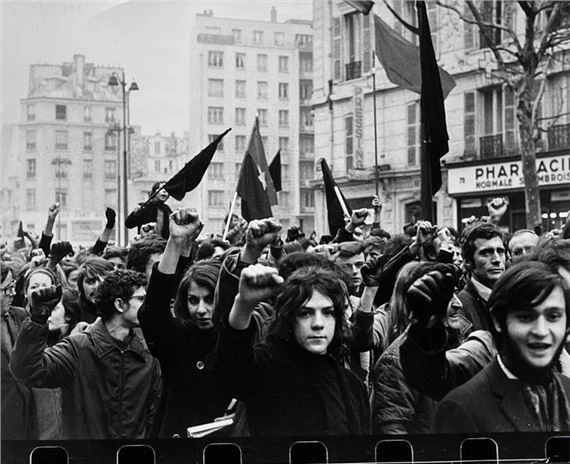
We share below an interview with Daniel Colson for the French magazine, Ballast (02/02/2015). Recently deceased, Colson’s philosophical readings of the anarchist tradition are among the most significant of the post-May 68 generation.

Continue reading
Posted in Commentary, Interview | Tagged , , | Leave a comment