If you would be a poet, discover a new way for mortals to inhabit the earth.
Lawrence Ferlinghetti, Poetry is insurgent art
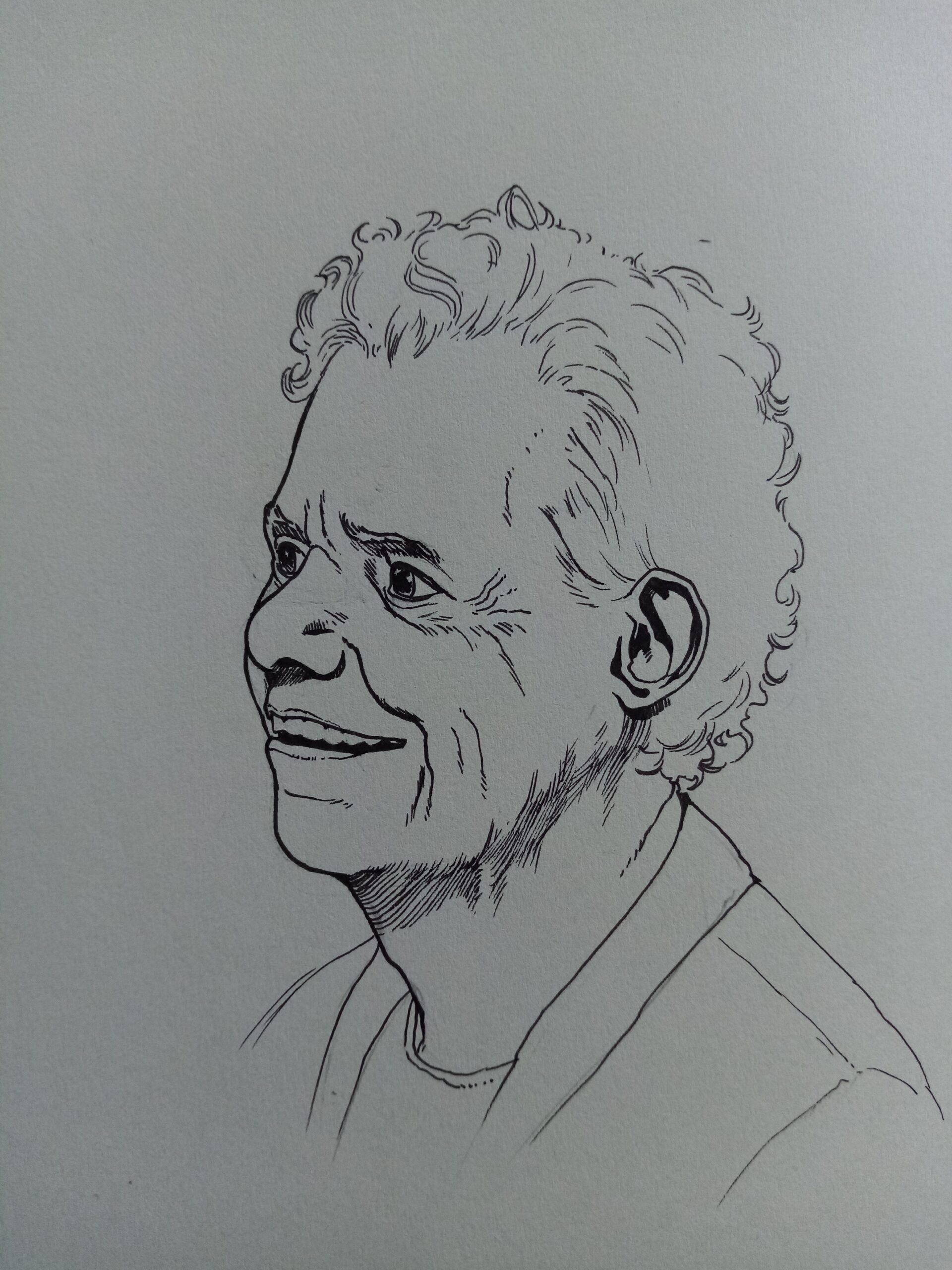
Celebrating Lawrence Ferlinghetti (1919-2021), anarchist, poet, publisher of the Beat poets, and a founder of City Lights Bookstore in San Francisco, who died on February 22, 2021.
From the CrimethInc. collective, news from greece ...
Greece: The Ghost of Junta Past Returns
The Hunger Strike of Dimitris Koufontinas
We are writing from the same lockdown conditions here in Athens that we have reported on for months. Despite stringent measures—or perhaps because of the ways that the government has combined these with policies to promote tourism and consumption despite the pandemic—infection rates continue to soar. Hospitals have reached 89 percent ICU capacity accommodating COVID-19 cases.
But actually history is not the soil of happiness. The periods of happiness are blank pages in it. […] In world history only those peoples that form states can come to our notice.
G.W.F. Hegel, General Introduction to the Philosophy of History
What causes historical events? Power. What is power? Power is the collective will of the people transferred to one person. Under what condition is the will of the people delegated to one person? On condition that that person expresses the will of the whole people. That is, power is power: in other words, power is a word the meaning of which we do not understand.
Leo Tolstoy, War and Peace
In a recent text (La guerra e la pace), Giorgio Agamben reminds us that the state, war and history form an unbreakable trinity. There is no state without the violence of sovereignty, the non-legal decision on what lies beyond the law, the permanent state of exception-war that underlies government. And history is the chronicle of state war, “the slaughter-bench at which the happiness of peoples, the wisdom of states, and the virtue of individuals have been sacrificed.” (G.W.F. Hegel, General Introduction to the Philosophy of History). Without the state, there would be no history.
History combines in our language the objective as well as the subjective side. It means both the historiam rerum gestarum and the res gestas themselves, both the events and the narration of the events. (It means both Geschehen and Geschichte.) This connection of the two meanings must be regarded as highly significant and not merely accidental. We must hold that the narration of history and historical deeds and events appear at the same time; a common inner principle brings them forth together. Family memories, patriarchal traditions have an interest confined to the family and the tribe. The uniform course of events under such conditions is not an object for memory. But distinctive events or turns of fortune may rouse Mnemosyne to form images of them, just as love and religious sentiments stimulate the imagination to give shape to an originally formless impulse. But it is the State which first presents subject matter that is not only appropriate for the prose of history but creates it together with itself. A community which acquires a stable existence and elevates itself into a state requires more than merely subjective mandates of government, sufficient only for the needs of the moment. It requires rules, laws, universal and universally valid norms. It thus produces a record of, and interest in, intelligent, definite, and in their effects lasting actions and events. To these, Mnemosyne, in order to perpetuate the formation and constitution of the State, is impelled to add duration by remembrance.
G.W.F. Hegel, General Introduction to the Philosophy of History
Following Agamben, the current and much repeated declaration of war on the Covid-19 virus thus extends war into an explicitly permanent state of affairs, an enduring state of crisis and exception which opens onto a new history of non-freedom.
Agamben also reminds us of Leo Tolstoy’s distinction between peace and war. “In his novel Tolstoy contrasts peace, in which men follow their desires, their feelings and their thoughts more or less freely and which appears to him as the only reality, with the abstraction and the lie of war in which everything seems to be dragged along by an inexorable necessity.” (Agamben, War and Peace, ill will editions translation)
Peace is thus to be found beyond or outside of history, beyond the reach of the state. Tolstoy will call this beyond anarchy and will describe it in religious terms as the kingdom of God, that is, the ethical reign of love freed of the law.
In Agamben’s words: “It is possible, however, that the war on the virus, which seemed to be an ideal apparatus, which governments can measure and direct according to their needs far more easily than a real war, ends up, like any war, getting out of hand. And, perhaps, at that point, if it is not too late, men will once again seek that ungovernable peace which they have so unwisely abandoned.” (Agamben, War and Peace)
In memory of a much neglected “anarchist” in these our pandemic times, a selection of Leo Tolstoy’s “political” writings.
Posted the CrimethInc. collective, anarchist reflections from Brazil (22/02/2021) …
Brazil: Epicenter of the Virus of Populism – A Year of Catastrophe and Resistance
In the following analysis, anarchists in Brazil examine how the pandemic and rising far-right populism coincide in a colonial extraction economy, surveying a society headed for catastrophic collapse. In this context, self-organized mutual aid and collective defense projects involving delivery drivers, football fans, Indigenous organizers, squatters, residents of the favelas and the urban periphery, anti-fascists, and other targeted populations may indeed represent our only hope of survival.
Reflections on the Covid-19 pandemic and capitalism, by Gilles Dauvé (posted on trop loin). Without fully embracing Dauvé’s “Marxism”, there is much here for thought …
Until the early days of 2020, when they spoke of “viruses”, Westerners usually meant something was wrong with their computers (Asians were arguably better informed). Of course, everyone knew the medical meaning of the word, but these viruses remained far away (Ebola), relatively silent despite the 3 million annual deaths from AIDS (HIV), even banal (winter flu, cause of “only” 10,000 deaths in France each year). And if sickness struck, medicine worked miracles. It had even done away with space: from New York, a surgeon could operate upon a patient in Strasbourg.
Back then, it was mostly the machines that got sick.
After the imprisonment of rapper Pablo Hasél for a song against the monarchy, after the violent repression of the protests against his imprisonment, after the totally unpunished demonstration of neo-Nazis in Madrid praising the División Azul/Blue Division, after the unleashed police action in Linares, after months of a dusk curfew while every morning we go to work like sardines in trains, or even after the rush to put the Procés prisoners back in prison after the bad results for the regime in the Catalan elections, we are living through a new turn of events in the Spanish state.
With the arrest and incarceration of the rapper Pablo Hasél on Tuesday (16/02/2021) by the spanish authorities for the crimes of offending the crown and promoting terrorism under the country’s law on public security (Ley Orgánica de protección de la seguridad ciudadana), otherwise known as the “Ley Mordaza/Gag Law” (The Guardian; The New York Times), thousands have protested throughout the country with the usual parade of injured, arrested and hospitalised by the police. (El Salto Diario)
Hasél was condemned by spanish courts in 2018, one of over a hundred people condemned for the same crimes since the introduction of the law. (El Salto Diario)
We republish below our statement of solidarity with Hasél of 2018, followed by a letter of solidarity from Alfonso Fernández Ortega (“Alfon”), an anti-fascist activist also formerly condemned and imprisoned under the same law. (Público)
Music is our witness, and our ally. The ‘beat’ is the confession which recognises, changes, and conquers time. Then, history becomes a garment we can wear, and share, and not a cloak in which to hide; and time becomes a friend.
James Baldwin, Of the Sorrow Songs: The Cross of Redemption
To be a jazz freedom fighter is to attempt to galvanize and energize world-weary people into forms of organization with accountable leadership that promote critical exchange and broad reflection. The interplay of individuality and unity is not one of uniformity and unanimity imposed from above but rather of conflict among diverse groupings that reach a dynamic consensus subject to questioning and criticism. As with a soloist in a jazz quartet, quintet or band, individuality is promoted in order to sustain and increase the creative tension with the group–a tension that yields higher levels of performance to achieve the aim of the collective project. This kind of critical and democratic sensibility flies in the face of any policing of borders and boundaries of “blackness”, “maleness”, “femaleness”, or “whiteness”.
Cornel West, Race Matters
It was the music. […] It made you do unwise disorderly things. Just hearing it was like violating the law.
Toni Morrison, Jazz
Chick Corea’s music speaks for itself. We can only humbly celebrate its beauty. Often described as “jazz fusion”, its improvisational freedom resonates – or can we say, should resonate -, with the same improvisational freedom that is anarchism as a form of life.
The concept of “jazz fusion” perhaps masks more than it reveals, especially with Corea. He was part of a generation of jazz musicians who borrowed freely from other popular musics of his time (rock, r&b, soul, funk, and so on). But Corea always “borrowed”, because as he so often said, he was an permanent student of other musicians and diverse musical traditions, and his almost child-like joy in sharing what he learned and created is every in his music and his playing.
Without any pretense to sharing a “best of” Corea’s music, what follows is a personal choice among so much more.
Mutual aid works within the fissures and cracks of state and corporate management; it develops within spaces partially outside the reach of their power. It has the capacity to weave relations of support and autonomy, thereby generating new subjectivities and forms of life. If an anti-capitalism is to gain roots beyond moments of explicit insurrection, it is at this level.
We share the latest article (08/02/2021) in the CrimethInc. collective’s series exploring mutual aid projects around the world in the age of COVID-19, including profiles of efforts in New York City, Poland, and Brazil. You can read more about anarchist hurricane relief efforts here.
Puerto Rico: The Road to Decolonization
Disaster Relief, Mutual Aid, and Revolt
Throughout the tumultuous year of 2020, people in many parts of the world were jolted into rediscovering the importance of relying on one another. The people of Puerto Rico, however, have long understood the power of mutual aid as a means of both survival and resistance. After Hurricane Maria devastated the island in September 2017—inflicting nearly 3000 deaths, robbing thousands of shelter, and leaving millions without electricity, tap water, and phone service—Puerto Ricans self-organized at the grassroots level to meet each other’s immediate needs in view of the grossly inadequate responses of both local and federal government.
News and reflections from Tunisia shared withthe CrimethInc. collective (09/02/2021) and a video called “Ten“, a record of some of the many voices of Tunisia’s rebellions produced by the Nawaat news magazine …
Ten – Ten years after Tunisia’s revolution, a group of young activists set out to sea, on a route used for irregular migration. As they sail along they discuss some of the most important issues they have confronted over the past decade.
…
Tunisia: From the 2011 Revolution to the Revolt of 2021: New Stirrings in North Africa
On December 17, 2010, a young Tunisian named Mohamed Bouazizi set himself on fire to protest his treatment at the hands of police, setting in motion the wave of uprisings that came to be known as the Arab Spring. Today, Tunisia is experiencing its largest grassroots revolt since those days, with thousands in the streets confronting the police week after week. In the following report, our Tunisian comrades explain the context of this new revolt, exploring what has changed and what remains the same. What we see in Tunisia is a foretaste of the next round of revolutionary movements in the region.
The above photograph shows participants in the Tunisian anti-fascist group Wrong Generation carrying a banner proclaiming their slogan, “There is anger under the ground.”
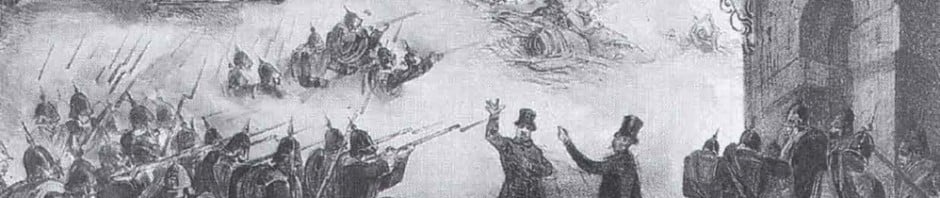




Leo Tolstoy remembered against the pandemic
But actually history is not the soil of happiness. The periods of happiness are blank pages in it. […] In world history only those peoples that form states can come to our notice.
G.W.F. Hegel, General Introduction to the Philosophy of History
What causes historical events? Power. What is power? Power is the collective will of the people transferred to one person. Under what condition is the will of the people delegated to one person? On condition that that person expresses the will of the whole people. That is, power is power: in other words, power is a word the meaning of which we do not understand.
Leo Tolstoy, War and Peace
In a recent text (La guerra e la pace), Giorgio Agamben reminds us that the state, war and history form an unbreakable trinity. There is no state without the violence of sovereignty, the non-legal decision on what lies beyond the law, the permanent state of exception-war that underlies government. And history is the chronicle of state war, “the slaughter-bench at which the happiness of peoples, the wisdom of states, and the virtue of individuals have been sacrificed.” (G.W.F. Hegel, General Introduction to the Philosophy of History). Without the state, there would be no history.
Following Agamben, the current and much repeated declaration of war on the Covid-19 virus thus extends war into an explicitly permanent state of affairs, an enduring state of crisis and exception which opens onto a new history of non-freedom.
Agamben also reminds us of Leo Tolstoy’s distinction between peace and war. “In his novel Tolstoy contrasts peace, in which men follow their desires, their feelings and their thoughts more or less freely and which appears to him as the only reality, with the abstraction and the lie of war in which everything seems to be dragged along by an inexorable necessity.” (Agamben, War and Peace, ill will editions translation)
Peace is thus to be found beyond or outside of history, beyond the reach of the state. Tolstoy will call this beyond anarchy and will describe it in religious terms as the kingdom of God, that is, the ethical reign of love freed of the law.
In Agamben’s words: “It is possible, however, that the war on the virus, which seemed to be an ideal apparatus, which governments can measure and direct according to their needs far more easily than a real war, ends up, like any war, getting out of hand. And, perhaps, at that point, if it is not too late, men will once again seek that ungovernable peace which they have so unwisely abandoned.” (Agamben, War and Peace)
In memory of a much neglected “anarchist” in these our pandemic times, a selection of Leo Tolstoy’s “political” writings.
Continue reading →