Early on June 24, Vladimir Putin addressed Russia about the unfolding rebellion of the Wagner private military company, saying that Yevgeny Prigozhin’s rebellion is “pushing the country toward anarchy and fratricide.”
This is a misuse of words. Fratricide has long been the rule under Putin. Torturing and assassinating dissidents was fratricide. Invading Ukraine was fratricide. Both the Wagner company and the Russian military have made fratricide their profession. Anarchy is the opposite of fratricide: it is the condition that prevails when people do not compete to rule each other. Totalitarianism always leads to bloody conflicts over power.
A message from Serge, Who Survived Attempted Murder at the Hands of the French Police
Below, we present a translation of the first message from Serge since French police seriously injured him along with many other people during a protest in Sainte-Soline on March 25, 2023. Serge spent a month in a coma after a policeman shot a grenade at his head. We have been following his situation with anxiety and it is with great relief that we report that he has recovered enough to post this message.
Justice consists in seeing that no harm is done to men. Whenever a man cries inwardly: “Why am I being hurt?” harm is being done to him. He is often mistaken when he tries to define the harm, and why and by whom it is being inflicted on him. But the cry itself is infallible.
Simone Weil, La Personne et le sacré
There are moments in our lives, in our experiences, which so powerfully call up images and words, that it is difficult not to return to them, as an exercise of recollection, but also of understanding; to verify in fact whether the words once read bring light to what is now experienced and, from this, to learn to read the words again, to feel their life anew.
The recent viewing of drone footage of the surrender of a Russian soldier to Ukrainian soldiers on the Bakhmut front was one such occasion. It was modest of course, in retrospect – for the simple reason that what we saw, we saw from a distance, mediated by a video recording –, but it so forcefully called to mind a late essay by Simone Weil, that we returned to it. And now, we share it, in the conviction that it radically puts into question a great deal about how “we” think about “radical politics”.
We obviously leave it to others to judge the relevance of our experience. But whatever conclusions others may come to, Weil’s essay remains a powerfully eloquent call for a way of life which begins from what she called the “sacred”.
On 14 June 2023, a fishing boat carrying migrants sank in international waters in the Ionian Sea off the coast of Pylos, Messenia, Greece. The boat, which left Tobruk, Libya, on 10 June, carried an estimated 400 to 750 migrants. 104 people were rescued, 82 bodies have been recovered and hundreds are missing and presumed dead. (The Guardian, 04/06/2023)
Circe is a powerful witch that Homer also calls polypharmakos: the one who masters the pharmakon, both remedy and poison. After sharing her bed, the witch tells Odysseus that before leaving for Ithaca, he must go to the kingdom of the dead and see the diviner Tiresias. To go to sea is to leave for this world in between, between life and death, and that, not only because the sea has its dangers. More fundamentally still, what the myth condenses into a sensible idea is that the sea, not being solid ground, does not belong to this or that, its world is between two worlds. Aristotle, who preferred taxonomies to myths, will say that there are three species of human beings: the dead, the living, and those who go to the sea.
We are urgently working to deliver more for people and the planet. … We are urgently working to fight poverty and inequalities. … We want a system that better addresses development needs and vulnerabilities, now heightened by climate risks, which could further weaken countries’ ability to eliminate poverty and achieve inclusive economic growth. … We want our system to deliver more for the planet. … We are convinced that poverty reduction and protection of the planet are converging objectives. … We, leaders of diverse economies from every corner of the world, are united in our determination to forge a new global consensus. … Achieving our development goals, including climate mitigation, will also depend on scaling up private capital flows. This requires enhanced mobilisation of the private sector with its financial resources and its innovative strength, as promoted by the G20 Compact with Africa. This also requires improving the business environment, implementing common standards and adequate capacity building, and reducing perceived risks, such as in foreign exchange and credit markets. This may require public support, as well as sharing reliable data. Overall, our system needs to lower the cost of capital for sustainable development, including through the green transition in developing and emerging economies. … Our work together is all about solidarity and collective action, to reduce the challenges facing developing countries and to fulfil our global agenda.
Emmanuel Macron, Mia Mottley, Luiz Inácio Lula da Silva, Ursula von der Leyen, Charles Michel, Olaf Scholz, Fumio Kishida, William Ruto, Macky Sall, Cyril Ramaphosa, Mohamed bin Zayed Al Nahyan, Rishi Sunak and Joe Biden[1] (The Guardian, 21/06/2023)
It is difficult to know what to make of these words, from an open letter signed by the leaders of some of the richest countries of the world (as such wealth is measured) – and the not so rich, perhaps as testimony to the “brotherhood of nations”.
Exploding over the past year, the Russian invasion of Ukraine and Israel’s escalating violence and ethnic cleansing in Palestine have become two centers of a deepening global crisis. For the international left, the Ukraine war and Palestine catastrophe, both on their own and together, pose very big tests of theory and more importantly, of politics.
A question has bedeviled the left: Is it possible to support both the Ukrainian and Palestinian struggles, and oppose imperialism, at the same time? Actually, the question should be reversed: How is it possible for a genuinely internationalist left not to support both of these struggles for self-determination and national survival?
On 31 May the Southern District Military Court in Rostov-on-Don sentenced Igor Paskar to eight-and-a-half years’ imprisonment on charges of “vandalism” and “terrorism”. He was found guilty of burning a Z-banner [a pro-war symbol] and the symbolic firebombing of the FSB [Federal Security Service] building in Krasnodar. The day before his sentencing, Igor gave his final statement in court. Here is a translation of his speech:
Almost a year has gone by since I carried out this action. During that year, I pictured this moment time and again, the moment when I would be given the opportunity to make my final statement. I agonised over the words I would say, and the motives that drove me to act as I did.
So common is the conceptualization of reactionaries as having “anti-sex” politics that it is hardly remarked upon. They hate sex workers, they hate it when women and other marginalized genders have a lot of sex, queer sex, or extramarital sex, they want to keep children from any form of sexual education, etc. What do these all have in common? Sex! So it really must be that the right-wing is anti-sex.
It is an easy conclusion, too easy, and so reductive as to render itself useless as a framework for political analysis. Reactionaries are not, nor have they ever been, anti-sex. Instead, what they really believe in is the politics of compulsory sexuality and patriarchal sexual control. Not only is reducing right wing ideology to being simply “anti-sex” inaccurate, it also positions those in opposition to reactionary politics as necessarily “pro-sex.” This frames sex as an inherent political “good” to be defended, when in reality what is in need of defending is bodily autonomy and consent.
… if there were only some way of contriving that a state or an army should be made up of lovers and their loves (compare Rep.), they would be the very best governors of their own city, abstaining from all dishonour, and emulating one another in honour; and when fighting at each other’s side, although a mere handful, they would overcome the world. For what lover would not choose rather to be seen by all mankind than by his beloved, either when abandoning his post or throwing away his arms? He would be ready to die a thousand deaths rather than endure this. Or who would desert his beloved or fail him in the hour of danger? The veriest coward would become an inspired hero, equal to the bravest, at such a time; Love would inspire him. That courage which, as Homer says, the god breathes into the souls of some heroes, Love of his own nature infuses into the lover.
Plato, The Symposium
“To remember” – to recall, to not forget, to bear in mind, to look back on, to cherish and to prize, to celebrate; it is this rich semantic field that we labour when we return to the past and extol riots and rebellions, not to confine the past to the past, but to give it life still, in the here and now. “All sensation is already memory”, wrote Henri Bergson. But should the memories die, our experience becomes the less for it.
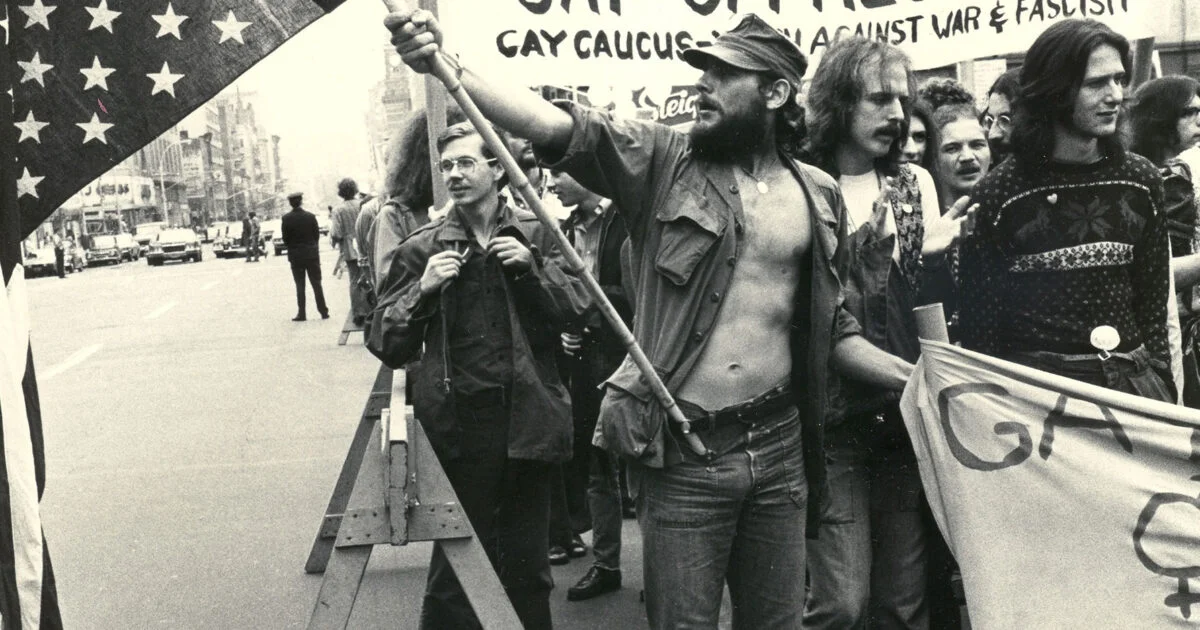
To remember the Stonewall riots of 1969, we share two texts: a selection from the Queer Nation Manifesto of 1990 and (Verso Books blog) and a reflection on gender subversion from the CrimethInc. collective, and between them, a brief and immensely lucid discussion by Judith Butler on the politics of gender.
Step forward: we hear That you are a good man. You cannot be bought, but the lightning Which strikes the house, also Cannot be bought. You hold to what you said. But what did you say? You are honest, you say your opinion. Which opinion? You are brave. Against whom? You are wise. For whom? You do not consider your personal advantages. Whose advantages do you consider then? You are a good friend. Are you also a good friend of the good people?
Hear us then: we know. You are our enemy. This is why we shall Now put you in front of a wall. But in consideration of your merits and good qualities We shall put you in front of a good wall and shoot you With a good bullet from a good gun and bury you With a good shovel in the good earth.
Bertolt Brecht, The Interrogation of the Good
The debate about the “correctness” of anarchists (and “leftists” more broadly) supporting and participating in the resistance to the Russian invasion of Ukraine – a debate that animates anarchists who are largely outside Ukraine – is overwhelmingly ideological, and perhaps nothing is more revealing of the “limits” of contemporary anarchism(s) than the fact that the controversy is largely ideological.
(This is not to say that all anarchists outside Ukraine fall into this category, as the many who have volunteered to resist the Russian invasion, in a variety of ways, both inside and outside Ukraine, testify to).
“We” sit on the sidelines, judging, pontificating, excommunicating, with seemingly little awareness of the irrelevance of “our” judgements to what is at hand. “We” proclaim moral-political principles with a consoling, but also passive, “purity of heart”. “Anti-militarism”, “anti-nationalism”, “anti-statism”, are elevated to status of absolute principles, bloodless and empty; like flags hoisted high, they but flutter in the winds of events.
Events and acts however are not, and cannot be, distilled from principles. And as events and acts unfold over time, we can at best, in the effort to understand them, attempt to follow them as closely as possible.
And what concepts are thereby developed, created (e.g., “nation”, “nationalism”, “nation-state”, etc.), must be as sensitive and pliable as possible so as to render social-political reality legible.
With this aim, we share below a series of interviews conducted by members of the lundimatin collective with anti-authoritarian militants engaged, in different ways, in the Ukrainian resistance (the subtitling is in French, but much of the interviews are conducted in English), followed by a fundamental anarchist reflection on “nationalism” by Fredy Perlman.
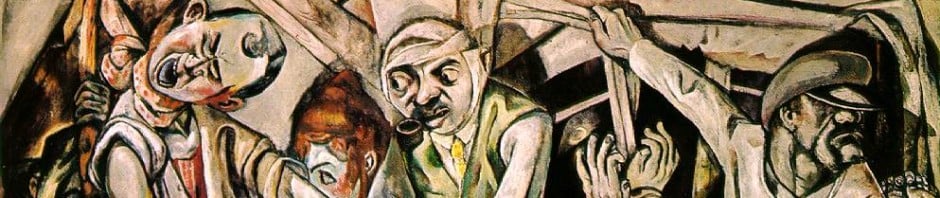







Simone Weil: La Personne et le sacré/Human Personality
Justice consists in seeing that no harm is done to men. Whenever a man cries inwardly: “Why am I being hurt?” harm is being done to him. He is often mistaken when he tries to define the harm, and why and by whom it is being inflicted on him. But the cry itself is infallible.
Simone Weil, La Personne et le sacré
There are moments in our lives, in our experiences, which so powerfully call up images and words, that it is difficult not to return to them, as an exercise of recollection, but also of understanding; to verify in fact whether the words once read bring light to what is now experienced and, from this, to learn to read the words again, to feel their life anew.
The recent viewing of drone footage of the surrender of a Russian soldier to Ukrainian soldiers on the Bakhmut front was one such occasion. It was modest of course, in retrospect – for the simple reason that what we saw, we saw from a distance, mediated by a video recording –, but it so forcefully called to mind a late essay by Simone Weil, that we returned to it. And now, we share it, in the conviction that it radically puts into question a great deal about how “we” think about “radical politics”.
We obviously leave it to others to judge the relevance of our experience. But whatever conclusions others may come to, Weil’s essay remains a powerfully eloquent call for a way of life which begins from what she called the “sacred”.
Continue reading →