

The limits of workers managed factories in the midst of capitalist economic relations are well known: the inability to acquire or control resources and supplies for production, the need to continue to produce for existing markets, the need to compete in markets thus submitting to capitalist practices, self-management reduced to the self-management of subsistence, external interests that seek the destruction of experiments in workers self-management.
Whatever their weaknesses though, such experiments are central to the construction of anti-capitalist forms of life. Through them, private property is questioned, collective self-management is lived and learned, non-oppressive relations become possible both within the industrial space and with communities outside the activities of production. Once we abandon the apocalyptic conception of revolution, the creation of spaces of autonomy beyond state and capitalist power is essential, both to contest State-Capital but also to create realities beyond both.



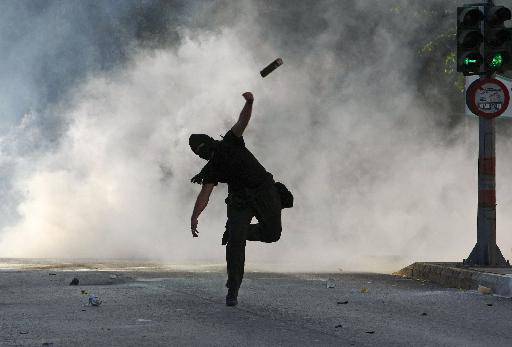


Taking back labour: Workers’ resistance and factory okupations in turkey
Labour struggles of workers continually strain against the limits of legality and labour union domestication. If salaried work, as traditionally understood, is not the exclusive domain of capitalist exploitation, it nevertheless remains central. And as workers discover, at times literally in the flesh, the impossibility of defending even a minimum of dignity in ever more violent conditions of work, the possibility of radicalisation emerges; a radicalisation that recent years has often been the child of broader social movements.
Stories from turkey, to share …
Continue reading →