
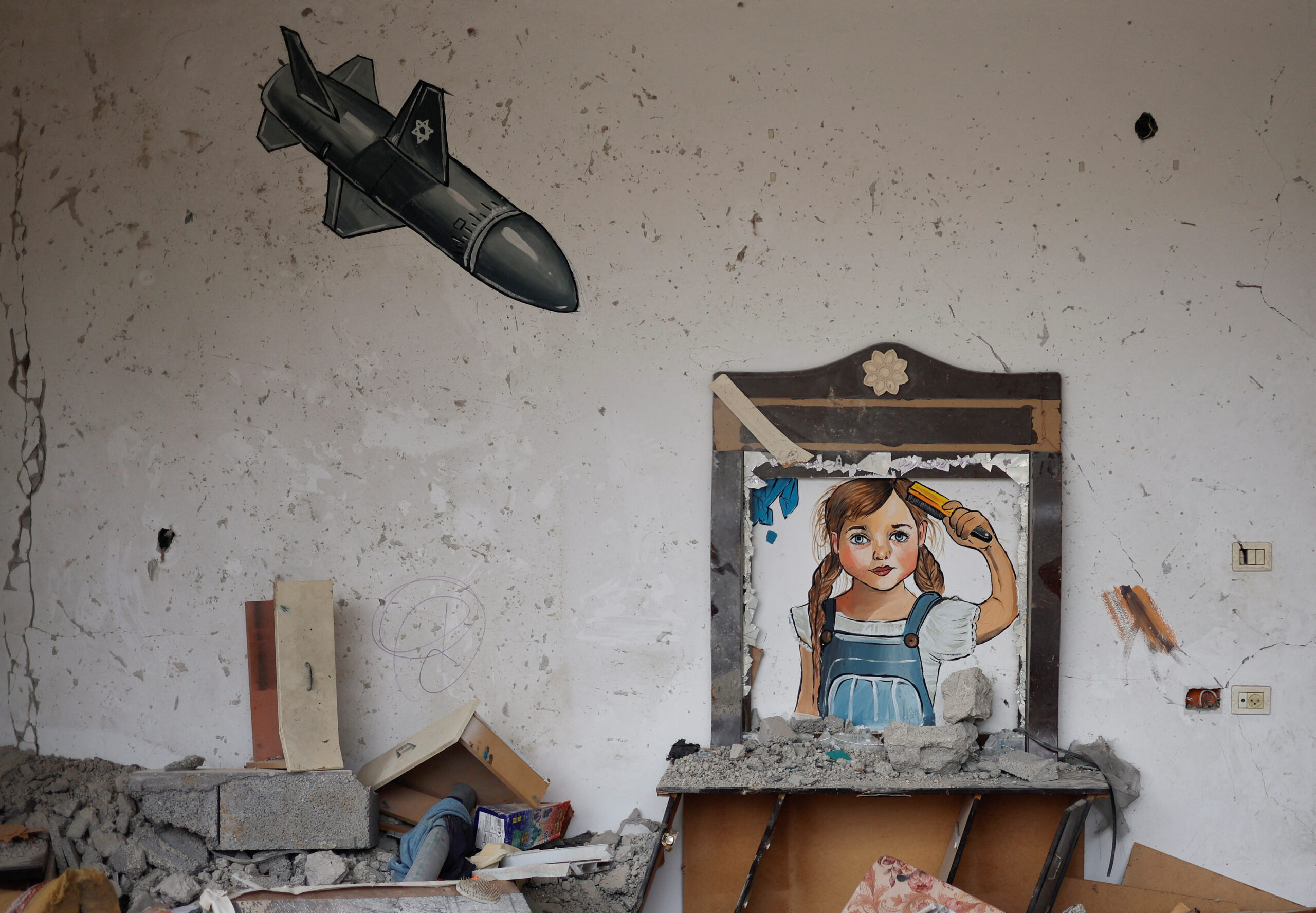
In December, Hudia, a refugee in Rafah, kept a diary of the horrors Israel has been visiting upon Gaza since October. This is testimonial 18 of the Palestine Uncensored series published on the Verso Books Blog.
Hudia, 13 February 2024
December 6, 2023
Gaza City and northern Gaza are completely annihilated, with only rare media coverage. The central part of the Gaza Strip is now annihilated by hunger, and high prices; its supplies of vegetables and goods were cut off after the south was separated from the central governorate.
In addition, it is being bombarded relentlessly day and night. Khan Yunis – the southern section of Gaza – is also being destroyed by displacement and continuous bombing. Rafah is bombed around the clock (I’m counting 8-12 seconds between bombs) and has received newly displaced people from Khan Yunis, but where are they supposed to go?
People sleep in tents and in the streets or in the shadows of shuttered businesses. The sounds of artillery, air and sea bombardment, and tank shells echo across the Gaza Strip from Rafah to Beit Hanoun. It’s a constant rush in your ears. There is no escape.
This situation requires no political, military, or strategic analysts. No sermon about steadfastness from leaders and media are going to help us right now. Gaza is absolutely no longer fit for life and it makes sense because I don’t think we are alive. We are ghosts and we should go and haunt the world, revealing what has happened to us.
Whole families have been tossed grieving along the streets. Shelter centers and schools are overflowing with broken, displaced people. Most stores have shut their doors because they’re empty of any supplies. What remains is small and non-essential. Prices are astronomical and crazy.
Lines from wherever there are any goods at all – long, long lines where you are stuck waiting for half the day.
Exhausted refugees are wearing filthy clothing (where can we wash dirty laundry?) Most of the women are in their prayer dresses. Wood burning stoves fill the main streets. Everything is cooked on wood fires now and they fill the air with smoke. The ground around them is blackened and people’s faces are blackened. This is a preview of the apocalypse: yes, right here in Gaza you can witness what the end of the world will look like.
As you walk, you pass faces of those who used to be proud and generous but are now humiliated and betrayed. They half-whisper, brokenly, in your ear: “I swear, I am not a beggar. But I was displaced from my home here and here. My family and children have nothing to eat. If you give me five shekels…”
This is only part of the picture, which is getting darker, more unbearable, and more painful every day with the siege and death. I do not know if death is worse than what people are experiencing now. What new, unthinkable circumstance will be thrown our way tomorrow? It’s too horrible to contemplate. I want to run away…
From the CrimethInc. collective (13/02/2024) …
An Anarchist from Jaffa on the Necessity of Anti-Colonial Strategies for Liberation
Four months into the assault on Gaza, the Israeli military has forced over a million refugees to the edge of the Egyptian border and is now bombing them while threatening to mount a ground assault against them. In the following text, Jonathan Pollak, a longtime participant in Anarchists Against the Wall and other anti-colonial solidarity efforts, explains why we should not look to international institutions or protest movements within Israeli society to put a stop to the genocide in Gaza and calls on ordinary people to take action.
A shorter version of this text was rejected by the liberal Israeli platform Haaretz—an indication of the diminishing space for dissent in Palestine and within Israeli society.
Continue reading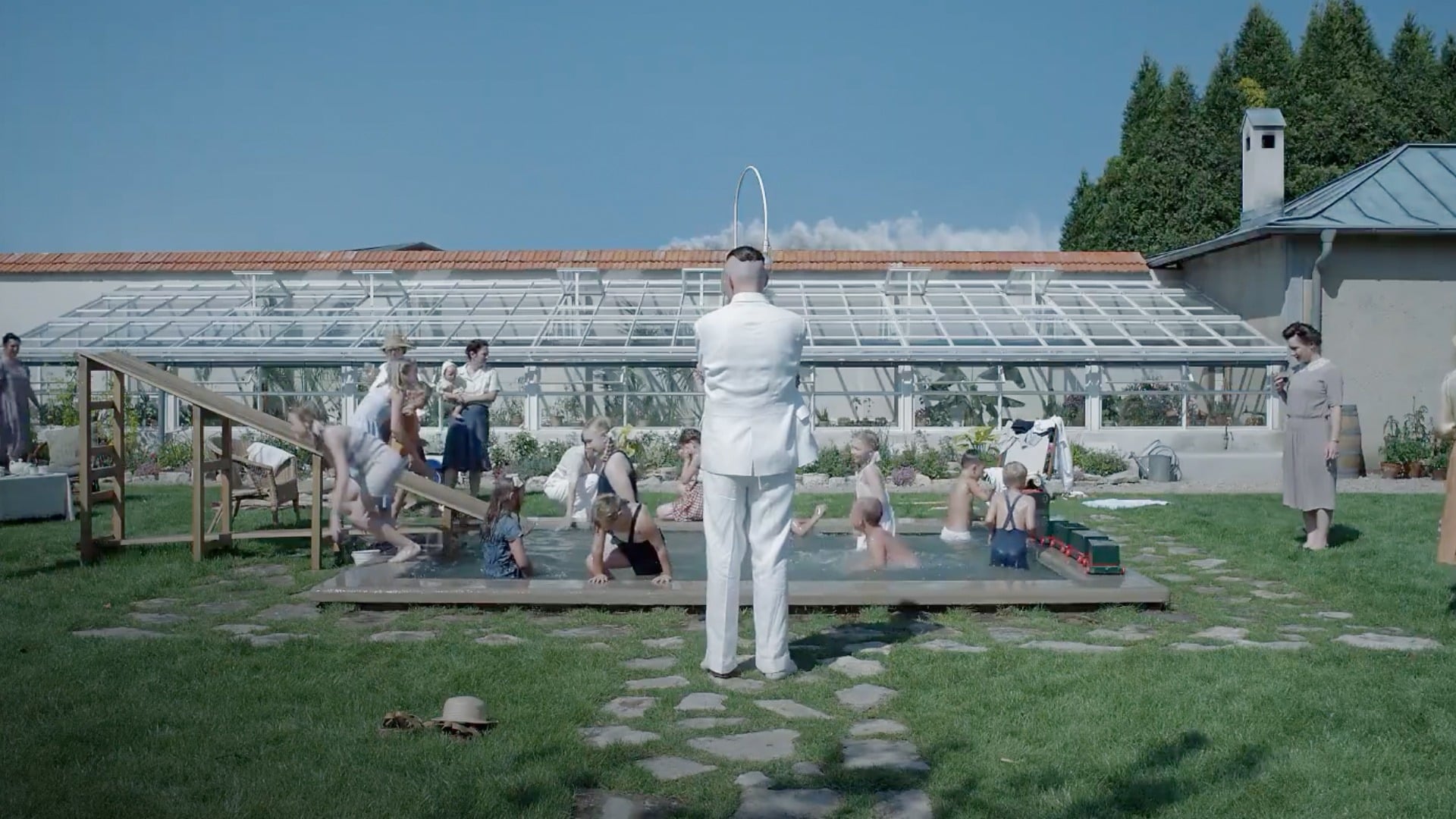


Jean-Marc Royer: Political philosophy of nuclear power
One day, [Noah] clothed himself in sackcloth and covered his head with ashes. Only a man who was mourning [the death of] a beloved child or his wife was allowed to do this. Clothed in the garb of truth, bearer of sorrow, he went back to the city, resolved to turn the curiosity, spitefulness, and superstition of its inhabitants to his advantage. Soon he had gathered around him a small curious crowd, and questions began to be asked. He was asked if someone had died and who the dead person was. Noah replied to them that many had died, and then, to the great amusement of his listeners, said that they themselves were the dead of whom he spoke. When he was asked when this catastrophe had taken place, he replied to them: “Tomorrow.” Profiting from their attention and confusion, Noah drew himself up to his full height and said these words: “The day after tomorrow, the flood will be something that has been. And when the flood will have been, everything that is will never have existed. When the flood will have carried off everything that is, everything that will have been, it will be too late to remember, for there will no longer be anyone alive. And so there will no longer be any difference between the dead and those who mourn them. If I have come before you, it is in order to reverse time, to mourn tomorrow’s dead today. The day after tomorrow it will be too late.” With this he went back whence he had come, took off the sackcloth [that he wore], cleaned his face of the ashes that covered it, and went to his workshop. That evening a carpenter knocked on his door and said to him: “Let me help you build an ark, so that it may become false.” Later a roofer joined them, saying: “It is raining over the mountains, let me help you, so that it may become false.”
Günther Anders, cited in Jean-Pierre Dupuy, The Mark of the Sacred, trans. M. B. DeBevoise (Stanford University Press, 2013), 203. (cf. e-flux journal, 09/2020)
From lundimatin, #414, 08/02/2024 …
The recent references to nuclear energy as green or alternative energy, prefiguring the so-called “ecological transition”[1] by European authorities or the Dubai conference, require that we come back to it seriously; and this includes the massive French recovery plan as well. On the other hand, the war between a state which possesses nuclear weapons and another which has six nuclear power stations on its soil revives all the forms of disaster inherent to its existence since 1945. This is the subject of the following text in eighteen theses, a text that proposes to return to the essence of nuclear power in order to propose a critical theory of it.
Continue reading →