For Alfredo M. Bonanno (1927-2023)

Being an anarchist does not mean one has reached a certainty or said once and for all, ‘There, from now on I hold the truth and as such, at least from the point of view of the idea, I am a privileged person’. Anyone who thinks like this is an anarchist in word alone. Instead the anarchist is someone who really puts themselves in doubt as such, as a person, and asks themselves: What is my life according to what I do and in relation to what I think? What connection do I manage to make each day in everything I do, a way of being an anarchist continually and not come to agreements, make little daily compromises, etc? Anarchism is not a concept that can be locked up in a word like a gravestone. It is not a political theory. It is a way of conceiving life, and life, young or old as we may be, whether we are old people or children, is not something final: it is a stake we must play day after day.

Alfredo M. Bonanno, The Anarchist Tension

Alfredo Bonanno’s elaboration and defence of “insurrectionalist anarchism” is undoubtedly his most significant theoretical-practical contribution to anarchism and, not coincidentally, his most contested.

Bonanno endeavoured to trace a path for anarchist politics in the wake of the waning of the working class as an agent of anti-capitalist struggle, born of changing social relations in modern capitalist society. His criticism of the anarchist-syndicalist tradition expresses what he understood as the need for a new orientation for anarchism, an orientation that could be described as an ethics and politics of militant opposition to the reign of capital in all social spheres. This translated into a rejection of formal mass anarchist organisations, as instruments of radical social change, and an ardent championing of “insurrection”: the permanent struggle against capitalist society, with the goal of its destruction, through concrete and situated actions that reflect and engender disruptive moments in the mechanics of capitalist social reproduction.

Continue reading
Posted in Commentary, News blog | Tagged , | Leave a comment

For Benjamin Zephaniah (1958-2023)

“Certainly, a lot of people in Britain, when you say ‘anarchists,’ they just think of riots. And the news will say, ‘Today, twenty anarchists went on a rampage.’ They don’t understand anarchism,” he said. “Politically, I’m a revolutionary. I believe in breaking the whole system down and f*cking starting again. And I can see that that’s not going to happen for a while. And when I say I’m a revolutionary, I’m an anarchist. I think that the political system we have right now lead to corruption at all kinds of levels,” he said.

Benjamin Zephaniah, interview from Psychology Today, 24 July 2018

People can write about anarchist theories as much they like but there are places that live without government and live peacefully and happily. A lack of power means people of course aren’t fighting over it and the main objective of society is to look after each other.

Benjamin Zephaniah, Palatinate, 27 October 2022

In a 2019 post, we shared Benjamin Zephaniah’s testimonial text, Why I am an anarchist. Today we mark his passing, celebrating the poetry and that artistry that he created, lived and shared with so many.

Continue reading
Posted in News blog, Poiesis | Tagged , , , , | Leave a comment

KAPT’AL

From lundimatin, #406, December 4, 2023.


KAPT’AL is not a God
It is a principle
It spreads like light or water or wind
And it expands
Imperturbably

***

Continue reading
Posted in Poiesis | Tagged , | Leave a comment

Eyal Weizman: The architecture of power in Israel’s war on the Palestinians

The architecture of colonialism and segregation by Israel is a multi-layered and shifting deployment of techniques of separation and surveillance; multi-layered because the well-known “wall of separation” in the West Bank is but one of a number physical obstacles employed to control, filter and condition the movement of Palestinians, pushing them away from the dominion of the settler colonies, while simultaneously facilitating interventions in nominally Palestinian held territories and shifting because the “walls” can be moved, added to and retracted, while the “walls” of the Palestinian spaces can be bypassed, pierced and/or destroyed.

If a “wall” serves as a physical marker of sovereignty – distinguishing friend from foe –, the plasticity and porosity of “walls”, as state practice-policy, means that who is friend and foe is rendered fluid. Or stated differently, those rendered “barbarians” by separation and exclusion are the creatures of a permanent state of exception, of an “anarchic” power, of the rule of barbarism.

The work of the Israeli architect. writer and activist, Eyal Weizman, has sought to map this architecture of power and violence in ways that reveal dimensions of the exercise of domination that are often neglected or forgotten.

We share below a series of video recorded reports and interviews with Weizman, followed by links to two of his published essays available online.


Continue reading
Posted in Commentary, Interview | Tagged , , , | Leave a comment

Judith Butler: Palestinians Are Not Being “Regarded as People” by Israel and US

The Truthout news service has generously given us permission to share an excellent interview with Judith Butler by George Yancy, on this most recent Israeli military campaign against Gaza and its people. (31/10/2023)


Judith Butler calls for immediate ceasefire, Palestinians’ right of return and the dismantling of colonial structures.

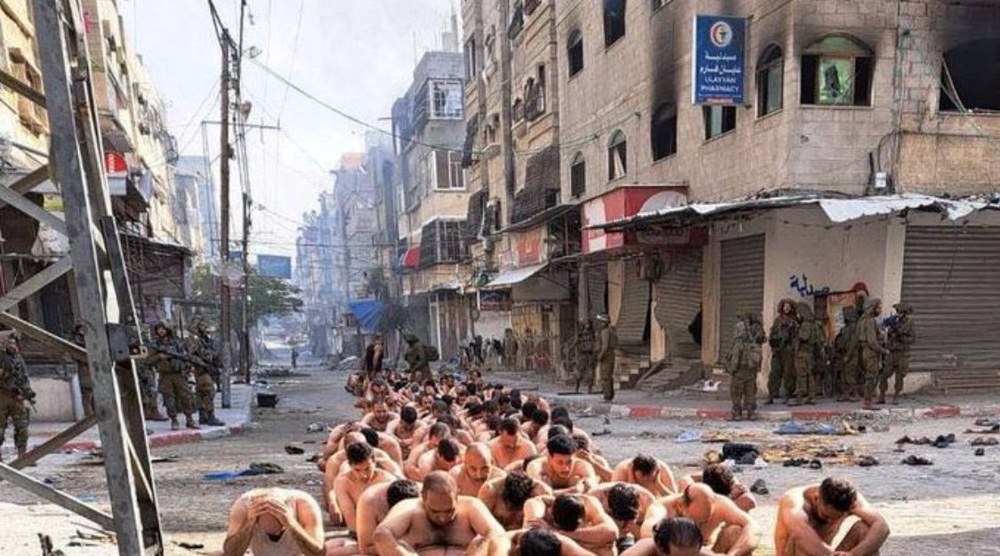
What’s happening in Gaza is genocide. The bodies keep falling, piling up. This is happening under our collective watch, our moment in history.

Israeli forces have now killed more than 8,300 people in Gaza, including at least 3,400 Palestinian children, and tens of thousands more face an acute risk of death as the Israeli military continues to prevent people in Gaza from accessing adequate food, clean water and functional medical care. The U.S. State Department has reportedly estimated that 30,000 babies under 6 months of age with barely formed immune systems are currently drinking contaminated water in Gaza. I dread to imagine the colossal ways in which illness and starvation wrought by conditions like these may soon push the death toll exponentially higher, even as Israel continues expanding its ground attacks under the cover of the ongoing communications blackout caused when Israeli forces severed Gaza’s phone and internet systems.

Continue reading
Posted in Commentary | Tagged , , , , , | Leave a comment

June Jordan: Poetry for Palestine

I am saying that the ultimate connection cannot be the enemy. The ultimate connection must be the need that we find between us … I must make the connection real between these strangers and me everywhere before those other clouds unify this ragged bunch of us, too late.

June Jordan, Report from the Bahamas, 1982


Continue reading
Posted in Poiesis | Tagged , , | 6 Comments

Support Bima!

(From Peter Gelderloos)

A last minute call for solidarity:

If you’re able to today, please send some aid to Bima, an anarchist comrade imprisoned in Indonesia! Bima is a writer, researcher, and organizer, and he helped me out a ton for my last book, connecting me to Dayak and anarchist groups resisting palm oil plantations in Kalimantan (Borneo). Palm oil production is connected to mass deforestation, genocide and displacement against indigenous Dayak communities, paramilitary violence, the local political elite, and major multinational corporations. To top it off, the oil is often marketed as a green energy source!

Bima needs some funds to get through the years ahead in prison. The money is necessary to get him sufficient food and clothing, and also to enable him to continue with his writing and research projects on the inside.

Check out this link! You can donate this money, and also read and help spread some of his earlier articles and books:

https://www.firefund.net/pustakacatut

Continue reading
Posted in News blog | Tagged | Leave a comment

Back to the Future

The Return of the Ultraliberal Right in Argentina

(From CrimethInc. 26/11/2023)

Last week, the extreme right won electoral victories in the Netherlands and Argentina. The global reactionary wave that brought Donald Trump to power did not subside with his electoral loss in 2020, nor with the defeat of Jair Bolsonaro in Brazil. In the following reflection, an Argentine anarchist explores why Javier Milei won the election and situates Milei’s politics in historical context. Although Milei’s “anarcho-capitalist” rhetoric may seem new, this is just the latest chapter of a story that is very old in Argentina: the combination of cutthroat capitalism with ruthless state violence.

Continue reading
Posted in Commentary | Tagged , , | Leave a comment

Raúl Zibechi: Argentina from below

From Desinformémonos (20/11/2023) …


With the triumph of Javier Milei, a cycle of Argentine politics closes, a cycle that began in December 2001 with the popular insurrection that overthrew the government of Fernando de la Rúa and his neoliberal policies without anaesthesia. The leadership that will occupy the administration of the State will have freer hands to dismantle social policies and repress those who resist.

Continue reading
Posted in Commentary | Tagged , , | 1 Comment

Peter Gelderloos: Israel is Committing Genocide

Revolution Was the Beginning by Sliman Mansour

From Peter Gelderloos’ blog/website, Surviving Leviathan, we share a recent essay (17/10/2023) by him on the current violence in Palestine/Israel.


What the Israeli government is currently doing to occupied Palestine meets all the criteria for genocide.

Time and again, the Israeli government has revealed that it supports the mass murder of Palestinian noncombatants, including children, babies, and the elderly. They support the mass expulsion of Palestinians from their homes, and the mass theft of Palestinian lands. The Israeli military bombs hospitals and houses, shoots unarmed children, and tortures political opponents, and the politicians and officers responsible do not get punished, they get rewarded.

Continue reading
Posted in Commentary, News blog | Tagged , , | Leave a comment