
From Ill Will (11/08/2025) and Colapso y desvio (07/04/2025), by Nueva Icaria.
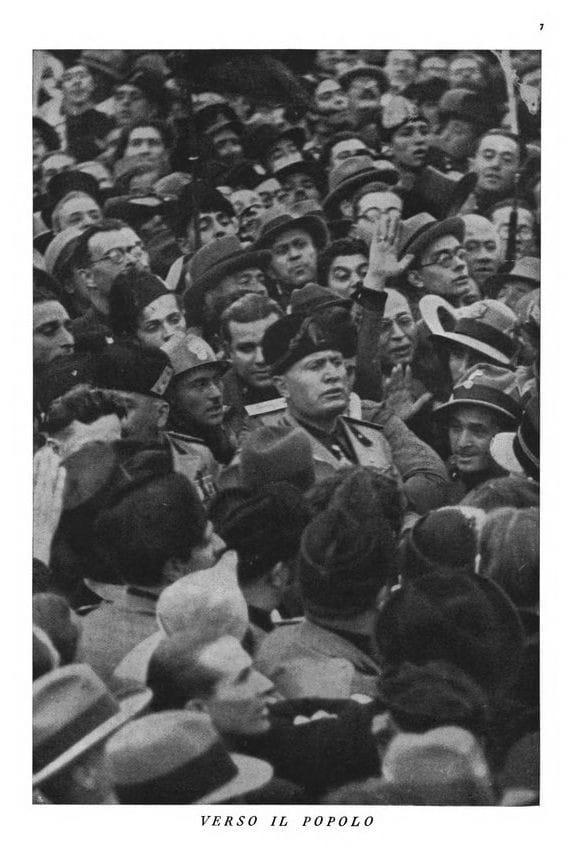
The present essay, written by friends in Chile, argues that the new fascisms of our day are not only generated by crises of capital, but must be understood as dynamically evolving reactions to its shifting needs. Drawing upon a wide range of influences from Bordiga, Marcuse, and Mattick to contemporary writers such as Lazzarato, Bifo, Toscano, and Endnotes, the authors trace the evolution of the “fascist solution” to capitalist crisis from its roots in the 20th century to today, emphasizing its tendency toward mutation, evolution, and adaptation. Among their important conclusions is that what sets the “new fascisms” apart from those of the past is not their emergence within the framework of democracy, which was already true of their 20th century predecessors. Rather, the difference lies in how contemporary liberal states “were able to perfect fascist policies and allow them to be deployed even within a democratic framework, to the point that they have been able to build an industry around crime and insecurity as justifications for the establishment of these policies.” In this respect, it is all the more striking that criticism of the fascistic tendencies of the Trump administration has not been accompanied by a thoroughgoing critique of democracy; instead, the progressive left has persisted in its wrongheaded belief in the total opposition between democracy and fascism. In the final analysis, the authors argue, this recognition of the reliance of latent fascisms upon preexisting democratic legal frameworks serves as a necessary precondition for thinking through the requirements of any possible communist revolution today, understood here as the practical abolition of capitalist social relations through the production of immediate measures that suppress its rigidly imposed social separations and fragmentation.
Continue reading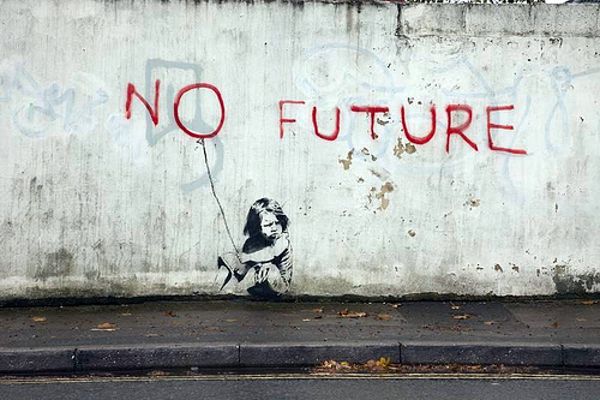


Counter-Utility: Ideas for avoiding the trap of useful things
A reflection on the necessary uselessness of radical thought-practice, published with Lobo suelto! (11/08/2025)
Produce or die is the motto of the West.
Pierre Clastres
They want to force us to govern, but we will not fall for that provocation.
The Invisible Committee
We may be of this world, but we are certainly not for it.
Andrew Culp
The social sciences and humanities have long been under attack for their ‘uselessness’. The social pact with the Masters of the World — on which their scientific legitimacy rested — has been broken, but this is nothing new. The rupture has manifested itself in many ways over the last few decades, and today it is particularly visible in the global reduction of public policies aimed at funding them. In Milei‘s Argentina, the scenario is moving towards a progressive and radical dismantling. Although this phenomenon could be interpreted as an obvious —and increasingly marked— anti-scientific stance in the world, that is, as a regression of human thought itself, it actually reveals something deeper. More than a decade ago, Fabián Ludueña Romandini already warned us about this: the brutal intensification of the cosmological conditions of the model of exploitation and accumulation in which we live, which demands, among other things, the abandonment of the concessions that at one time allowed the emergence of critical thinking within state science.
Continue reading →