
Eduardo Viveiros de Castro speaks of the indigenous as those who are still “tied” to a land for their well-being, as peoples whose “economy” is still significantly “local”; or indeed, who have no “economy”, as a separate and and dominate sphere of social life.
It is not that such peoples are completely severed from capitalist social relations. They are rather as of yet not fully colonised, not only materially (in production and consumption), but consciously-corporeally. And in many instances they resist/escape/create against, in different ways, that colonisation; perhaps not fully, but in part, and thereby keeping alive other forms of life, as well as keeping open the possibility of worlds beyond capitalism.
These forms of resistance-creation are rarely the children of ideologies and political organisation. They are rather, and have always been, the warp and woof of all “indigenous” human communities that have stood against centralising and appropriating State authorities. If they have more often than not been ignored by the grande ideologies of revolution, these same revolutions were nurtured by these same subterranean flows of life that largely escaped control.
These traditions of autonomy echo James Scott‘s “vernacular anarchism” and Eduardo Viveiros de Castro’s “indian” subjects, or Peter Kropotkin’s mutual aid. They are not timeless, pure and inexhaustible sources of resistance-creativity, somehow lying outside history; indeed, they are often formed in and through their engagement with and/or escape from what they contest. But they have been constant throughout State-made history and come to the fore when we reveal the underside of the chronicles of power through Scott’s anarchist “squint”.
It may be said that one of the fundamental characteristics of capitalism has been the need to control to the greatest degree possible the traditions of autonomy, not only for the extraction of profit, but to assure the conditions for its re-production. In its permanent “primitive accumulation“, in its unrelenting expansion, it manifests a drive towards death, that is, the destruction of the very conditions of social reproduction. The permanent ecological crises are testimony to this. But the complete destruction of “traditional autonomies” will also effectively destroy human life.
Capitalism cuts us from land, from waters, even air, except that which can be exploited; from all manner of flora and fauna, except the domesticated and engineered; from all of those with whom we may share and give, care for, except those for whom we can pay. Capitalism, in the proliferation of spectacle, separates us from life, thereby eradicating still undomesticated subjects.
What remains of resistance to capitalism when all of the “indians” have been massacred? When we no longer know what land is? When what remains are but disembodied consumers in a sea of superfluous humans? Can autonomies be created after they have been wiped out, when we know longer know it tastes or smells like? And if so, how? Should we turn to the “indigenous”, to the examples of the Zapatistas, of Rojava and/or are we to start anew amidst the ruins of the disaster, in the seemingly impossible life of cities or in the abused and abandoned countryside?
But then perhaps the point of encounter is to be found here: in both the city and the countryside (increasingly fictional categories), populations are ever more rendered superfluous by plunder and extraction. Space comes to be inhabited by non-subjects, those who because they have nothing to lose, gather together to create new forms of meaningful life.
If “traditional autonomies” do not to become the new ideology of resistance, then there is no doubt great wealth that can be shared from and with their struggles. We therefore share from the Crimethinc collective (02/11/2017) a less well known story of autonomy, from the kabylia region of algeria. If anarchists may hesitate before certain expressions of such movements, they can also learn to hesitate before the exigencies of their own ideology.
Continue reading →



The russian revolution of 1917: Cornelius Castoriadis
The autonomous activity of the masses belongs by definition to what is repressed in history.
Cornelius Castoriadis
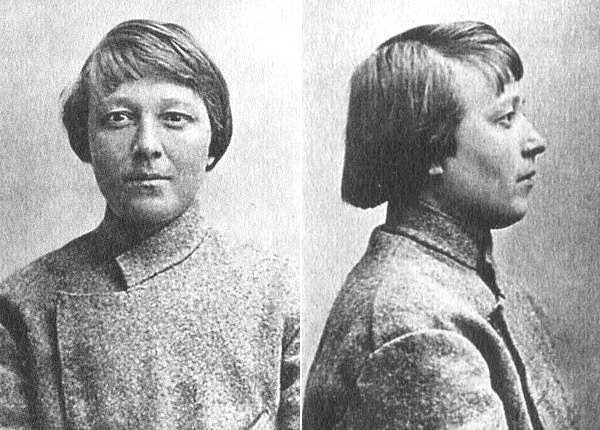
Cornelius Castoriadis’ saw in the Bolshevik seizure of power the beginning of the end of the russian revolution; an end marked by the administrative dispossession of the autonomy of the soviets and the factory committees by a nascent bureaucracy grounded in a vanguardist political ideology. Castoriadis’ reading of the destruction of the revolution – and a revolution there was – remains pertinent, not only for the understanding of the events of the time, but also because it raises a fundamental question: what institutional form can autonomy assume? Castoriadis’ question remains ours.
A further contribution to our series on the russian revolution of 1917.
Continue reading →