December 6th marked the beginning of a general strike in france against proposed reforms to the national pension schemes for different categories of workers. The “reforms” are the typical State driven “neoliberal” cuts in the value of the pensions, extension of the working age to 64 from 62, both a consequence of the desire to unify the different pension schemes (structured by collective contracts for different types of work) into a universal or general public pension programme.
Called by the country’s major union centrals, the strike has held, but essentially in the “public sector”: transportation, health, education, etc. Marked by demonstrations and protest marches, the strike, as a general strike, is nevertheless curious for its inability to paralyse the country’s economic activity. If things are slowed, if there are inconveniences of mobility, the overall affair continues to function. With more and more workers not covered by collective labour contracts, with the base of labour unions concentrated in public-state workers and with the inability to extend the strike to all “reproductive” labour – to all of the work which sustains social relations -, the strike risks falling into a merely defensive gesture of too little too late.
December 5 strike protests in france
One is tempted to call for a strike against the strike, that is, a strike against the ways in which strikes are carried through, to radicalise them, to render them rebellious, wild. And yet, with each daily protest, the rebelliousness lurks just beneath the surface.
From the lundi matin collective, reflections on a strike still frightened of itself …
We share a letter in two parts, a letter which is a reflection on the chilean insurrection, on insurrection, and on anarchism and insurrection. (Posted in spanish at portal libertario oaca and a las barricadas. The letters were published in English translation at Act for freedom now! – letter 1; letter 2).
The popular assemblies at the heart of the Chilean uprising
Bree Busk (11/12/2019)
Chile has a long history of radical neighborhood organizing — a tradition that is now put at the service of drafting a new constitution for a country in turmoil.
More than fifty days have passed since the Chilean uprising burst into existence. For those living it on the ground, it feels like much longer. The movement has already gone through several upheavals, alternately evolving and disintegrating in response to the changing terrain of struggle. The Piñera administration and its sympathizers have called — without success — for a return to normality. In response, the people have unequivocally stated that “normality” was the problem. Throughout the capital city of Santiago, graffiti reads: “I prefer the chaos.”
More than tiring, the capitalist world exhausts possibilities; indeed, through fatigue, it blinds to our exhaustion. What lies before us is a repetition of the same. But that repetition can not entirely cover over the meaningless of our lives divorced from the world and any sense of self, that is, divorced from everything but spectacle.
We live in times of depressed narcissism.
Yet, it may be from the depths of our exhaustion that the felt need to create emerges; if we can care for possibilities ignored and/or erased and come to desire to create them anew.
A reflection on the politics of exhaustion (in translation); another face of the politics in times of catastrophe.
Colombia’s national civic strike is paving the way for a rural-urban coalition of protesters and movements that together can take on President Duque’s right-wing government.
Leftists worldwide, stand by the protesters in Iran!
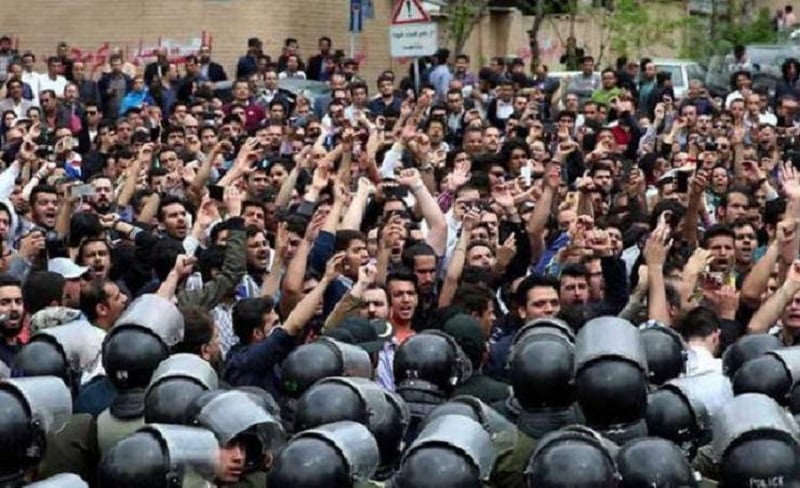
The following is a statement by the Iranian leftist diaspora in the United Kingdom, France and Germany who have formed a loose coalition of academics and militants to express their support for the ongoing popular uprising in Iran.
For a full list of the signatories to this statement, including David Harvey, Catherine Malabou and Etienne Balibar, click here.
We are protesting against problems in the whole system in general. We reached a crisis where we noticed that the system cannot handle it anymore
We received this
anonymous text from Bordeaux. We liked it very much, so here it is.
I dreamed chaos. I have dreamed of the embrace of possibilities and the burning of the catafalque which cradles our torpor in its eternal fall of boredom.
José Mário Branco was musician, song writer, composer, poet and militant. Though largely unknown outside portugal and lusophone countries, he was a central figure, among others (e.g. José Afonso), in what came to be known in his country as “musica de intervenção“, a politically engaged music that was born of and animated the resistance to fascism and the revolutionary process unleashed by the 25th of April, 1974 coup against the dictatorship.
Politically, Branco would move from student activism in progressive catholic groups to the portuguese communist party (being arrested by the political police in 1962). Upon release from prison, he escapes to france to avoid doing military service in the colonial wars (something that would begin his growing disagreement with the communist party, which defended “political” intervention in the war). Politically and artistically active in france’s “May 68”, he will return to portugal with the April revolution.
José Mário Branco died this last week, on the 19th. Branco’s political ties and affinities – he will move through various “extreme” left-wing parties after 1974 – are however not the reason why we remember him. It is rather for his music, an art which he always situated politically in the struggle against capitalism. As he said of himself, I “was a musician who was in politics, not a politician who was in music”.
If his music reflects a particular history which may seem dated to some, his art is a rare example of ethical-political engagement for a world without oppression.
Below, we share songs (most with lyrics translated), interviews and a lecture (for those with a knowledge of portuguese).




France: a general strike waiting to happen
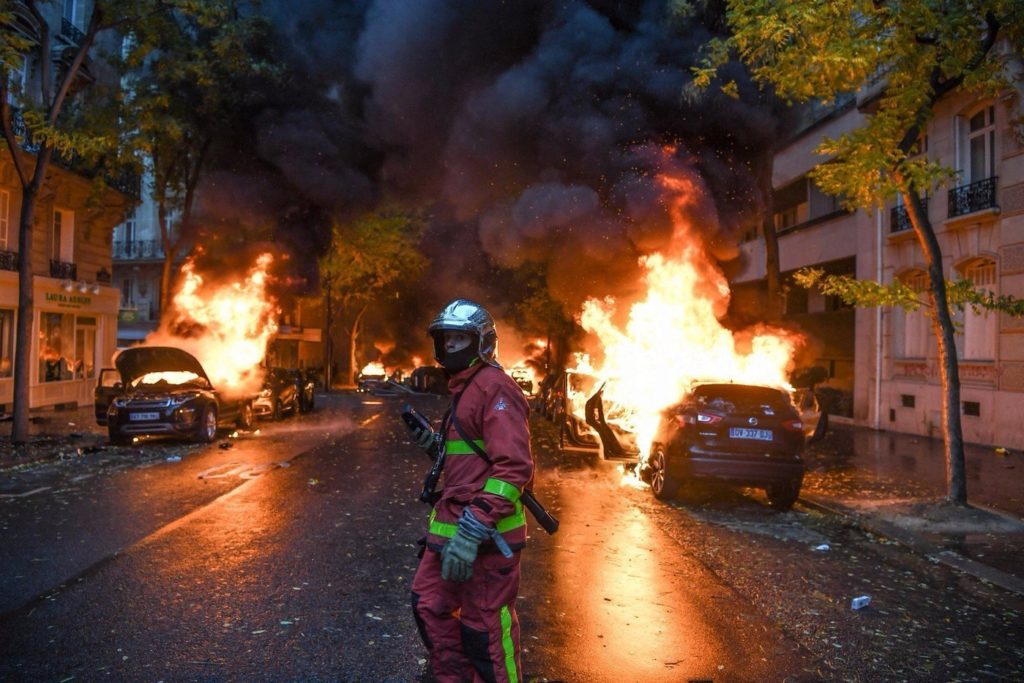
December 6th marked the beginning of a general strike in france against proposed reforms to the national pension schemes for different categories of workers. The “reforms” are the typical State driven “neoliberal” cuts in the value of the pensions, extension of the working age to 64 from 62, both a consequence of the desire to unify the different pension schemes (structured by collective contracts for different types of work) into a universal or general public pension programme.
Called by the country’s major union centrals, the strike has held, but essentially in the “public sector”: transportation, health, education, etc. Marked by demonstrations and protest marches, the strike, as a general strike, is nevertheless curious for its inability to paralyse the country’s economic activity. If things are slowed, if there are inconveniences of mobility, the overall affair continues to function. With more and more workers not covered by collective labour contracts, with the base of labour unions concentrated in public-state workers and with the inability to extend the strike to all “reproductive” labour – to all of the work which sustains social relations -, the strike risks falling into a merely defensive gesture of too little too late.
One is tempted to call for a strike against the strike, that is, a strike against the ways in which strikes are carried through, to radicalise them, to render them rebellious, wild. And yet, with each daily protest, the rebelliousness lurks just beneath the surface.
From the lundi matin collective, reflections on a strike still frightened of itself …
Continue reading →