Writing: such has been my crime ever since I was a small child. To this day writing remains my crime. Now, although I am out of prison, I continue to live inside a prison of another sort, one without steel bars. For the technology of oppression and might without justice has become more advanced, and the fetters imposed on mind and body have become invisible. The most dangerous shackles are the invisible ones, because they deceive people into believing they are free. This delusion is the new prison that people inhabit today, north and south, east and west…We inhabit the age of the technology of false consciousness, the technology of hiding truths behind amiable humanistic slogans that may change from one era to another…Democracy is not just freedom to criticize the government or head of state, or to hold parliamentary elections. True democracy obtains only when the people – women, men, young people, children – have the ability to change the system of industrial capitalism that has oppressed them since the earliest days of slavery: a system based on class division, patriarchy, and military might, a hierarchical system that subjugates people merely because they are born poor, or female, or dark-skinned.
Nawal El Saadawi,Memoirs from the Women’s Prison
For Nawal El Saadawi, feminist, marxist, anti-imperialist, atheist, revolutionary, physician and psychiatrist, activist, political prisoner … the list of “identities” fail to exhaust her. She was perhaps above all an artist, a writer, someone for whom rebellion was life itself. Nawal El Saadawi died this last 21st of March. In her memory, we share words given out in interviews, and a short article.
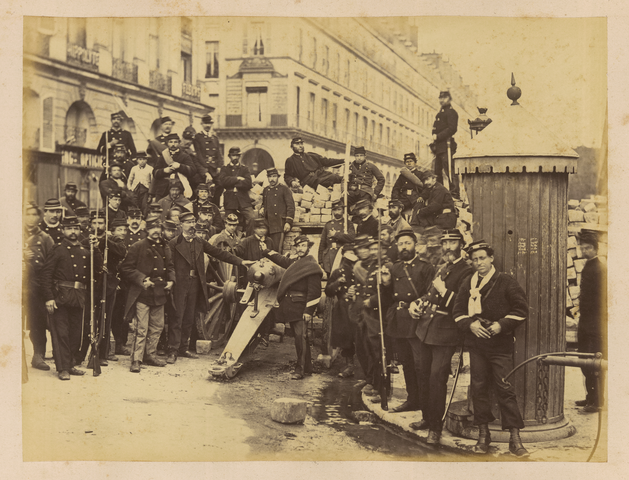
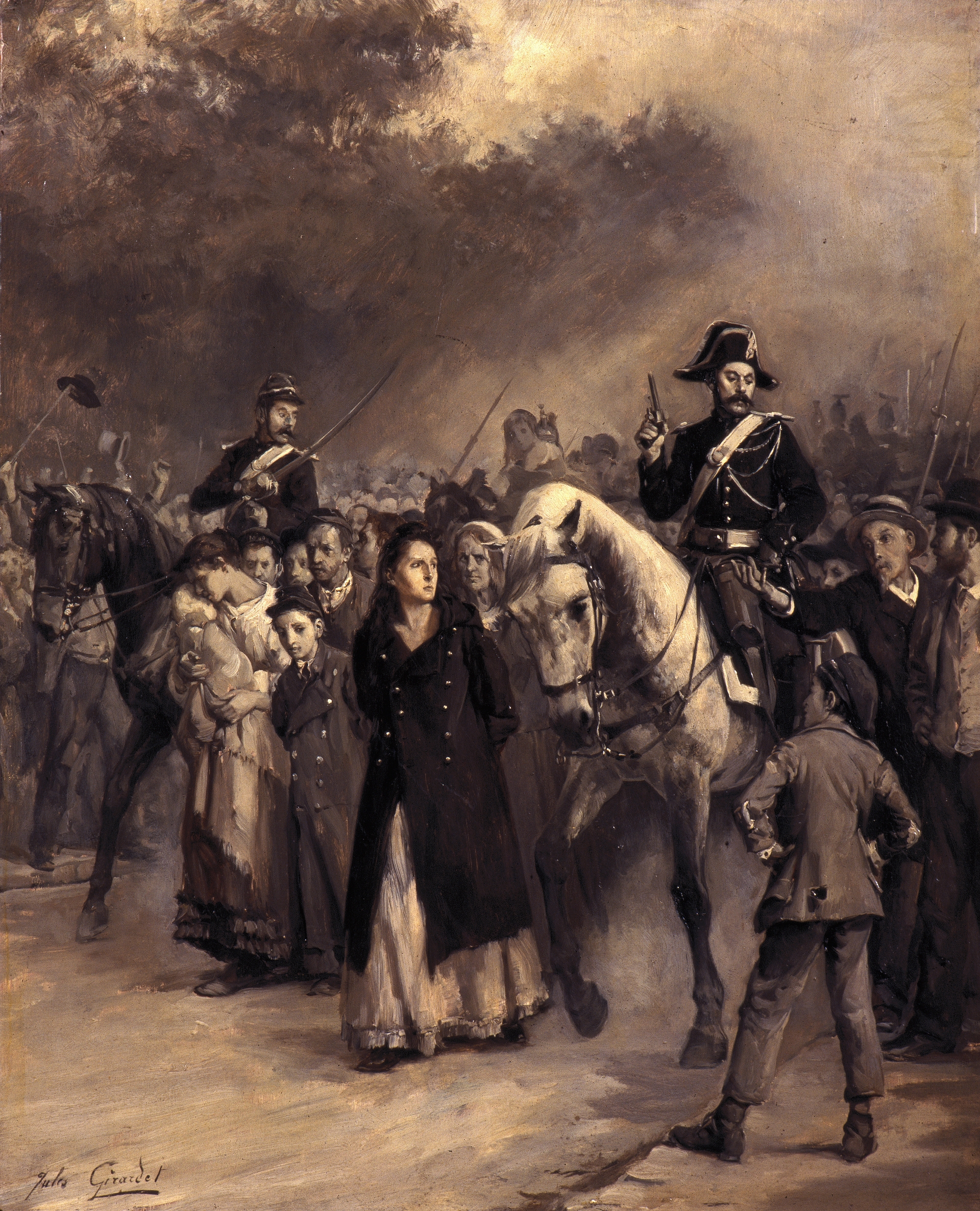
The Paris Commune of 1871 will have a life well beyond the historical events that mark the moment, politically, but also in various forms of artistic-political expression. The examples are many (music, poetry, literature, and so on), but in this post, we wish only to share Peter Watkins’ brilliant film, La Commune (de Paris, 1871).
The film is followed by a description of the making of the film and a reflection on its significance, by Peter Watkins, and a video recorded interview with him.
“...it is time we examine the Commune not just as an outmoded example of revolutionary primitivism, all of whose mistakes can easily be overcome, but as a positive experiment whose whole truth has yet to be rediscovered and fulfilled.“
The Situationists Theses on the Paris Commune of 1871 remains a fundamental text, not only to understand the significance of the Commune – in a radical departure from those on the “Left” who have pretended to, and who continue to, draw lessons from the event based on the facts -, but also to understand what remains unfulfilled in the idea of anti-capitalist revolution.
Alexander Berkman sees in both the Paris Commune of 1871 and the Kronstadt Rebellion of 1921 a failure of foresight and nerve. In both cases, what was demanded was aggressive action against the State. And what occurred was passivity, lack of resolve, defense rather than offense, and a blinding trust in government.
The Paris Commune of 1871 was not a revolution of the many against the tyranny of state and capital, but an uprising of a minority that confusedly took control of Paris, then left the foundations of power in place, only to be crushed by it.
For Voltairine de Cleyre, if there is a lesson to be taken from the Commune, it is not that it offers the example of a failed revolution – it was not, and what it might have become, no one knows -, “is that people cannot be made free who have not conceived freedom; yet through such examples they may learn to conceive it.” The Commune expressed an idea of freedom, an idea whose resonance and contagion is without limit.
The Commune hoped to free Paris, and by so setting an example free many other cities. It went down in utter defeat, and no city was freed thereby. But out of this defeat the knowledge and skill of craftsmanship of its people went abroad over other lands, both into civilized centers and to wild waste places; and wherever its art went, its idea went also, so that the “Commune,” the idealized Commune, has become a watchword through the workshops of the world, wherever there are even a few workers seeking to awaken their fellows.
Writing of the Paris Commune in 1900, Errico Malatesta sought to disarm the myth of the Commune as a revolution – it was neither a socialist nor an anarchist revolution – and bring to the fore what in fact it was, a largely spontaneous, patriotic movement opposed to government concessions to the victorious Prussians in the Franco-Prussian War of 1870-71; a movement, which due to circumstances, found itself in conflict with a new reactionary government eager to capitulate, and in this conflict, the movement would emerge as an incipient radical republic and be crushed by those who could tolerate no such political form.
For Malatesta, the reasons for the failure – without criticising those who died for the Commune – are those proffered by the communard, Gustave Lefrançais:
The degrading situation that the French Republic now finds itself in—a situation wanted by all those who have held the government in their hands since September 4, 1870, faithful continuators of the system inaugurated by the republicans of February 24, 1848—clearly proves that the proletariat has nothing to hope for from those who don’t recognize that revolution and authority, be it republican or royalist, are antagonistic.
This was this profound conviction held by most of those who composed the minority of the Commune of 1871 that led them to separate from their Jacobin colleagues, while recognizing their sincerity and their devotion to the revolution of March 18.
The twenty-five years that have passed have convinced me even more that the minority was right and that the proletariat will only succeed in truly emancipating itself on the condition that it rid itself of the republic, the last, and not the least maleficent form of authoritarian governments.
But if it persists in its mad hope of arriving at its emancipation through the famous “conquest of governmental power” it is certainly preparing for itself a new and bloody disappointment from which it will likely not recover for quite some time. (“Voices of the Paris Commune”, Anarchist Library)
In its failure to contest State power and capital, the Commune condemned itself. It is from the fact of this defeat that we must learn.
Let us honor the martyrs of the Paris Commune, who, even though they chose the wrong path, gave their lives for freedom. But let us put ourselves in a position to do better than them. (Errico Malatesta)
And what must be done, according to Malatesta, is to “fight the cult of authority, the faith in the necessity and usefulness of government. Once this is done the revolution may triumph.”
And if only things were so simple, we could say in response.
Separating myth from fact is not so easily accomplished, whether it be among the actors of events or their more distant interpreters. Facts are read through myth and myth is born of facts. Malatesta separates the two with an unwarranted levity, possibly ignoring facts (e.g., the recent history of insurrections in france before the Paris Commune of 1871, the divisions and tensions between different levels of “government” and (worker, shopkeeper, military, women’s, neighbourhood, etc.) associations defying any centralised control, efforts at creating parallel economies, and the like) that suggest at least that if the movement was not as radical as he desired, that it was more radical than he saw, as well as perhaps ignoring the resonance of “revolutionary ideologies” among parts of the Parisian people.
But then perhaps we are being too simple, for the most important thing to take from Malatesta’s reflections on the Commune is what he writes in the opening of the second article that follows, words that still ring true.
Even the simplest historical facts, always being the result of a thousand different factors, variously modified by a thousand circumstances, never exactly correspond to the ideal of one party or school of thought, and cannot fit into any ideological classification. This is especially true when it involves those great social events that all needs, all interests, all feelings, all ideas existing among the people of a country, consciously or unconsciously, contribute to determine—such events are not planned and prepared by a party nor provoked by their initiative, but are spontaneously born by circumstances and thrust themselves upon parties and men of ideas, who must then accept them as they present themselves!
The revolution of 1871 was above all a popular one. It was made by the people themselves, it sprang spontaneously from the midst of the mass, and it was among the great masses of the people that it found its defenders, its heroes, its martyrs. It is just because it was so thoroughly “low” that the middle class can never forgive it. And at the same time its moving spirit was the idea of a social revolution; vague certainly, perhaps unconscious, but still the effort to obtain at last, after the struggle of many centuries, true freedom, true equality for all men. It was the revolution of the lowest of the people marching forward to conquer their rights.
I. THE PLACE OF THE COMMUNE IN SOCIALIST EVOLUTION
On March 18, 1871, the people of Paris rose against a despised and detested government, and proclaimed the city independent, free, belonging to itself.
This overthrow of the central power took place without the usual stage effects of revolution, without the firing of guns, without the shedding of blood upon barricades. When the armed people came out into the streets, the rulers fled away, the troops evacuated the town, the civil functionaries hurriedly retreated to Versailles carrying everything they could with them. The government evaporated like a pond of stagnant water in a spring breeze, and on the nineteenth the great city of Paris found herself free from the impurity which had defiled her, with the loss of scarcely a drop of her children’s blood.
Yet the change thus accomplished began a new era in that long series of revolutions whereby the peoples are marching from slavery to freedom. Under the name “Commune of Paris” a new idea was born, to become the starting point for future revolutions.
The work of Karl Marx on the Paris Commune of 1871 remains central for the understanding of the Commune as a “revolution”. We share below a text known as The Third Address of May 30th, 1871, part of a collection of addresses to the General Council of the International, published under the title, The Civil War in France, also of 1871.
I am a supporter of the Paris Commune, which for all the bloodletting it suffered at the hands of monarchical and clerical reaction, has nonetheless grown more enduring and more powerful in the hearts and minds of Europe’s proletariat. I am its supporter, above all, because it was a bold, clearly formulated negation of the State.
… the coming international revolution, expressing the solidarity of the peoples, shall be the resurrection of Paris.
Mikhail Bakunin
The Paris Commune and the Idea of the State
This work, like all my published work, of which there has not been a great deal, is an outgrowth of events. It is the natural continuation of my Letters to a Frenchman (September 1870), wherein I had the easy but painful distinction of foreseeing and foretelling the dire calamities which now beset France and the whole civilized world, the only cure for which is the Social Revolution.
My purpose now is to prove the need for such a revolution. I shall review the historical development of society and what is now taking place in Europe, right before our eyes. Thus all those who sincerely thirst for truth can accept it and proclaim openly and unequivocally the philosophical principles and practical aims which are at the very core of what we call the Social Revolution.
Anarchy is not a new idea; writers long before Saint-Just believed that a person who makes himself a leader commits a crime.
Louise Michel
It is not possible to read Louise Michel’s memoires without being swept away by the passion with which she wrote them. The years that separate her words and the events of the Commune from us seem to vanish, as she herself said of her own act of writing years after the revolution.
In my mind I feel the soft darkness of a spring night. It is May 1871, and I see the red reflection of flames. It is Paris afire. That fire is a dawn, and I see it still as I sit here writing. Memory crowds in on me, and I keep forgetting that I am writing my memoirs.
If revolutions live on in the embers of futures yet to come, because there present is lived outside time, it is because, we believe, they are moments of poetic-ethical intensity. Louise Michel lived this and expressed it as perhaps few others have.
Some people say I’m brave. Not really. There is no heroism; people are simply entranced by events. What happens is that in the face of danger my perceptions are submerged in my artistic sense, which is seized and charmed. Tableaux of the dangers overwhelm my thoughts, and the horrors of the struggle become poetry.
It wasn’t bravery when, charmed by the sight, I looked at the dismantled fort of Issy, all white against the shadows, and watched my comrades filing out in night sallies, moving away over the little slopes of Clamart or toward the Hautes Bruyeres, with the red teeth of chattering machine guns showing on the horizon against the night sky. It was beautiful, that’s all. Barbarian that I am, I love cannon, the smell of powder, machine-gun bullets in the air.
I am not the only person caught up by situations from which the poetry of the unknown emerges. I remember a student who didn’t agree with our ideas (although he agreed even less with the other side’s), who came to shoot with us at Clamart and at the Moulin de Pierre. He had a volume of Baudelaire in his pocket, and we read a few pages with great pleasure—when we had time to read. What fate held for him I don’t know, but we tested our luck together. It was interesting. We drank some coffee in the teeth of death, choosing the same spot where three of our people, one after another, had been killed. Our comrades, anxious about seeing us there at what seemed to be a deadly place, made us withdraw. Just after we left a shell fell, breaking the empty cups. Above all else, our action was simply one of a poet’s nature, not bravery on either his part or mine.
What could remain of a life, of her life, after the Commune, except to testify to it, for all to see.
The Commune, surrounded from every direction, had only death on its horizon. It could only be brave, and it was. And in dying it opened wide the door to the future. That was its destiny.
What follows are selections from Louise Michel’s, The Memoires (1886), focusing upon the Paris Commune and closing with her “final thoughts”.




For Nawal El Saadawi (1931-2021)
Writing: such has been my crime ever since I was a small child. To this day writing remains my crime. Now, although I am out of prison, I continue to live inside a prison of another sort, one without steel bars. For the technology of oppression and might without justice has become more advanced, and the fetters imposed on mind and body have become invisible. The most dangerous shackles are the invisible ones, because they deceive people into believing they are free. This delusion is the new prison that people inhabit today, north and south, east and west…We inhabit the age of the technology of false consciousness, the technology of hiding truths behind amiable humanistic slogans that may change from one era to another…Democracy is not just freedom to criticize the government or head of state, or to hold parliamentary elections. True democracy obtains only when the people – women, men, young people, children – have the ability to change the system of industrial capitalism that has oppressed them since the earliest days of slavery: a system based on class division, patriarchy, and military might, a hierarchical system that subjugates people merely because they are born poor, or female, or dark-skinned.
Nawal El Saadawi, Memoirs from the Women’s Prison
For Nawal El Saadawi, feminist, marxist, anti-imperialist, atheist, revolutionary, physician and psychiatrist, activist, political prisoner … the list of “identities” fail to exhaust her. She was perhaps above all an artist, a writer, someone for whom rebellion was life itself. Nawal El Saadawi died this last 21st of March. In her memory, we share words given out in interviews, and a short article.
Continue reading →