Leo Tolstoy: Must It Be So?

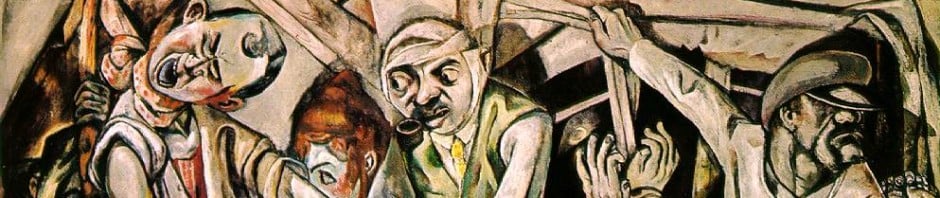
Ilya Repin’s Religious Procession in Kursk Province

Justice consists in seeing that no harm is done to men. Whenever a man cries inwardly: “Why am I being hurt?” harm is being done to him. He is often mistaken when he tries to define the harm, and why and by whom it is being inflicted on him. But the cry itself is infallible.

Simone Weil, La Personne et le sacré

Leo Tolstoy’s anarchism is grounded in a religious universalism in which God is identified with love for one’s fellows. The denial of this universalism, its distortion in the religious justification of hierarchical authority, is the root of all violent oppression and slavery.

The latter cannot be addressed by merely changing social and economic arrangements – the illusion of political reformers and revolutionaries –, but only by a radical transformation of human “spirituality”. If this last word is difficult for the agnostic and atheistic – especially among anarchists opposed to all religion –, it is for these political reformers to demonstrate that their proposed changes will not imply violence in turn. Should they do so, then it is difficult to see in what way their celebrated ends will not be undermined and corrupted by the means employed; indeed, it would appear to be difficult how they will not in turn fall to the siren calls of violence.

But what of Tolstoy’s “God” – whom he so often identifies with an original Christianity –, must one embrace it? Without wishing to deny Tolstoy’s own convictions on the matter, pointing as they do to the necessity of belief in a divine source of life, his “moral universalism” points to what Simone Weil described as the impersonal in all ethical engagements. Ethics grounded in a “respect for the person” or for the law will always be conditional, justifying thereby all manner of exceptions; exceptions that are for their part reflective of or grounded in the violence of power.

“So far from its being his person, what is sacred in a human being is the impersonal in him. Everything which is impersonal in man is sacred, and nothing else.” (Simone Weil, La Personne et le sacré)

How we understand this sacred, or what Weil also calls the supernatural, or that Tolstoy calls love and God, remains open, but that it should not be merely set aside by atheistic reflexes seems obvious.

We share below Leo Tolstoy’s eloquent and still timely essay, “Must it be so?”.

Continue reading
Posted in Commentary | Tagged , , | Leave a comment

Support Sudanese anarchists in exile

The following is a statement collaboratively written and endorsed by anarchist organizations around the world. This statement originally appeared on Anarkismo.net and is reproduced here in full.


International anarchist solidarity call

Our anarchist comrades are still in Sudan and were hoping to be able to continue their agitation activities there clandestinely. We provided financial aid before the war and even at the beginning. But the situation has become untenable and no longer allows for any social or political activity. Some members of the group decided to leave the country as quickly as possible after their house was ransacked by the RSF. Others have decided to stay for the time being, and we are trying to help them too.

[Français] [Deutsch] [Castellano] [Português]

Continue reading
Posted in News blog | Tagged , , | Leave a comment

Call for International Week of Solidarity with Anarchist Prisoners 2023 // 23 – 30 August

The world is on fire. The climate crisis is getting worse and worse. Instead of masks against Covid-19, people now have to wear masks against smoke from forest fires. At the same time huge areas getting flooded due to heavy rain caused by the ongoing pollution of the environment. Nothing of that is caused by individual decisions of the people. It is not cause by buying the wrong product in the supermarket. It is caused by the systematic exploitation of nature and humanity. Governments and big corporations are the ones steering us into a climate catastrophe that, at this point, seems to be unstoppable.

Governments and big corporations that created a world where wealthy people are more important than others. This was especially visible while the global media had nothing better to do than talking for 5 days about a missing submarine filled with 5 rich people, while hundreds of others are dying in the mediterranean sea during their try to get chances for a better life.

Extreme right, conservative and authoritarian politics are increasing all around the world. Some use it to start Wars and kill thousands of people, some build fences and guard what they think is their property and others use it to arm up in the digital world. Surveillance is increased and the states are leaping more and more into our private spaces, analyzing our private conversations and collecting data about us with a depth of detail we could never have imagined. The tools of the states to crush resistance, crush even the idea of fighting the system, are sharpened with every minute. Many anarchists, anti-authoritarians, environmental activists, and antifascist around the world face repression because acting anonymous in a digitalized world is as difficult as never before.

With all the obstacles put into our way during the struggle for a better world, anarchist ideas and values remain important. In times of crisis methods of collective organizing, mutual aid and the principle of solidarity start to shine. The system will fall apart and we should get ready to take back a world that was stolen by companies, yacht owners and the war industry. A world that was meant for everyone. And while our friends are put behind bars and states try to hide them in the darkest corners of their prisons, we will not hold still but fight till they are free again.

Let’s break out together!
That is why we are calling again for International Week of Solidarity with Anarchist Prisoners. Do some action of solidarity! Write letters, organize speeches or film screenings, make our comrades visible on the streets with a banner drop or a graffiti and let them show that they are in our hearts and that we are fighting together.

Let’s remember those who fought against this injustice and payed with their lives.
No one is free, till all are free!

(from solidarity.international)

Posted in News blog | Tagged , | Leave a comment

Learning from the Flames

Reflections on the June 2023 revolt in France, from the CrimethInc. collective (09/08/2023) …

On June 2023, in the city of Nanterre, a suburb of Paris, police brutally murdered a teenager named Nahel Merzouk, continuing a pattern of post-colonial violence directed at a sector of the French population that is treated as second-class citizens. In response, thousands of people in the outlying banlieues of Paris and other French cities engaged in several days of pitched revolt, attacking town halls and police stations, looting shops, and defending themselves against the police. In the following reflection, a participant in the movements of recent years looks back on the revolt of June 2023 and the movements that preceded it, exploring the limits they reached and considering what it would take for them to bring about revolutionary transformation.

For further reflections on the same events, you could begin here.

Continue reading
Posted in Commentary | Tagged , , , | Leave a comment

Mario Tronti: Through the imperative to understand

Mario Tronti (1931-2023)

The revolutions of the twentieth century did not fail because of their excessive rigidity, but because of their excessive suppleness: not by reason of their refusal of the late Modern, but because of their poor adaptation to it. The limit of the conservative revolution was to not have found an institution. One does not win, one does not resist, one does not even survive, without giving oneself a political form. Nazism destroyed the conservative revolution. The workers’ revolution found an institution, it made itself a party, without succeeding in making itself a State. It therefore tried to construct a new society without the State-form and to create a new man in the structure of the party. Violent coercion replaced the exercise of politics. Understand me well: it was socialism that vanquished the workers’ revolution.

Power is tied to human nature. Humankind cannot be what it is without the dimension of power, without exercising it or without bearing it. For this reason, potentiality/power is necessary in the face of power, a domination over power, a freedom within power. Power becomes necessary from the moment of the “fall”, freedom becomes possible from the moment of the “coming”. It is in the face of evil that one is free. There is no necessity for freedom in Eden; freedom becomes possible in the World. The political obligation, and at the same time, its refusal, is born with the expulsion from paradise. The Coming marks the passage from this refusal of possibility to reality.

To speak in the name of all, in a divided world, … amounts to idle prattle. To discover anew what our side is and to base oneself on it so as to construct our own partial point of view, or rather to redefine the partiality of the point of view and reconstruct, from that, the consistency, the force, the organised force, the potentiality/power, of a side? An impulse pushes me to choose the second option. Again: before the “what is to be done?”, “from where to begin?”

The overthrow of the present state of things, in the twilight of the West, has no “form”: it has no words in which to express itself, there are no actions by which it makes itself.

Mario Tronti, Dello spirito libero, 2015


For Mario Tronti, a short essay by him entitled A Message From the Emperor, published in Sidecar/NLR and an excellent testimonial essay by Gerardo Muñoz for Ill Will.

If Mario Tronti evinces an interest in intellectual-political figures and events that are less than obvious for many anarchists, the questions he raises through these points of reference are also central to anarchism: What remains of the “revolutionary working class”? Indeed, how is its “revolutionary” nature to be understood in relation to capitalism? What is “politics“? Is “democracy” the last horizon of political practice? What is the relationship between destituent revolutionary praxis and power, constitution, institutionalisation? What remains of revolution, or “anti-capitalism”, in the totalising reality of capital? And the questions multiply in the wake of the uncertainty of our times.

To read Tronti, is to set out on a difficult path of understanding, where questions multiply, without certain or fixed answers. “I must understand. That is the categorical imperative: not ethical but theoretical.” (Dello spirito libero)


Continue reading
Posted in Commentary | Tagged , , | Leave a comment

Mario Tronti: On destituent power

For Mario Tronti, from the Ill Will collective (22/05/2022) …


In his influential 2008 interview with Adriano Vinale, Mario Tronti provides some of the earliest speculations on the possibility of a destituent power. Below we present the first English edition of this influential document, bolstered by a substantial new introduction by Idris Robinson.


Continue reading
Posted in Commentary, Interview | Tagged , , | Leave a comment

Mario Tronti: “I am defeated”

For Mario Tronti, from Communists in situ; Italian original / Mar 3rd, 2015

Translated by Rees Nicolas

Under the soles of his shoes, you can still recognise the dirt of history. “This is all that remains. A mix of straw and shit by which we delude ourselves into erecting cathedrals to the worker’s dream.” Here’s a man, I say to myself, imbued with a consistency that bursts through in a total melancholy. It’s Mario Tronti, the most celebrated of the theorists of Operaismo. He has only recently finished writing a book on this subject: the origins of his thought, how it has changed and what it is today. I don’t know who will publish it (I would guess a decent publisher). I read a profound sense of despair. Like a chronicle of defeat articulated through the long agony of a past that has not yet passed at all, that refuses to die, but is no longer wanted.

“It’s the others who keep you going”, he says ironically. When life, if only, demands other trials, other choices. Perhaps it is for this reason – to find an escape – that he has distracted himself with Tai Chi: “the gestures of this oriental martial art reveal, in their slowness, a secret harmony. Everything is concentrated on respiration. I did it for a bit. With curiosity and attention. But in the end I realised I wasn’t good enough. Out of place. The orient requires a mindset that can create empty space [il vuoto]. I live in a house full of the things I’ve accumulated over time.

Continue reading
Posted in Commentary, Interview | Tagged , , , , | 4 Comments

Mario Tronti: “In art as in politics there is nothing other than struggle”

László Moholy-Nagy | Photogram, 1941

For Mario Tronti (from Blackout)


Can you really be outside? This is the question I asked Mario the last time we talked (Francesco Matarrese | Greenberg and Tronti: Being Really Outside?). Today, the eighth of January, his important, extraordinary answer arrived. Now it is here, naturally, in the written struggle, in this paper.

In art as in politics there is nothing other than struggle

Can you really be outside? This is the question. I answer: yes. I am. I feel I am. For sensibility, even before for reason. This world, as it is, as it is historically organized and dominated, does not belong to me, it is not part of me, and therefore it is extraneous to me. I do not stop here. The fact is: I find, before me, a form of being in the world, which is also not metaphysical but historically determined, which demands and obtains a hostile relationship. This way of being, or this world of being, fights me, and I fight it. I am not subjected to the forms of struggle, I choose them: naturally as far as possible. And all my intellectual and practical efforts consist in increasing and possessing the sphere of possibilities. There is a change in the contingencies. And all depends on the power relationships. The “inside and against,” the labor that, from inside capital, had enough power to block the mechanism of its reproduction, describing a high level of struggle, and proposing the concrete utopia of putting the systemic organism into subjective crisis. All this is a past. It no longer affects the present. Is a utopian reading of the past possible? Benjamin showed that it is not only possible but necessary. I shall follow in this direction. With an addition. The past, which I feel has a name: the Twentieth Century—I always write my century in capitals, to mark its majesty—it is not the Edenic age that invokes nostalgia, but rather the epoch of maximum danger for the centuries-old order of dominion and exploitation. And I know, along with Hölderlin, that where danger is greatest, there is salvation. It is only from the disorder of the world of life that new skies and new earths, or rather new forms of life, can be born. The avant-gardes of the Twentieth Century are not neo-Romanticism, they are neue Revolution.

Continue reading
Posted in Commentary | Tagged , , , , | Leave a comment

For Mario Tronti (1931-2023)

For Mario Tronti, who died this last August 7th, we share a short text by Diego Sztulwark and Mario Tronti’s Thesis on Benjamin.


Today Mario Tronti passed away. His 92 years were many, but he will surely remain the author of Workers and Capital (Italy, 1966). In January 2001, Tronti wrote a reflection on those years in which an anti-bourgeois current, embedded in a revolution to modernise capital, seemed to be the “yes, this time” in history: a rupture and not the restructuring of capital. The spirit of innovation of those years came to break the air of “decline” of the time. And it was not surprising that this happened, if one takes into account that this “divided social form” that is capitalism is inevitably traversed by conflict and the will to integration (this phrase, applied to the Argentine labor movement, resonates with Resistance and integration, title of a great book by historian Daniel James on Peronism).

Antagonism and assemblage are operations that weave with a single thread, from within the opposition of classes. As Gilles Deleuze read it, the novelty of Workers and Capital resided in the – ontological – precedence of potentiality (Workers) over power (capital). Class antagonism changed its face when the perspective of labor struggles was adopted. Tronti seems to believe, in his last reflection, that the wheel of fortune turns under the weight of innovation in production – against the tradition of the political institution -, or that it stops catastrophically under the weight of repression, fetishism of the merchandise and the handling of technique. The methodological core of workerism consisted, for Workers and Capital, in displacing the point of view of the whole (that of capital) towards that of workers autonomy, registering in theory and in practice the centrality of the worker both in counter-culture and in production. The error of the workerism would have been its “orthodox Marxism” – in the sense of Lukács -, although recomposed from the experience of the factories of advanced capitalism.

From a distance, Tronti believes that he made a mistake in reducing the class struggle to direct antagonism. Fascinated by the best Marx, that of the critique of political economy, the workerists of the 1960s had overlooked the role of a decisive third term, without which capital would not have defeated the uprising of labor: the political. More than the defeat of a political collective, however, Tronti registers the demolition of the workers’ centrality itself, which was followed by the great project of capital to erase a proletarian memory. To the question of whether there is a legacy of the workerist tradition in a world that believes itself to be non-workerist, Tronti answers yes. A Benjaminian yes, with which we would like to remember him today. If workers autonomy was the current of Marxism that turned the partial view of the whole into a source of subversive subjectivation – producing a series of events that form the heritage of labor struggles – workers autonomy constitutes a world that cannot be canceled (and something of that we have managed to experience in our 2001 [in Argentina]), belonging only (in his words) “to all those subjected, to all those excluded, to all those dominated

Diego Sztulwark 07/08/2023 (Lobo Suelto)


Continue reading
Posted in Commentary | Tagged , , , , | Leave a comment

For Mário Cesariny

true democracy will only be possible when all men are poets. But this … [is] … not democracy – but ANARCHY!

António Maria Lisboa, “Uma carta de António Maria Lisboa”, in Mário Cesariny, A Intervenção Surrealista

I believe in the unbelievable.

Pedro Oom, “O Sonhador Espacializado”, in Mário Cesariny, A Intervenção Surrealista

My name is tired of being written on the list of tyrants: condemned to death!
the days and nights of this century have screamed so much in my chest that there is a miraculous tree in it

Mário Cesariny, Autografia I

Today would be the 100th birthday of the Portuguese surrealist painter and poet, Mário Cesariny de Vasconcelos (August 9, 1923 – November 26, 2006). To celebrate the occasion, his art-life, and perhaps to modestly help to spread the word in the English speaking world, we share below a collection of poems (in Portuguese and English, and unless otherwise indicated, from Poem Hunter website), and interview and a brief biography by Richard Zenith.

Miguel Gonçalves Mendes dedicated a beautiful documentary film to Cesariny, entitled Autografia, released in 2004. The film is available on youtube, but exclusively in Portuguese. We nevertheless close with the film.

Continue reading
Posted in Poiesis | Tagged , , , | Leave a comment