El patio maravillas: Struggles for an urban commons

Amongst this population, men, women, animals, age, sex, health, sickness, all seemed communal; everything fitted together, was merged, mingled and superimposed; everyone was a part of everything.

Victor Hugo, Notre-Dame de Paris

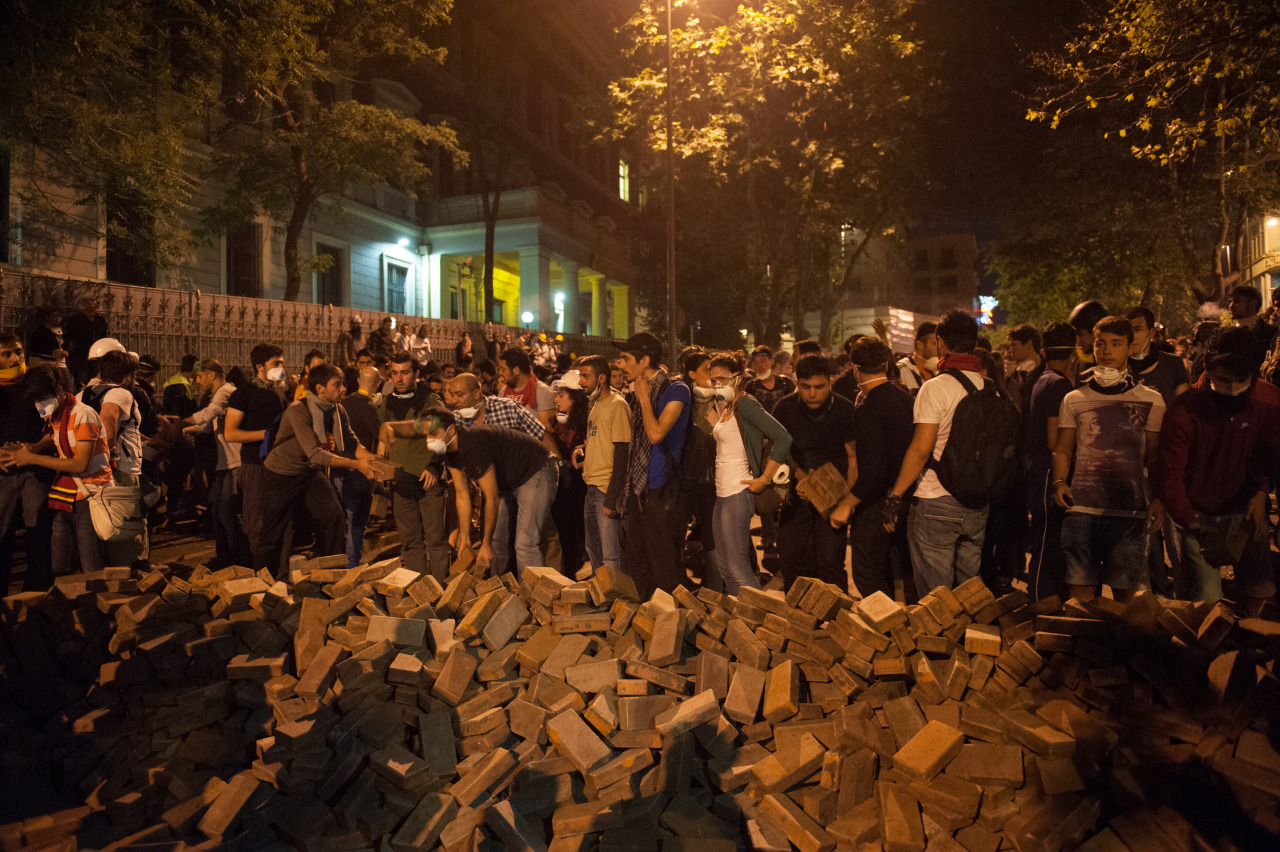
The struggle of okupations in the city is part of the  war against the appropriation and accumulation that are at the very heart of capitalism.  On the 11th of June, one of Madrid’s most emblematic and active okupied social centres was evicted by order of local city authorities, El Patio Maravillas.  Only one response to such state actions is fitting: okupation!  At the end of the same day, the Patio collective okupied a public building that had been sold to a private real estate company a year before, but which has remained unused. (12/06/2015: Tercera Informacion, Periodico Diagonal)  The “court of miracles” will thereby continue …

Continue reading

Posted in News blog | Tagged , | Leave a comment

Antifenix: A call for solidarity

With czech anarchists arrested during “operation fenix”, we share the following message, in solidarity …

Continue reading

Posted in News blog | Tagged , | Leave a comment

Fighting capitalism on every front: A lesson from france

We share below a review by Paul Cudenec of a book on the resistance to the building of the Sivens dam project in southern France, a resistance that came to be known as the ZAD of Testet.  And we do so because of the conviction that the experiences in france around ZADs are of enormous importance to radical politics today.  That is, they point to the need of understanding this politics not as a contest between powers, but as a refusal of the power of State-Capital and resistance to it through the creation of autonomous forms of life.  The book is entitled Sivens sans retenue: Feuilles d’automne 2014, and is published by Editions La Lenteur of Paris.

Continue reading

Posted in Commentary | Tagged , , , , , | Leave a comment

From Gazi to Gezi – a stone’s throw away

A new film on the Gezi uprising by Ross Domoney captures the poetry behind a rebellion; the art of resistance and the power of the spoken word.

Continue reading

Posted in Film | Tagged , , | Leave a comment

The poetic anarchy of Jesús Lizano

Quien duerme, quien duerme, quien duerme, despierte.

Lope de Vega 

Soy anarquista poetico: mi mundo no es de este reino.

Jesús Lizano

Q. – Is the Real Poetic World distant?

R. – The Real Poetic World is here, in what is natural, in its beauty, in its innocence, in the fusion of the unitary and the diverse. Only our madness prevents us from enjoying it …

Jesús Lizano, Periódico “cnt” (379 June 2011) 

In response to an interviewer’s question as to what is a poet, Jesús Lizano answered, “a messenger of beauty”; a beauty that he would convey in countless poems, essays, chronicles, interventions. Philosopher, essayist, but above all poet, Lizano described the true artist as someone who “lived only for his work, and his work is for others. The work is not born until it arrives at others.” As for his anarchism, rejecting the domain of the political condemned as it is in violent games of domination, Lizano described himself as a “poetic anarchist”. Poetic anarchism: “Faith in the human, faith in that we can overcome the structure of dominant-dominated, faith in mutual aid as our only law and morality.” (La Vanguardia, 28/11/2011)

Jesús Lizano died at the age of 84 this last 26th of May. We celebrate his anarchy with a few selected poems in spanish and in translation to english …

Continue reading
Posted in Poiesis | Tagged , | Leave a comment

Gentrificação: A cidade como campo de apropriação, deslocação e segregação

3

Partilhamos uma reflexão sobre a gentrificação enquanto processo de desalojamento capitalista, de um amigo de Autonomies …

No dia 14 de Junho de 1989, Bruce Bailey, activista de defesa dos direitos de inquilinos na cidade de Nova York foi assassinado, o seu corpo esquartejado e abandonado numa lixeira do Bronx. A sua cabeça nunca foi encontrada. Chegaram assim ao fim mais de vinte anos de militância, na constituição de associações e sindicatos de inquilinos e moradores, na organização de greves de renda, na participação em processos legais contra proprietários em violação das leis de arrendamento e de habitação. Em 1995, Jack Ferranti foi acusado do crime, mais o seu irmão Mario, mas sem que a sua culpabilidade fosse provada. Jack Ferranti, em 1989, era proprietário de 14 prédios de habitações em Manhattan.

Continue reading

Posted in Commentary | Tagged , , | Leave a comment

Gentrification: The city as a field of appropriation, dislocation and segregation

2

We share below a reflection on gentrification as capitalist dispossession, from a friend of Autonomies

On the 14 the of June of 1989, Bruce Bailey, tenants activist in New York city, was murdered, his dismembered body abandoned in a Bronx garbage dump. His head was never found. Twenty years of activism, organising and initiating tenants associations and unions, rent strikes and legal proceedings against property owners, was thus brought to an end. In 1995, Jack Ferranti, along with his brother Mario, was accused of the crime, but acquitted. Jack Ferranti, in 1989, was the owner of fourteen residential buildings in Manhattan.

Continue reading

Posted in Commentary | Tagged , , | Leave a comment

Procés Embat: Popular movements and electoral expectations

From Procés Embat, a reflection on electoral-representative politics and social movements, on the eve of spain’s municipal and regional elections.  If we share this text in translation, it is because of its intrinsic interest, as well as its relevance beyond the borders of the country.  What we might question in it is the emphasis on the need of creating counter-hegemonies against what is presented as a homogeneous and centralised power structure. Once however the latter is understood as complex, centreless and heterogeneous, then the idea of politics as a struggle for hegemony is displaced by a politics of creative retreat, substitution and resistance …

Continue reading

Posted in Commentary | Tagged | Leave a comment

Economies of solidarity in spain: Red de Economia Alternativa y Solidaria

What would be the nature of a non/anti-capitalist economy today?  What characteristics would it possess?  How would production be carried out?  Would only socially necessary goods be produced?  And what is a socially necessary good?  How would distribution be effected?  And consumption?  Would such an economy be decentralised, local, or could it still embrace a possible global dimension?  What is to be the nature of work?  How is it to be compensated?  Should it be salaried?  And if not, then how is the distribution of goods to be managed?  How or who will make the decisions regarding all of these matters?  The questions seem to mutliply without end.  If private ownership of the means of prodution and re-production is perceived as a problem, should property then be simply collectivised (which does not imply its destruction) or abolished?  Should the primacy of commodity exchange-value over use-value be circumscribed or overthrown?  Should salaried labour be limited or abolished?  Should there be money, or none?  Should we even continue to talk of “economics” in this context, when economic practice is invariably a form of government, of social control?

Continue reading

Posted in Commentary, News blog | Tagged , | Leave a comment

John Holloway: Critical thought against the capitalist hydra

John Holloway remains one of the most eloquent marxists of our times.  With intellectual roots in italian autonomist marxism, his insistence on reading Capital as a dynamic system of social relations of appropriation constructed through struggles against peoples’ efforts to autonomously and … Continue reading

More Galleries | Leave a comment