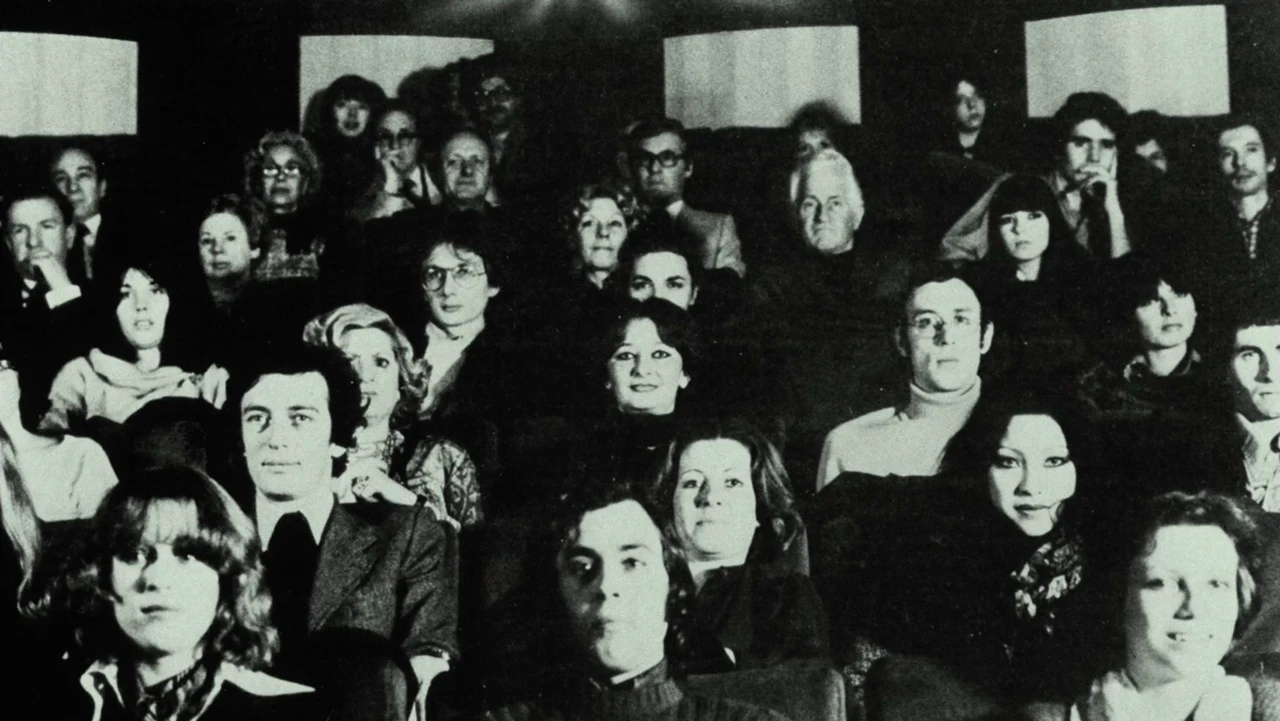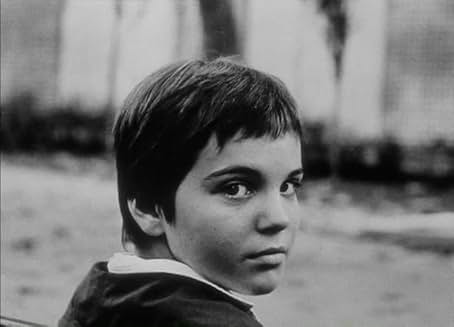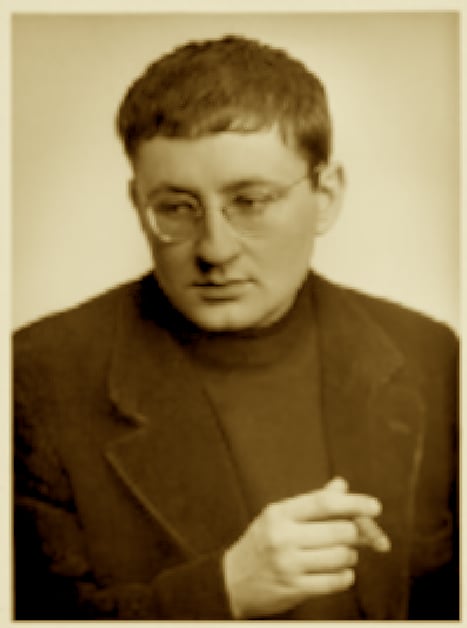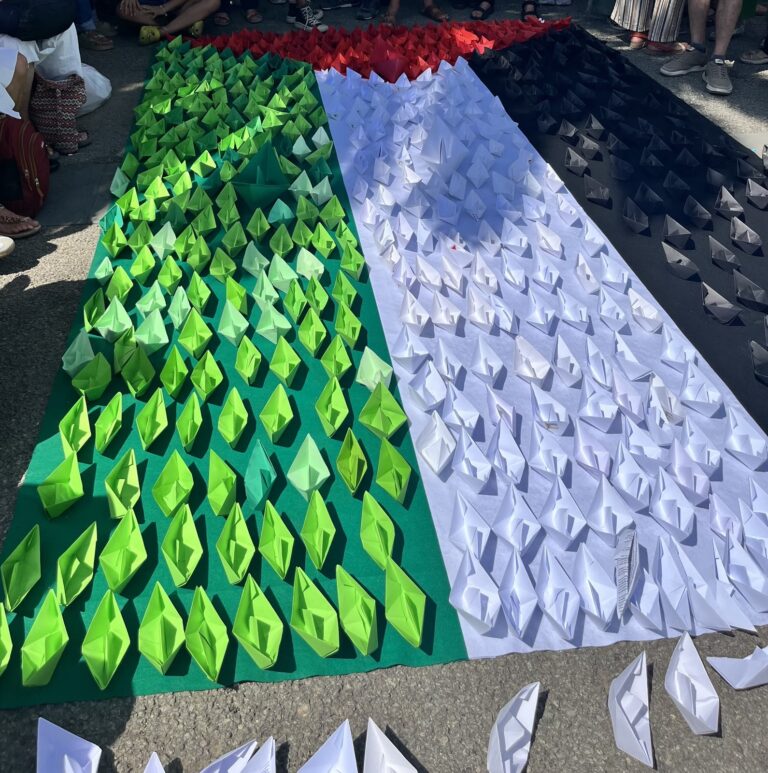
The time of the assassins of the assassins

From Lundi matin #475, 13/05/2025.


Walter Benjamin said somewhere that salvation will come from children. But what if children are starved, murdered?

Then every hungry, murdered child will come back to haunt this world and shatter it. All disordered, they will accomplish something great, something innocent for the air, taking revenge on death in the guise of life: humanity.

Let it come, let it come, the time of the assassins of the assassins.

It began with the cries of children, it will end filled with their laughter.

And it will be the Flood and the Cataracts that will see Israel fall: from heaven to earth. Though slower than lightning. And all the theology buried, dust returned to dust! And all the prophecies with it. For only he who falls breaks. And only he opens himself to the fugue that breaks.

What the devil! Who would have thought that grace meant falling?

Atelier Oncléo

Alors chaque enfance affamée, tuée, reviendra hanter ce monde pour le briser. Toutes désordonnées, elles accompliront quelque chose de grand, d’innocentant pour l’air, en se vengeant de la mort aux apparences de vie : l’humanité.

Qu’il vienne, qu’il vienne, le temps des assassins des assassins.

Cela commença sous les cris des enfants, cela finira plein de leurs rires.

Et ce seront Déluge et Cataracte, qui verront Israël tomber : du ciel à la terre. Quoique plus lent que l’éclair. Et toute la théologie enterrée, rendue au sol ! Et toutes les prophéties par cette dernière. Car seul qui tombe se fend. Et seul s’ouvre à la fugue qui se fend.

— Diable  ! Qui l’eût cru, que la grâce : c’était la chute?

Atelier Oncléo

Posted in Film, Poiesis | Tagged | Leave a comment

Ian Alan Paul: Fascism and the Spectacle of Death

From Ill Will (10/05/2025)


Other languages: Türkçe, Français, Español

I

Wealth above, and death below: in recent history this arrangement has proven to be remarkably tolerable. Everyone of course is aware that ever more people are immiserated and discarded, that ever more of the Earth is destroyed. But for the better off, the very worst is kept at a very comfortable distance, and life more or less maintains its rhythms. Guards and maids arrive as scheduled to patrol and clean, investment portfolios flash to life and fall to rest as global markets open and close, and Amazon packages show up on doorsteps miraculously, in only hours. Misery, suffering, and death do enter into view, and at times there is even the lingering sense that this life may only remain possible because of the way those lives continue to be depreciated and at times disposed of, but it all appears to stay quite removed and detached, shining always on the other side of the screen.

Continue reading
Posted in Commentary | Tagged , , , , , , | Leave a comment

Octavio Alberola: The existential urgency of our times

The Palisades Fire, Los Angeles, California, on January 7, 2025 Ringo Chiu/Reuters

Certes, le goût de la vérité n’empêche pas la prise de parti./Of course, a taste for the truth does not preclude taking sides.

Albert Camus, “Actuelles I, Le journalisme critique”, Combat, 8 septembre 1944


Octavio Alberola is an anarchist militant, strongly committed at the time to the anti-Franco libertarian struggle, who remains active in the struggle for a better world, keeping anarchist reflection alive.


The images that the national and international media transmit to us almost daily, of happy crowds strolling through festivals and fairs or filling concert halls, theatres, cinemas, stadiums and beaches on all five continents, encourage us to believe that humanity is living in times of great prosperity and peace. Yet never has its survival been as threatened as it is today. Not only because of the madness of war which, in addition to continuing to sow death and desolation, may end up causing a nuclear apocalypse, but also because of increasingly deadly viral pandemics and climate change which may make the Earth an uninhabitable planet.

Continue reading
Posted in Commentary | Tagged , , | Leave a comment

InterRebellium: Documents of rebellion

Buses burn during clashes between protesters and the riot police in Santiago, Chile, on October 19, 2019.
 Martin Bernetti/AFP

subMedia announces the first episode of their new documentary series, InterRebellium, featuring a deep dive on the 2019 uprising in Chile.

Continue reading
Posted in Film | Tagged , | Leave a comment

David Graeber: Hatred has become a political taboo

William Etty, The Combat

A season is set for everything, a time for every experience under heaven: … A time for loving and a time for hating …

Ecclesiastes, 3:1,8


By the end of the twentieth and beginning of the twenty-first century, it is the one emotion that is considered intrinsically illegitimate. We have legal categories like “hate speech,” “hate crimes.” For a public figure, to profess or even publically acknowledge feelings of hatred towards anyone—even their bitterest rival—would be to instantly place themselves outside the pale of acceptable political behavior. “Haters” are bad people. In no sense can it ever be legitimate to base a political or social policy on hatred, of any kind. It has come to such a pass that one can barely encourage hatred even against abstractions. Christians used to be encouraged to “love the sinner, hate the sin.” Such language would never have been coined today. Even to encourage others to feel hatred for envy, pride, or gluttony might be considered slightly problematic.

Continue reading
Posted in Commentary | Tagged | Leave a comment

Giorgio Agamben: The coming middle ages

A poor man and a pilgrim receive hospitality at a monastery, as depicted in a 13th-century Spanish manuscript.

A passage from Sergio Bettini’s book on L’arte alla fine del mondo antico [Art at the End of the Ancient World] describes a world that is difficult not to recognise as similar to the one we are living in. “The political functions are assumed by a state bureaucracy; the bureaucracy is accentuated and isolated (anticipating the Byzantine and medieval courts), while the masses become abstentionist (germ of the popular anonymity of the Middle Ages); however, within the state new social nuclei are formed around the various forms of activity (germ of the medieval corporations) and the latifundia, rendered autarchic, are a prelude to the organization of some of the great monasteries and of the feudal state itself.”

Continue reading
Posted in Commentary | Tagged | Leave a comment

Remembering the tradition of the oppressed: The Kwangju Uprising (1980)

Thousands of Gwangju citizens amassed in the city square during the May 1980 uprising

It wasn’t as though we didn’t know how overwhelmingly the army outnumbered us. But the strange thing was, it didn’t matter. Ever since the uprising began, I’d felt something coursing through me, as overwhelming as any army.

Conscience.

Conscience, the most terrifying thing in the world.

The day I stood shoulder to shoulder with hundreds of thousands of my fellow
civilians, staring down the barrels of the soldiers’ guns, the day the bodies of
those first two slaughtered were placed in a handcart and pushed at the head of
the column, I was startled to discover an absence inside myself: the absence of
fear. I remember feeling that it was all right to die; I felt the blood of a hundred
thousand hearts surging together into one enormous artery, fresh and clean … the sublime enormity of a single heart, pulsing blood through that vessel and into my own. I dared to feel a part of it.

At one o’clock in the afternoon, while the speaker in front of the Provincial
Office was playing the national anthem, the soldiers opened fire. I’d been
standing in the middle of the column of the demonstrators, but when the bullets
came flying, I turned and ran. That sublime feeling that I’d been tapping into,
that enormous heart I’d felt briefly a part of, was smashed to pieces, strewn over the ground as so much rubbish. And the gunfire wasn’t only in the square;
snipers were also positioned on the roofs of the surrounding buildings. Beside
me and in front of me people crumpled to the ground, but I kept on running.
Only when I was sure I’d left the square far behind did I let myself stagger to a
stop. I was so out of breath I genuinely thought my lungs would burst. My face a mask of sweat and tears, I sank to my knees on the steps leading up to a shop
door. Its shutters were down. A small group had gathered in the street, and I
heard them talking about raiding the police stations and reserves barracks to get guns. They were clearly made of much sterner stuff than I was. We’re sitting
ducks like this. They’ll gun us down, the lot of us. Paratroopers even broke into
the houses in my area. I was so scared I slept with a kitchen knife by my pillow.
Shooting hundreds of rounds like that in broad daylight – I’m telling you, the
world’s gone mad!

One of them jogged off to fetch his truck, and I stayed there slumped on the steps until he drove back. I thought about whether I really had it in me to carry a gun, to point it at a living person and pull the trigger.

It was already late at night by the time the truck I was riding in returned to the
centre. We’d twice taken a wrong turn, and when we’d got to the barracks we’d
found that the guns had already been looted, so it turned out to be a wasted trip. In the meantime, I had no way of knowing how many had fallen in the street fighting. All I remember is the entrance to the hospital the following morning, the seemingly never-ending line of people queuing up to give blood; the doctors and nurses striding through the blasted streets, white gowns bloodstained, hands gripping stretchers; the women who handed up stale rice balls, water and strawberries to the truck I was riding in; the strains of the national anthem, and ‘Arirang’, which everyone was singing at the top of their voice. Those snapshot moments, when it seemed we’d all performed the miracle of stepping outside the shell of our own selves, one person’s tender skin coming into grazed contact with another, felt as though they were rethreading the sinews of that world heart, patching up the fissures from which blood had flowed, making it beat again. That was what captured me, what has stayed with me ever since. Have you even known it, professor – that terrifying intensity, that feeling as if you yourself have undergone some kind of alchemy, been purified, made wholly virtuous? The brilliance of that moment, the dazzling purity of conscience.

Han Kang, Human Acts (2014)


Forty-five years on from the Gwangju uprising, we revisit an event that is only comparable, according to George Katsiaficas, to the Paris Commune or that can only be understood in what the author Han Kang calls “the ‘absolute community’ of self-governing citizens”. (Nobel Prize Lecture, 2024)

And we celebrate and mourn this event as part of the tradition of the oppressed, recalling Walter Benjamin’s words, and the more recent words of Han Kang.

The tradition of the oppressed teaches us that the ‘state of emergency’ in which we live is not the exception but the rule. We must attain to a conception of history that is in keeping with this insight. Then we shall clearly realize that it is our task to bring about a real state of emergency, and this will improve our position in the struggle against Fascism. One reason why Fascism has a chance is that in the name of progress its opponents treat it as a historical norm. The current amazement that the things we are experiencing are ‘still’ possible in the twentieth century is not philosophical. This amazement is not the beginning of knowledge—unless it is the knowledge that the view of history which gives rise to it is untenable.

Walter Benjamin, On the Concept of History (1940)

Continue reading
Posted in Commentary | Tagged , | Leave a comment

For Jacques Camatte (1935-2025)

Revolution is now able to pose its true terrain of struggle, whose centre is everywhere, but whose place is nowhere. Its task in this sense is infinite: to destroy domestication and engender the infinite manifestation of the human being of the future.

Jacques Camatte

We recently learned of the death of Jacques Camatte, a key figure in the revolutionary thinking of the 60s and 70s. Some of his writings, which appeared in the journal Invariance that he edited, had a major influence on many. His contributions to the analysis of changes in capitalism, and therefore to revolutionary theory, were invaluable and decisive. As a tribute to his work, we share below his essay Contre la domestication [Against Domestication], published in 1973, in the 3rd issue of Invariance. Though that was 52 years ago, it remains, like so much of Camatte’s work, powerfully relevant.

The source for the essay below is the Jacques Camatte archive, at the Marxist writers archive. The libcom.org website also houses a collection of his writings.

For an introduction to and analysis of Camatte’s work, see: Michele Garau two part essay The Community of Capital (published in English by Ill Will, 2022, pt. 1 and pt. 2). And for a short memorial, see: Maxence Klein, In memoriam: Jacques Camatte (1935-2025) (published in English by Ill Will, 04/05/2025)

Continue reading
Posted in Commentary | Tagged , , | Leave a comment

Tomás Ibáñez: Neo-fascism, new totalitarianism and the illusion of the ballot box

David Ramos/Getty Images

We share below a recent talk given by Tomás Ibáñez at the Ateneo Libertario La Idea, Madrid, on the 27th of February. The importance and urgency of its subject matter requires no introduction.

(Source: Redes Libertarias, 17/03/2025)


I shall begin with a note that is merely conceptual, or perhaps simply terminological.

I – Fascism and Neo-fascism

It is well known that fascism proper, classical fascism, is a historically situated phenomenon which, despite their differences, usually encompasses both Mussolini’s fascism and Hitler’s National Socialism. We also know that this term has been extrapolated to designate both regimes that bear a certain resemblance to those that prevailed in the 1920s and 1930s, and to qualify political positions and movements that claim to be based on the ideologies of those regimes, with a few minor updates, if any.

Continue reading
Posted in Commentary | Tagged , , | Leave a comment

Simón Royo Hernández: Event and Anarchy: The anarchic event

Jackson Pollock, Autumn Rhythm No. 30, 1950

We publish below an essay generously shared with us by its author, Simón Royo Hernández. Hernández’s work has endeavoured to engage philosophically with the tradition of political anarchism, as others have tried to do, in significant ways.

We know that many criticise such endeavours, even perhaps citing Bakunin in their favour: “No theory, no ready-made system, no book that has ever been written will save the world. I cleave to no system. I am a true seeker.” And yet Bakunin was no stranger to philosophy and he did not hesitate to also criticise “philosophically” ideas that he thought problematic. More importantly, the refusal of the refusal of theoretical systems is not a refusal of philosophy, for what Hernández in part explores is precisely the anti-systemic or anti-totalising nature of anarchist thought.

Whatever one’s judgement about such an exercise, to dismiss it categorically is itself intellectually arrogant.

And what kind of action or praxis would be imaginable or possible without thought?

Continue reading
Posted in Commentary | Tagged , , | Leave a comment