Occupy Wall Street: Sharing reflections on a fifth anniversary (1)

If Occupy Wall Street began with the occupation of Zuccotti Park in New York City on September 17th, 2011, it quickly spread to other cities in north america and beyond, making it the largest “anti-capitalist” protest movement on the continent since the 1960s.

To describe Occupy as anti-capitalist is of course already to invite criticism, for the movement was and remains the subject of considerable criticism from more traditional “leftist” organisations who saw in it little more than the expression of a middle class discomfort before its own growing impoverishment.  At best, the movement could inspire a renewal of reformist, social-democratic politics (e.g. the Bernie Sanders campaign within the Democratic Party), or disappear into self-satisfied irrelevance, due to a lack of political program and organisation (e.g. Slavoj Žižek’s criticism of Occupy).

Such readings of Occupy are however caricatural, for they rest upon a number of rather grotesque assumptions: that the notion of the “middle class” as a social agent is clear, when it is far from being so; that sociologically and/or economically, those who occupied public squares throughout the united states were all from the middle class, and that this class identity was the dominant political force shaping the course of the movement, when this is anything but obvious, if not patently false; that Occupy was a movement, and not a plurality of agents, movements, singular and collective, with very different aspirations, aims, methods, etc.; that what is an anti-capitalist politics is itself unambiguous, an idea that usually presupposes and suggests a rather mechanistic, linear understanding of social relations/processes, when any social formation is complex, including capitalism, with no single foundation or cause, and which cannot thus be contested and challenged by focusing upon one dimension of those relations (e.g. to address exclusively the relation between labour and capital as definitive of capitalism leaves aside all of the many social relations necessary for commodity/spectacle production and the reproduction of that supposedly central relation); that the distinction between reform and revolution is clear, both theoretically and practically, when it is not …

Continue reading

Posted in Commentary | Tagged , , , | Leave a comment

Territorialising solidarity: Okupied refugee squats in Athens

In the early hours of the 24th of August, the housing squat for refugees and migrants, Notara 26, in Athens was the target of an incendiary attack.  The molotov and gas-bottle bombs caused serious material damage and could have killed the over 130 residents.  Fortunately, the inhabitants responded quickly enough to evacuate the building, and then with the aid of the fire department, were able to extiguish the flames.

The attack bore all of the markings of the country’s fascist elements: to terrorise and murder migrants-refugees in a desire for ethnic and racial purification; to attack and terrorise, even kill, both greek and foreigner, engaged in no-border solidarity work with refugees; to hit at the heart of Athens’ Exarchia neighbourhood, where a significant anti-authoritarian/anarchist presence has established itself over the years, to show that the fascists can attack anyone, anywhere; to feed the raging xenophobia and hostility towards those who contest the power of State-Capital.

However, Notara 26, through the work of its residents and activists, the assistance of other refugee squats in the city, along with the broader anti-authoritarian and anarchist movements, continues … a continuity that is testimony to the courage and generosity of all of those who have committed themselves in this struggle of solidarity with the “refugee crisis” spawned by the violence in Syria and elsewhere.
Continue reading

Posted in Commentary, News blog | Tagged , | Leave a comment

For Marc Riboud

When somebody asks me what my best photograph is, I answer, I hope to do it tomorrow and thus try to change my way of seeing.

Marc Riboud

Few photographic journalists traveled the 20th century as Marc Riboud, both in space and time.  And though he would photograph many of the powerful of the events of the age, Riboud’s eye never left the daily life of the many who created and moved events behind the limelight; indeed, who made those events possible.  With the eye of a child, he opened himself to the world.  Or in his own words, “My obsession is to photograph life in what it has of most intense and to do so as intensely as possible”. (Público 01/09/2016)

As the individual that he was, he was the child and militant of the French resistance.  As a photographer, he was the student of Henri Cartier-Bresson and Robert Capa.  (He would leave the photography group Magnum, founded by Cartier-Bresson and Capa, in 1979, having no sympathy with the competition for glory that came to characterise the agency).  And his passions would take him to Maoist China, Japan, India, the war of Vietnam and Cambodia, revolutionary Cuba, the independence struggles in Africa, the United States in the 1960s, May 68 in France, the Iranian revolution, and beyond.

His eye was an engaged one, to use a term he disliked; yet engaged not by political identification, but in the same way that a child’s eye is: curious, sympathetic, open.  The ugly and the beautiful are captured equally in his lens, but with a subtlety that defies moral judgement.  We see without thinking, and we are thereby invited to think.  We see without direction, sloganeering, and the world’s joys and tragedies show themselves.    Marc Riboud’s art has us see differently, and to continue to do so, even after we no longer behold his photographs.

Marc Riboud died at the age of 93 this last 30th of August.  We here modestly celebrate and share his innocent eye …

Continue reading

Posted in News blog, Poiesis | Tagged , | Leave a comment

Struggles for space: Anarchism, architecture and anarchitecture (1)

If there is no art without architecture (for are not most of what we call the “fine arts” housed?) and if architecture is the arkhi-chief-master tekhne-art and the architect the master tekton-artist-artisan-builder, then the anarchist should find little affinity with such apparently masterly and mastered creativity.  Indeed, the struggle against authority could be seen to include a struggle against art and architecture.  But if etymology may serve as an initial guide, it is far too inadequate a source to be able to understand art, architecture and the complex relations that anarchists have assumed with regard to them.

Is there a uniquely anarchist art or architecture, understood in terms of content and/or form?  Is there an anarchist way or method in the arts?  Or are the arts, for the anarchist, to be taken back from the masters and re-appropriated by the pleb, thereby rendered “anarchitecture”, free, unmastered and unrestrained creativity?  But is art possible without mastery?  And if not, is there a specifically anarchist creative mastery?  The questions multiply, as well as the different answers that have been given, both within anarchist thought and practice, as well as beyond it.

Continue reading

Posted in Commentary, Poiesis | Tagged , , , | Leave a comment

In Memoriam: For Hande Kader

Amid the violent and often murderous repression in turkey against dissidence, against leftist political militants, ethnic and religious minorities, intellectuals, journalists, academics, LGBT activists also find themselves targeted by public authorities and para-State political and religious groups.

On the 8th of August, the burned body of Hande Kader, LGBT activist and sex worker, was found dead in Istanbul, the victim of President Recep Erdogan’s and his government’s politics of moral and political purification; a politics that not only serves the interests of his political authority, but also that of transforming the country into a neoliberal space of unrestrained exploitation.

In memory of Hande Kader, in memory of her passion and courage, in memory of her beauty, in memory of the all too many LGBT activists assaulted, imprisoned, and killed in turkey, and in solidarity with all of those who continue to resist, as the many thousands who filled the streets of central Istanbul this last Sunday, we share news and analyses …

Continue reading

Posted in Commentary, News blog | Tagged , , | Leave a comment

Nuit Debout: To live the commune – Interventions by the revolutionary erotic committee

France’s Nuit Debout movement may be the first of the post-2011 “movements of occupation” that dissipates almost entirely due to its own democratic self-delusions.

Continue reading

Posted in Commentary | Tagged , , , , , , | Leave a comment

An illustrated guide to Guy Debord’s “The Society of the Spectacle”

From Hyperallergic, a brief, illustrated reflection on Guy Debord’s The Society of the Spectacle, authored by Tiernan Morgan and Lauren Purje (10/08/2016) …

Continue reading
Posted in Commentary | Tagged , | Leave a comment

The anarchist critique of democracy (9): CrimethInc.

The anarchist collective CrimethInc. initiated in the month of May a critical analysis and discussion of “democracy”, promising a series of reflections.  What follows is the ninth essay, by Uri Gordon, in which he discusses the attractions and risks of democratic discourse.  (The tenth “essay”  – in the series the third – appears in the form of an audiozine)  The Gordon essay is preceded by the introduction to the series.  We have shared earlier the first eigth essays,  The Party’s OverFrom Democracy to Freedom, From 15M to Podemos, Destination Anarchy!, Occupy: Democracy versus Autonomy, “Gotovo Je!”: Reflections on Direct Democracy in SloveniaBorn in Flames, Died in Plenums: The Bosnian Experiment with Direct Democracy, Lessons from Rojava: Democracy and Commune

Continue reading

Posted in Commentary | Tagged , , , , , | Leave a comment

Nuit Debout: Where lies the filthy beast?

The State is a condition, a certain relationship between human beings, a mode of behaviour; we destroy it by contracting other relationships, by behaving differently toward one another… We are the State and we shall continue to be the State until we have created the institutions that form a real community.

Gustav Landauer

We leave the obituaries of political movements to the powers of the State and social scientists, both eager to clearly trace the beginnings and ends of human events; both obsessed with transparency and rule.

Nuit Debout, in Paris and elsewhere, no longer fills city squares with thousands (and the reasons for this merit analysis).  And yet it has not vanished.  It simmers like a slowly cooking food, sustaining refusal and protest; keeping alive the possibility of future rebellion.

The text below, by Olivier B. and published in Paris.luttes.info (02/08/2016), and which appears here in translation, possesses the virtue of reading what is at stake in the movement (and, we may add, many other movements) in a manner that helps to understand its significance.  If we have any doubts regarding the argument, it has to do with uncertainty surrounding the concept of “heterogeneity” that is here opposed to “homogeneity”, a concept that calls for more clarification.  In other words, that question that all of the contemporary “movements of occupation” pose is that of the nature of the “subject” of dissisdence, of rebellion, and all that follows from this notion.  Who are the anonymous “many” that have taken to the streets since Tahrir in Egypt (or even much earlier)?  And secondly, are we not all in the end Olivier B.’s “beast”?

Continue reading

Posted in Commentary | Tagged , , | Leave a comment

André Laude, anarchist poet

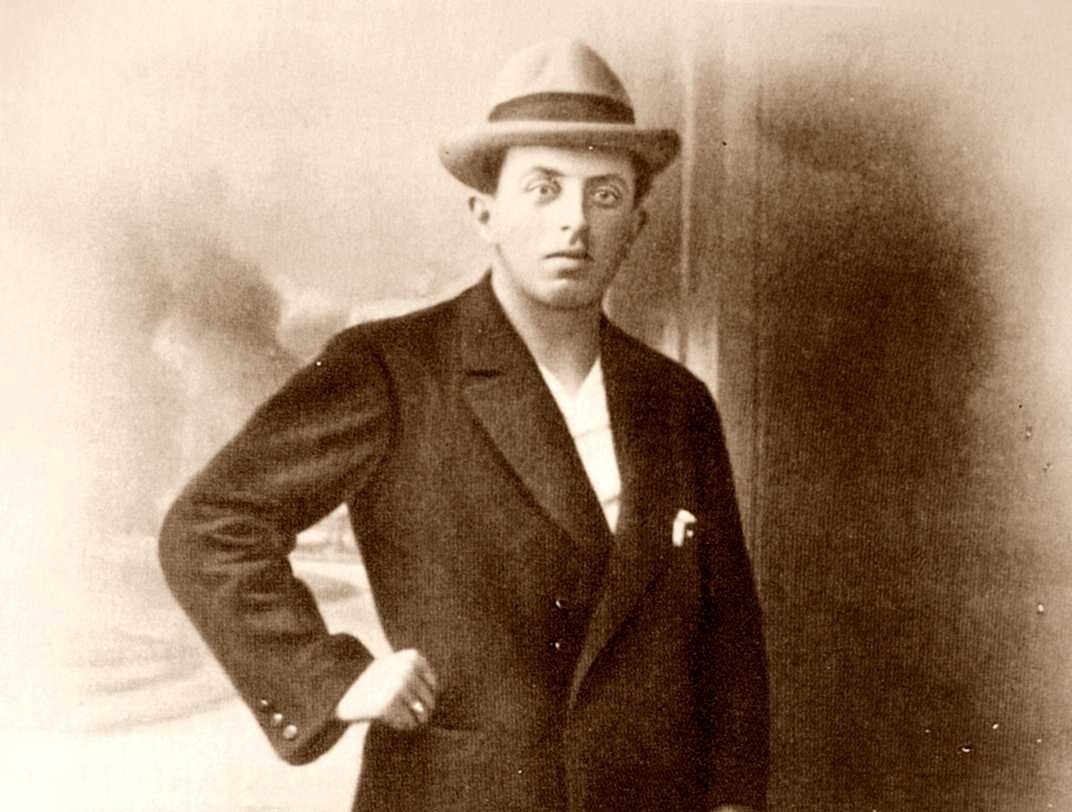
For André Laude (1936-1995), for his poetry, for his fiery beauty …

Toute mon expérience poétique s’articule autour de cette perspective : la poésie doit changer la vie.

André Laude: Working class family.  Exiled to Paris, will later rejoin his homeland: Occitanie.  School under Nazi occupation.  First masturbations and first revolts.  Very early writing and dreaming of becoming a journalist.  Comes to know a band of anti-conformist poets and painters.  Anarchist militant.  Self-taught … .  Learns with difficulty to make love well.  Meets André Breton, Benjamin Péret and a few other “lights”.  War of Algeria: horror and suffering.  Quits Europe for several years.  Journeys: Cuba, the Orient, Asia … Returns to Europe.  Writes in a hundred newspapers and magazines.  Publishes collections of poetry.  Poverty, humiliation.  Lets his beard grow to hide the scars.  A unique desire: to live and enjoy without limits while aging his flesh.

André Laude

Continue reading

Posted in Commentary, Poiesis | Tagged , , | 4 Comments