
Carnival is a pageant without footlights and without a division into performers and spectators. In carnival everyone is an active participant, everyone communes in the carnival act… The laws, prohibitions, and restrictions that determine the structure and order of ordinary, that is noncarnival, life are suspended during carnival: what is suspended first is hierarchical structure and all the forms of terror, reverence, piety, and etiquette connected with it… or any other form of inequality among people.
Carnival is past millennia’s way of sensing the world as one great communal performance. This sense of the world, liberating one from fear, bringing the world maximally close to a person and bringing one person maximally close to another (everything is drawn into the zone of free familiar contact), with its joy at change and its joyful relativity, is opposed to that one-sided and gloomy official seriousness which is dogmatic and hostile to evolution and change, which seeks to absolutize a given condition of existence or a given social order. From precisely that sort of seriousness did the carnival sense of the world liberate man.
Mikhail Bakhtin, Problems of Dostoevsky’s Poetics
L’histoire moderne ne peut être libérée, et ses acquisitions innombrables librement utilisées, que par les forces qu’elle refoule : les travailleurs sans pouvoir sur les conditions, le sens et le produit de leurs activités. Comme le prolétariat était déjà, au XIXº siècle , l’héritier de la philosophie, il est en plus devenu l’héritier de l’art moderne et de la première critique consciente de la vie quotidienne. Il ne peut se supprimer sans réaliser, en même temps, l’art et la philosophie. Transformer le monde et changer la vie sont pour lui une seule et même chose, les mots d’ordre inséparables qui accompagneront sa suppression en tant que classe, la dissolution de la société présente en tant que règne de la nécessité, et l’accession enfin possible au règne de la liberté. La critique radicale et la reconstruction libre de toutes les conduites et valeurs imposées par la réalité aliénée sont son programme maximum, et la créativité libérée dans la construction de tous les moments et événements de la vie est la seule poésie qu’il pourra reconnaître, la poésie faite par tous, le commencement de la fête révolutionnaire. Les révolutions prolétariennes seront des fêtes ou ne seront pas, car la vie qu’elles annoncent sera elle-même créée sous le signe de la fête. Le jeu est la rationalité ultime de cette fête, vivre sans temps mort et jouir sans entraves sont les seules règles qu’il pourra reconnaître.
The liberation of modern history, and the free use of its hoarded acquisition, can come only from the forces it represses: the workers without power over their conditions, the meaning or the product of their activities. In the nineteenth century the proletariat was already the inheritor of philosophy; now it inherits modern art and the first conscious critique of everyday life. It cannot suppress itself without realising, at the same, art and philosophy. To transform the world and to change the structure of life are one and the same thing for the proletariat – they are the passwords to its destruction as a class, its dissolution of the present reign of necessity, and its accession to the realm of liberty. As its maximum program it has the radical critique and free reconstruction of all the values and patterns of behavior imposed by an alienated reality. The only poetry it can acknowledge is the creativity released in the making of history, the free invention of each moment and each event: poésie faite par tous–the beginning of the revolutionary celebration. For proletarian revolt is a festival or it is nothing, because the life that it announces will itself be crfeated under the sign of festival. The game is the ultimate rationality of this festival, to live without a dead time and to enjoy without limits are the only rules that it recognises.
Situationist International, On The Poverty of Student Life
If I can’t dance, I don’t want to be part of your revolution.
Emma Goldman
Is it possible to imagine revolution as a carnival? Those who suffer from the spirit of seriousness would dismiss the idea categorically. And yet, what is, or what was, carnival if not the inversion of all hierarchy and social roles? Ephemeral yes, but all revolution, until institutionalised is transitory. The question then is if the spirit and practice of carnival can be made institutional, and if so, in what form? The question remains open, but until then, what revolution there is without transgression is not …
From the Crimethinc collective, we share the following text, Flashback to June 18, 1999: The Carnival against Capital: A Retrospective, Video, and Comic …
Continue reading →


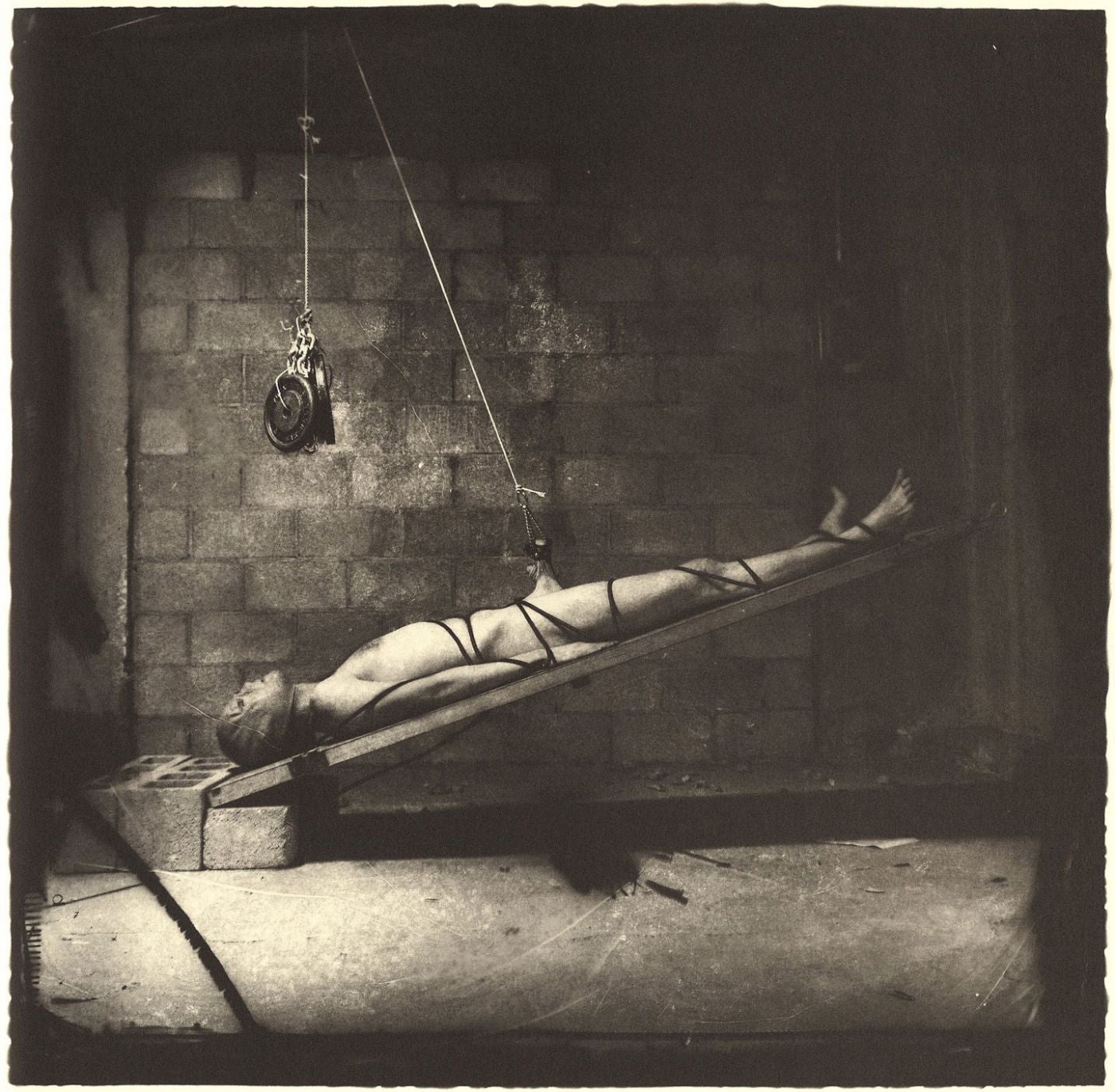

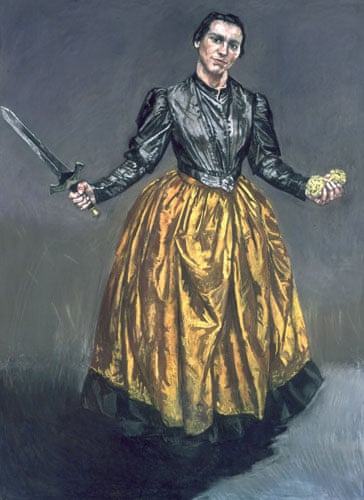

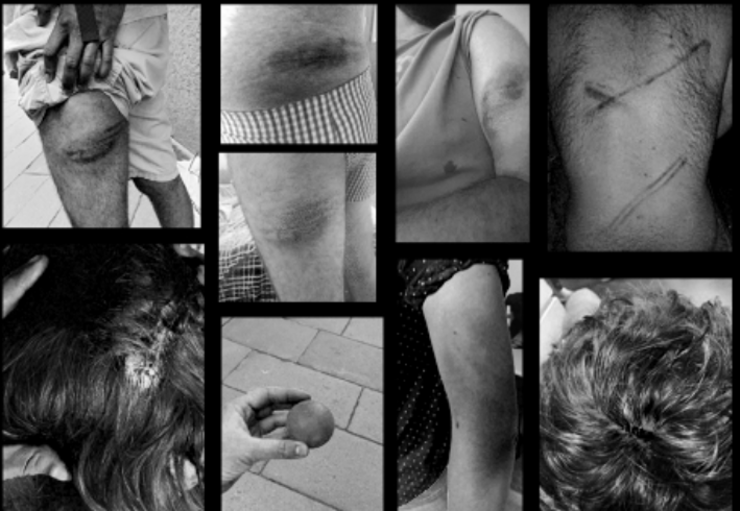


Government by the economy: The invisible committee’s Now
The astonishing reality of things
Is my discovery every day.
Each thing is what it is,
And it’s hard to explain to someone how much this makes me happy,
How much it’s enough for me.
If I stretch out my arm, I get exactly where my arm gets –
Not even a centimeter farther.
I only touch where I touch, not where I think.
I can only sit down where I am.
And that’s funny like all really true truths,
But what’s really funny is that we’re always thinking something else,
And we live truant from our reality.
And we’re always outside it because we’re here.
Alberto Caeiro/Fernando Pessoa, The Keeper of Flocks
What follows is a third exercise in the sharing of ideas, of visions (for the first, click here, and the second, here). The most recent essay by the invisible committee, Now, continues a reflection-intervention that began with The Coming Insurrection and To Our Friends, and offers a powerful critique of contemporary politics, along with a defense of “autonomy”. What is proposed here then is again a partial translation, summary and a critical commentary on their reading of the our capitalist economy.
Continue reading →