It is by no means obvious that the history of anarchist politics every owed anything to the speculations of philosophers, even anarchist philosophers. And in like manner, no such politics could ever be read mechanically off a philosophy.
Philosophies of the 19th century echo through the writings of Proudhon, Bakunin and Kropotkin, to cite but the names of three “classical” anarchists, as today, anarchists theorise from any number of recent philosophers. But anarchist thought was always so much forged in struggle, that it could never be beholden to any single philosopher. Anarchists have always been the joyful orphans of unknown fathers and mothers. Their lineage has always been rooted in a militant present that breaks with the determinations of history, stealing from the past so many moments of rebellion that it calls upon, and gathers unto itself, in the always contemporaneous desire for freedom. And it is this desire that animates anarchist affinities.
Our recent post, sharing an essay on Emmanuel Levinas’s “anarchism”, may have suggested a theoretical ambition which is not ours. Levinas, as with so many other writers, is for us but one more possible vantage point on our world, shedding light where it is difficult to see, and offering paths to different worlds.
Without any ambition to assimilate practice to theory (and how could Levinas’ ethics ever be interpreted suggesting any specific kind of politics?), there is in the idea of care as struggle, an idea defended by Kevin Van Meter and the Team Colors Collective that perhaps resonates with the work of Levinas. Or shall we say that Levinas helps us to understand the ethics of care as an anarchist politics.
On the 23rd of February, thousands marched through Madrid in solidarity with and in defence of the Fraguas rural occupation. (Kaos en la red)
Six of the accused-defendants involved in the occupation were sentenced to 1 year and 9 months imprisonment, plus fines of € 2800 each. In addition, the demolition of the town of Fraguas is demanded, with the costs of demolition, still without a fixed value, being imputed to the defendants. If the payment is not made, the imprisonment will increase to 2 years and 3 months of jail.
The Fraguas occupation began in 2013. Then, an abandoned village – like so many others in spain -, it became a rich experience in autonomous, communal life. And as with urban occupations, it is this which the State and capital cannot tolerate.
Freedom is joyfully contagious.
We share below a statement of solidarity by chimera (14/02/2019) and a short video documentary.
Over and beyond capitalism and exploitation what was contested were their condition: the person understood as an accumulation of being, by merits, titles, professional competence, an ontological tumefaction weighing on others and crushing them, instituting a hierarchized society maintained beyond the necessities of consumption, which no religious breath any longer succeeds in rendering egalitarian.
Emmanuel Levinas, on May 68
The self of consciousness and self-consciousness is a thematised thematised reality of knowledge; it is the self-as-known (and un-known and known again). Beneath or beyond this self lies a non- or pre-consciousness that underlies and sustains consciousness; a pre-consciousness without an arche, or governing principle; an an-arche, opposed to the autarchy.
Autarchy demands (self)-government and property, that is, subjects, enemies and dispossession. Anarchy, by contrast, exiles us from self-possession, subjectification and divisions of friend and foe; it throws us out of ourselves, before others, into a commons of encounters and possible affinities.
A politics of self-government harbours the same ills, such that anarchy is the abandonment of all government for an ethics of being-for-the-other.
These are but a few words that may serve as an introduction to an anonymous essay on Emmanuel Levinas’ “anarchism”.
We close with selections from a televised interview with Levinas.
We share below, in translation, a text that appears on the portuguese website, Portal Anarquista, marking the one hundredth anniversary of the anarchist newspaper, A Batalha. We do so for the newspaper’s historical significance, as a testimony to a tradition in anarchism of publishing as an intrinsic part of political struggle.
With numerous and violent interruptions throughout its history, A Batalha is today among the continent’s oldest anarchist newspapers.
Across europe, driven by the desire and need to extract maximum profit from urban spaces, authoritarian handmaidens of capital, in the guise of State-democratic authority, turn their violence on those people who are nothing but obstacles to the management of the economy (through real estate speculation, urban “renewal”, gentrification, touristification, social and ethinic cleansing, and so on).
Across europe, the last half dozen years have seen a marked increase in the eviction of okupied social centres (along with other occupied spaces), spaces which both impede and school resistance to the commodification of the city.
On February 7, the social centre Asilo Occupato in Turin, occupied since 1995, was forcefully closed by hundreds of heavily armed police. Six anarchists were arrested on charges of formation of a subversive association, incitement to crime and the possession, manufacture and transportation of explosives in a public place.
We share below an account of the State’s intervention, the resistance to it, and a call of solidarity. We also share a text of the 1980’s, from the french autonomist fanzine, Molotov & Confetti, which critically addresses the context and the politics of okupation.
Beginnings do not reach their end. they remain halfway. But this also means that they never stop beginning over again, even if this means that the actors change. This is the realism of revolt, an inexplicable realism, one that demands the impossible. Because the possible has already been removed in the very formula of power: ‘there is no alternative’.
In the midst of Act XIV of the yellow vests insurrection, Jacques Rancière offers a reflection on the rebellion.
(This article first appeared on Analyse Opinion Critique and has been translated from french by David Broder and published the Verso Books blog. It is also available in spanish at Lobo Sueulto.)
We continue to share fragments of reflections, of a movement, or movements, in motion.
The yellow vests insurrection(s) is a picture of our future today: the only ethical response possible to permanent crises is permanent rebellion; the only radical politics imaginable is that forged in uprisings.
We begin with excerpts from a lundi matin (#178, 11/02/2019) interview (the second) with the sociologist Michalis Lianos. Excerpts of a second article, from Temps critiques, and a third by Koubilichi, both also published in the same number of lundi matin, also follow.
I think I would have been the perfect anarchist. We have too much discipline. You know my triangle of life? It’s very important. It took me years to do it. It’s a triangle with variable angles and one is for discipline, one for enthusiasm and one for pragmatism. And if it’s a rubber triangle under the pressure of goodwill, you get a pyramid. But not too much goodwill, because otherwise the rubber is gonna burst like an old condom.
…
I believe reality illustrates itself by the absurd. But in terms of my philosophy, one of my famous sayings is, “Don’t hope, cope.” I’m totally realistic. I don’t believe in illusions. In the papers, I read between the lines. What really strikes me is the total absurdity of our world. Even this killing is totally absurd. When you have the absurd, you have fantasy, and when you see the absurd in facts, then you have the facts. That’s the key.
Tomi Ungerer
Children triumphing over fear, learning for themselves and from (often despised) animals, without false innocence, about the absurdity and ugliness of the world created by adults, rendering us children again, eager to create: Tomi Ungerer’s children’s stories are all of this and more.
Ungerer died yesterday (09/02/2019) at the age of 87. It would be impossible for us to summarise all that he created (the children’s stories, erotic art, political posters, illustration, aphorisms, architecture, sculpture); it is for each to travel through his world, to discover it. In everything, he was above all the satirist, the court jester, a Diogenes, who allows us to see.
For us, he will be one more of our dead who is always welcome.
Fear! How long has it been since the ruling classes (of a “developed” country) have feared their poor? The forced gymnastics of the french government’s “great national debate”, supported and secured by a militarised police apparatus whose only red line or limit at this point is not to kill the yellow vests (1000’s have been arrested, hundreds prevented from demonstrating in Paris and other cities, hundreds have been injured and mutilated by weapons for “maintaining the peace”),** the unconscious consensus between the media, journalists, politicians of almost all parties, all testify to a fear before an unknown energy that seems uncontrollable.
For the State and economic authorities, what is urgent is that all of the protesters return and stay home. That things should once again become normal, which is to say, that nothing should happen. And if persuasion should fail, let the fear of the police and the courts effect this labour.*** Indeed, the government is increasingly but an adjunct of the police, the only administrative force capable of managing the production and reproduction of capitalist social relations.
Political parties have been marginalised, labour unions conceal with difficulty their irrelevance (the announced February 5th general strike proved to be anything but “general”), and everywhere “spokespersons” of disinformation endeavour to paint the yellow vests as savage, ignorant fascists, ignorant or enemies of “democratic debate”.
What the yellow vests insurrection testifies to is not only the brutality of the neo-liberal pact of post-1989, but of the failure of the “Left” (of all colours) to contest capitalism critically and militantly.
The insurrection continues (now with 12 Acts). That the “movement’s” indignation manifests itself in a multiplicity of directions should surprise no one: since at least “May 68”, a hegemonic social movement against Capital has become difficult to imagine. If it does come about, it will not fall ready-made from above, but must be struggled for, in struggle.
Liberal-capitalist democracy can only promise more of the same (with greater or lesser strains of explicit authoritarianism), that is, that it can only perpetuate class or caste violence and ecological destruction.
Social democracy (in all of its varieties) is dead. (The stink of its rotting corpse is now more than a hundred years old).
All that remains is to destroy what is: capitalist social and political relations, and what we are within and through them.
We share below reflections on the “violence” of the yellow vests.
Everything must be done to preserve the sense of this movement, the originality of the action that is outlined within it, the new freedom that it has already conquered for everyone. No organisation can today pretend to represent alone the revolutionary demand.
Les Organisations Dissoutes (From a writers and artists manifesto of May 68, france)
The yellow vests insurrection challenges not only political and economic representation, but the representation of words and images, words and images appropriated for commodity production and circulation, words and images central to spectacle capitalism.
In mid-December, a call emerged from a self-proclaimed Brigades d’Actions Cinématographiques, a call for a revolutionary cinema.
We reproduce the call below (as it appeared in lundi matin on December 19th) in translation, followed by a selection of the Brigades work.
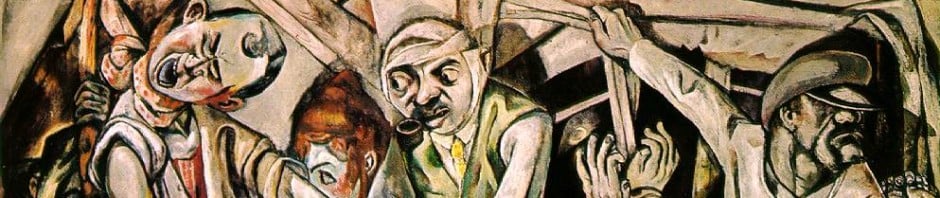


Care as struggle
It is by no means obvious that the history of anarchist politics every owed anything to the speculations of philosophers, even anarchist philosophers. And in like manner, no such politics could ever be read mechanically off a philosophy.
Philosophies of the 19th century echo through the writings of Proudhon, Bakunin and Kropotkin, to cite but the names of three “classical” anarchists, as today, anarchists theorise from any number of recent philosophers. But anarchist thought was always so much forged in struggle, that it could never be beholden to any single philosopher. Anarchists have always been the joyful orphans of unknown fathers and mothers. Their lineage has always been rooted in a militant present that breaks with the determinations of history, stealing from the past so many moments of rebellion that it calls upon, and gathers unto itself, in the always contemporaneous desire for freedom. And it is this desire that animates anarchist affinities.
Our recent post, sharing an essay on Emmanuel Levinas’s “anarchism”, may have suggested a theoretical ambition which is not ours. Levinas, as with so many other writers, is for us but one more possible vantage point on our world, shedding light where it is difficult to see, and offering paths to different worlds.
Without any ambition to assimilate practice to theory (and how could Levinas’ ethics ever be interpreted suggesting any specific kind of politics?), there is in the idea of care as struggle, an idea defended by Kevin Van Meter and the Team Colors Collective that perhaps resonates with the work of Levinas. Or shall we say that Levinas helps us to understand the ethics of care as an anarchist politics.
Continue reading →