Vertiginous ecological collapses. Liberal-fascist governmentality, from Bolsonaro to Macron. How to confront the disaster? Are we condemned to resuscitate new scenarios of political representation?
And what if we had to dismantle politics, all pretenders to representation, its deadly abstractions so that shared lives worth living could arise anew? It will then again be necessary to summon the old word communism which only humans can no longer compose. But communism was never an idea. It resides in the practices of communisation, in the arts of our inter-dependencies, both during uprisings and in the care that we bring to a garden (1).
We share a second account in a series on mutual aid in the times of the Covid-19 pandemic from the CrimethInc. Collective, this time from poland.
There is much to learn from and respect in such mutual aid initiatives. A question however remains, a question that is expressed in the form of a fragile hope by those involved: “While there is no way to predict what long-term impact Visible Hand will have on Polish society, we can hope that the sense of community and empowerment people have found in these groups will remain with them. Margo expresses how much it’s meant to her personally to be able to do something for others during this tumultuous period. “It’s changed me,” she says.”
For anarchists – and others, perhaps -, the hope translates into a profound political question: to what extent should “political work or activism” be beholden to ideological identification when that work/activism reflects the values of the ideology without claiming it? And if the ideology is absent in the choices of what is to be done, what remains of anarchist or revolutionary politics? We leave these questions unanswered here, because we ourselves are unsure.
We share below a very free and partial translation (interspersed with paraphrases and summaries) of Donatella Di Ceasare’s essay, Virus Sovrano? L’Asfissia Capitalistica (Bollati Boringhieri Editore, 2020).
A forthcoming English language edition is to be published by MIT Press in the Semiotext(e)/Intervention Series, under the title Immunodemocracy: Capitalist Asphyxia and what we offer below should in no way be seen as a substitute. (A French language edition is also forthcoming with La Fabrique, with a Portuguese language translation already in circulation, published by Edições 70).
We do not believe that what we do share in any way betrays the substance and spirit of the text (no more so than any translation does and however much our selection of passages may be contested), and if we have adventured to offer what we do, it is because we believe the essay to be of singular importance. May it allow us to see further.
It is the interdependent ensemble of our technicised world – which is literally the humanly created world and at the same time the world of a virtually integral subjugation of all existents – of which we must think the truth.
Jean-Luc Nancy, L’Équivalence des catastrophes
For the first time, an invisible and unknown being, almost immaterial, paralysed the whole of technical human civilisation. Nothing like it ever occurred before – even less at a global scale. Old dogmas were pulverised, solid certainties were profoundly shaken. Everything now changed: economic axioms, geopolitical equilibriums, forms of life, social realities. But an epochal transformation generates anxiety because it is a true inversion of perspective. Until yesterday, we could consider ourselves omnipotent among the ruins; the first and the only even in the primacy of destruction. This primacy was taken from us by a power superior to and more destructive than ours. That it be a virus, an insignificant portion of organised matter, makes the event even more traumatic. Even the smallest creature can dethrone us, destroy us, undermine us. Perhaps, who knows, life on the planet can assume new directions. In the meantime, we have to recognise that we are not omnipotent as we presumed. On the contrary, we are extremely vulnerable.
Donatella Di Cesare, Virus sovrano? L’asfissia capitalistica
Reading the pandemic with Antonin Artaud …
“Damages management” would seem to be the limit of our capacity to imagine catastrophe. Its cause or source must be identified, classified, mapped, controlled, overcome, without in anyway putting into question the human vanity of technical-political mastery over “nature”. Our “progress” rests upon the latter, however it is driven and measured, and what we thereby fail to see is that the catastrophe lies precisely in this. The catastrophes of our present, real or imaginary, impede us from learning from the inhuman and nonhuman, from that which lies beneath and beyond our hubris, condemning us thereby to repeat our catastrophic follies blindly. (Annie Le Brun)
The Covid-19 pandemic, which has taken the lives of close to a million people, and infected millions more, defies any simple, transparent legibility. As with any pandemic, it is not an exclusively biological or epidemiological phenomenon, whether one speaks of its causes or effects. But in the management of this crisis – and this regardless of the diversity of the responses –, what has been central is the desire for domestication of the semantic field through which the virus is read, with corresponding instruments and apparatuses of political control. What is most threatening to established orders of power is not the virus itself, but the unmasking, the apocalypse, the seeing of the violence exercised upon ourselves and the world that unleashed the virus.
Everything that can be said about the suffrage may be summed up in a sentence.
To vote is to give up your own power.
To elect a master or many, for a long or short time, is to resign one’s liberty.
Call it an absolute monarch, a constitutional king, or a simple M.P., the candidate that you raise to the throne, to the seat, or to the easy chair, he will always be your master. They are persons that you put “above” the law, since they have the power of making the laws, and because it is their mission to see that they are obeyed.
When I vote, I abdicate my power — that is, the possibility everyone has of joining others to form a sovereign group, which would have no need of representatives. By voting I confirm the fact that we, the voters, are always other than ourselves and that none of us can ever desert the seriality in favor of the group, except through intermediaries. For the serialized citizen, to vote is undoubtedly to give his support to a party. But it is even more to vote for voting, as Kravetz says; that is, to vote for the political institution that keeps us in a state of powerless serialization. … If they want to return to direct democracy, the democracy of people fighting against the system, of individual men fighting against the seriality which transforms them into things, why not start here? To vote or not to vote is all the same. To abstain is in effect to confirm the new majority, whatever it may be. Whatever we may do about it, we will have done nothing if we do not fight at the same time — and that means starting today — against the system of indirect democracy which deliberately reduces us to powerlessness. We must try, each according to his own resources, to organize the vast anti-hierarchic movement which fights institutions everywhere.
With national parliamentary elections now slated for the 17th of October in Aotearoa/New Zealand, we share a statement that was generously passed onto us by the anarchist Aotearoa Workers Solidarity Movement against participation in the vote; a statement which forcefully expresses the reasons anarchists have continuously refused to subordinate collective, human creativity to “professional representatives” that we have come to call politicians.
The posting by the online website lobo suelto! of an archive of the writings the argentine based Colectivo Situaciones, is the occasion to return to the “theoretical” work of this group and its “reflection” in the 2001-3 insurrection in the country. The importance of this work for the understanding of events in argentina, and beyond, justifies our choice in sharing this material, especially with those not familiar with either.
If we place “theory” and “reflection” in quotation marks, it is because the collective saw its intellectual work as immanent to situations of struggle, as something which created cognitive-aesthetic realities which could animate effective and radical political interventions.
The events in argentina confirmed the death of older, anti-capitalist forms of militancy; the question then was to try to grasp from within what was taking shape as new forms of political opposition.
The archive (below) is in spanish and therefore to assist those not familiar with the writings of the Colectivo Situaciones, along with the introductory text to the archive, we also share three essays by the group, as well as an interview. For further writing by the group, the text 19 & 20: Notes for a New Social Protagonism is also available online. And we close with two documentary films by Fernando Solanas dedicated to the crisis of argentina and the dignity of those who resisted.
Belarus: Anarchists in the Uprising against the Dictatorship: An Interview
Starting on the night of Sunday, August 9, in response to an election widely deemed to be rigged, a massive protest movement has broken out in Belarus against Aleksandr Lukashenko, the strongman who has ruled the country for over a quarter of a century. Police have arrested thousands of people, firing live rounds and murdering demonstrators. From Sunday to Tuesday, Lukashenko’s government apparently shut down the internet and landline telephones in hopes of dampening the protests, while claiming that the blackout was the work of forces outside Belarus. Belarusian opposition candidate Svetlana Tikhanouskaya was detained and apparently forced to read a script declaring that Lukashenko had won the election and urging people to “obey the law” and stay away from street protests before fleeing to Lithuania. Despite this, the protests continue. In a context in which the state has cracked down on every form of political opposition, anarchists are among the only organized groups still capable of participating in street demonstrations. To understand the events that are unfolding, we interviewed multiple anarchists from Belarus.
Anarchism swept us away completely, because it demanded everything of us and promised everything to us. There was no remote corner of life that it did not illumine … or so it seemed to us … shot though with contradictions, fragmented into varieties and sub-varieties, anarchism demanded, before anything else, harmony between deeds and words.
Victor Serge, Memoirs of a Revolutionary
It is an easy approach to libertarian thinking to express the iniquitous violence of the State, and contrast it with the complete non-violence of a non-governmental society. Yet it is dishonest to show the goods without mentioning the price, and a free society can only come about through determined resistance. It is not only a question of overthrowing a ruling class, but making it abundantly clear that no rule may exist again. The aim of the free society is not the “rejection” of the repressive organs of the State. It is their abolition.
Stuart Christie, The floodgates of anarchy
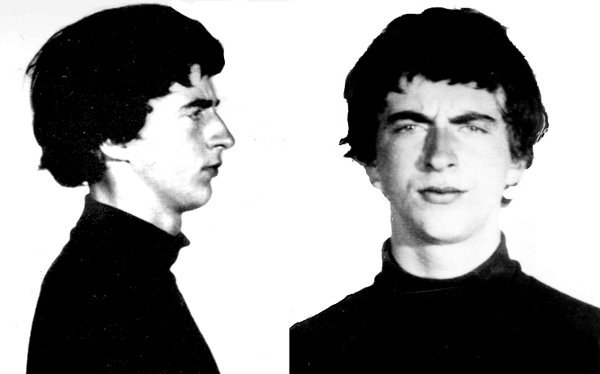
The anarchist militant, writer and publisher, Stuart Christie died on the 15 of August. The erasure of history is such in our time that Christie’s name, as that of so many others who dedicated themselves passionately to the struggle against capitalism, is almost unknown. Christie’s anarchism grew in the shadow of the spanish revolution (about which he would write extensively) and it would lead him to an assassination attempt against the dictator Francisco Franco. He would also gain notoriety for his participation in britain’s The Angry Brigade. And throughout all of his “activism”, and inseparable from it, he would write and testify to what can be called an ethics of anarchism.
In an “obligation of rememberance”, we share below an obituary which retraces his life, followed by an excerpt from Christie’s Granny Made Me An Anarchist covering the assassination attempt, an interview looking back at The Angry Brigade, video documents and a ballad for Stuart Christie …
“Even those who denounce the permanent state of emergency do not hesitate to repeat the same slogans, to make the same appeals as the “decision-makers”, who now work shamelessly and in the open for the “Great Restoration”… . However, “To live up to the event today, in this human world that we now know to be finished, does this not call instead for doing nothing, for radicalising our imposed inactivity?”
To return to past struggles, to recall those who gave their life to them, is not to engage in museumification or idol worship. It is to remember today that those pasts remain our present, that those who fought are still with us pointing to paths that we can still take; in the case of Martin Sostre, a path of black anarchism.
We share two articles and a short video, for Martin Sostre …




The world returns: Outlines of an anti-politics
We share below an essay by Josep Rafanell i Orra, published with lundi matin #252 (31/08/2020) …
Vertiginous ecological collapses. Liberal-fascist governmentality, from Bolsonaro to Macron. How to confront the disaster? Are we condemned to resuscitate new scenarios of political representation?
And what if we had to dismantle politics, all pretenders to representation, its deadly abstractions so that shared lives worth living could arise anew? It will then again be necessary to summon the old word communism which only humans can no longer compose. But communism was never an idea. It resides in the practices of communisation, in the arts of our inter-dependencies, both during uprisings and in the care that we bring to a garden (1).
Continue reading →