

Reflecting on the protests following the murder of George Floyd and as an historical example of mutual aid in African-American political history, a moment from the history of the Black Panther Party.
Continue readingReflecting on the protests following the murder of George Floyd and as an historical example of mutual aid in African-American political history, a moment from the history of the Black Panther Party.
Continue reading
(https://www.instagram.com/olhosesfomeados/)
On racism …
Negrophobes exist. It is not hatred of the Negro, however, that motivates them; they lack the courage for that, or they have lost it. Hate is not inborn; it has to be constantly cultivated, to be brought into being, in conflict with more or less recognized guilt complexes. Hate demands existence and he who hates has to show his hate in appropriate actions and behavior; in a sense, he has to become hate. That is why Americans have substituted discrimination for lynching. Each to his own side of the street.
Frantz Fanon, Black Skin, White Masks
You can’t have capitalism without racism.
Malcom X
If Black people had simply accepted a status of economic and political inferiority, the mob murders would probably have subsided. But because vast numbers of ex-slaves refused to discard their dreams of progress, more than ten thousand lynchings occurred during the three decades following the war.
Angela Y. Davis, Women, Race, & Class
James Baldwin at the Cambridge Union (1965)
Malcolm X at the Oxford Union (1964)
In memory of George Floyd and in solidarity with all of those who resist racist capitalism.
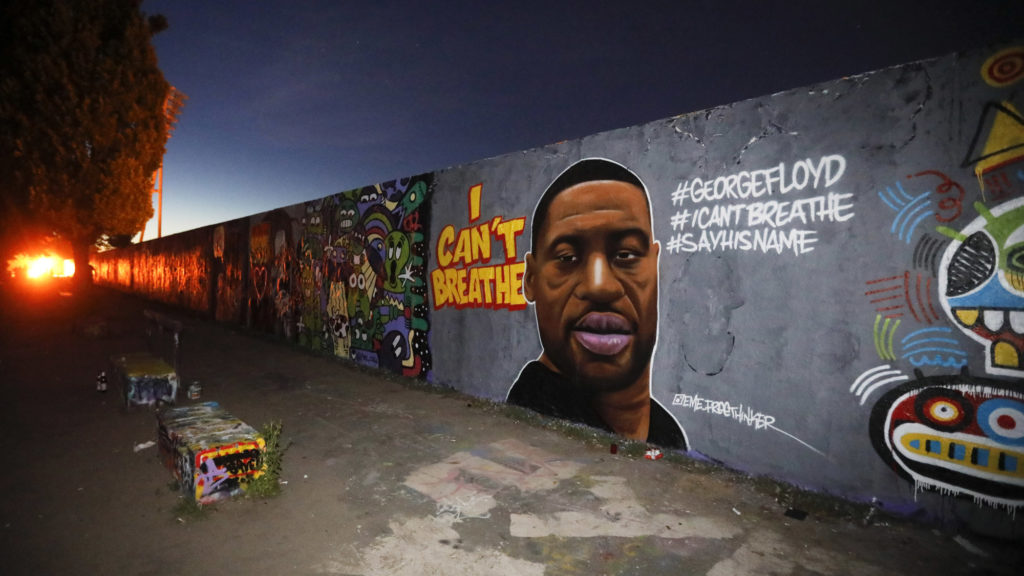
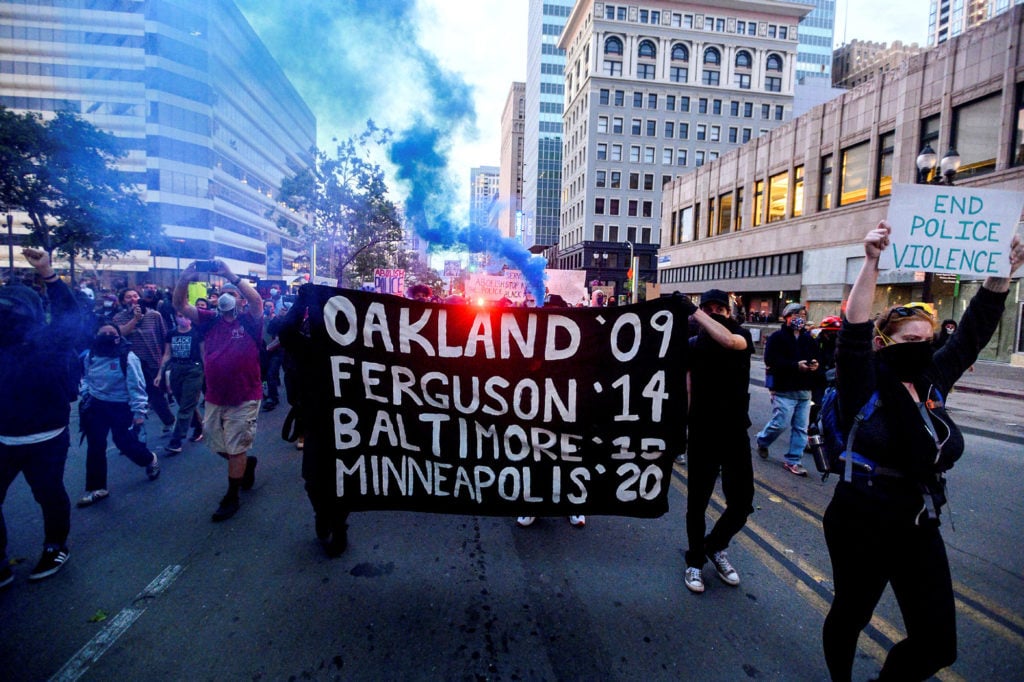
From the CrimethInc. Collective (31/05/2020), a reflection on a question that has so often been raised in the past, and that reappears again in the wake of the George Floyd police murder in Minneapolis …
What Will It Take to Stop the Police from Killing?
We’ve reached a breaking point. The murders of George Floyd—and Breonna Taylor, Tony McDade, and the other Black people whose lives were ended by police just this month—are only the latest in a centuries-long string of tragedies. But in the context of the COVID-19 pandemic, when the state is openly treating Black communities as a surplus population to be culled by the virus, the arrogance and senselessness of the murder carried out by Officer Derek Chauvin crossed a line. Supported by hundreds of thousands across the US and beyond, the people of Minneapolis have made it clear that this intolerable situation must end, no matter what it takes.
Since the Ferguson uprising of 2014, considerable attention has focused on racist police killings in the United States. Reformers of many stripes have introduced new policies in hopes of reining in the violence. Yet according to the Police Shootings Database, the police killed more people in the US last year than in 2015. If police killings are continuing or even increasing despite widespread public attention and reform efforts, we need to revisit our strategy.
How can we bring an end to racist police murders once and for all?
Continue reading
MANIFESTO AGAINST POLICE VIOLENCE / PUSSY RIOT x LASTESIS
This manifesto is co-written and co-performed by
feminists from Mexico, Chile and Russia. We unite our
forces to stop police violence. In solidarity we trust.
Pussy Riot x LASTESIS.
PART 1. LASTESIS
a feminist performance collective from Valparaíso, Chile; who created the activist performance piece “Un Violador en Tu Camino” (“A Rapist in Your Path”) that now is a feminist anthem worldwide.
Continue reading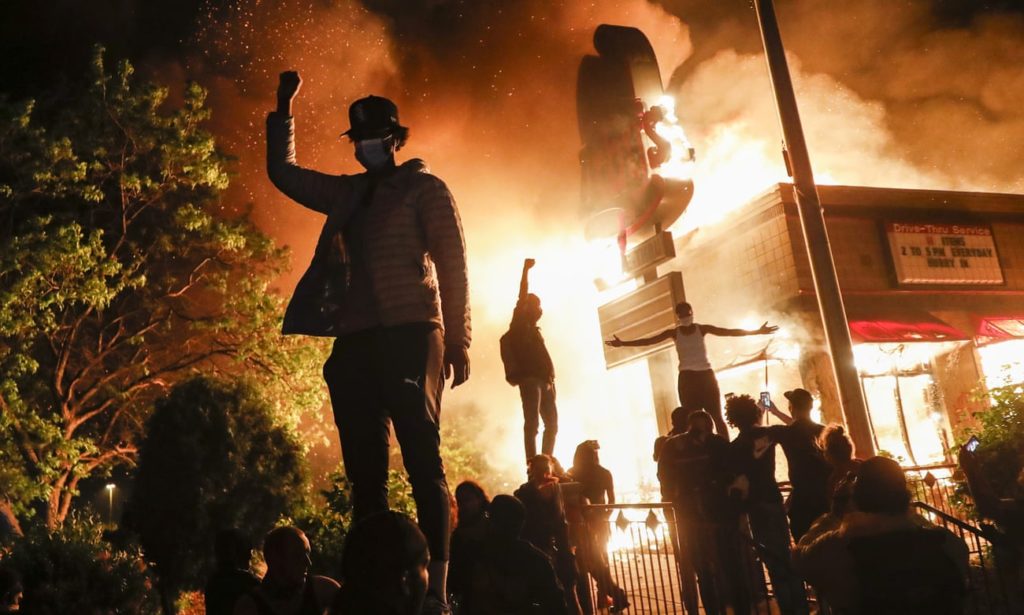
An anonymous contribution to the understanding of a rebellion, posted on It’s going down (28/05/2020) …
Between Looted Targets And Trillionaires: Solidarity With The Rebels In Minneapolis
Endlessly, we hear “why are they looting and burning their own community?” As if by geographic proximity, the Targets and Autozones and McDonalds and even the sacred small businesses have ever belonged to the workers and poor who now light them ablaze. At a time where historic unemployment and disparity meets skyrocketing corporate profits and the advent of the first ‘trillionaire,’ we hear the scolds and defenders of the present order mobilizing to shame those who are reclaiming their time, their labor and their lives. They remind us that there is a ‘correct’ way of doing things, that there are channels and representatives we must go through to seek justice. Meanwhile, the stores are burning, people are pushing police into retreat, and dancing in the streets.
Continue reading
From the CrimethInc, reading the Minneapolis riots …
Minneapolis: Now This Fight Has Two Sides – What the Riots Mean for the COVID-19 Era
The demonstrations this week in Minneapolis mark a historic watershed in the COVID-19 era. As we argued in March, there are some things that are worth risking death for. Perpetuating capitalism is not one of them. But some of us face threats even more deadly than COVID-19. It is worth risking our lives to fight for a world in which no one will be murdered the way that George Floyd was—and what is happening in Minneapolis shows that people are ready to.
Continue reading
A new way of life, not a new faith….
Friedrich Nietzsche, The Antichrist
To speak of anarchism as a way of life, as an ethics, takes us to difficult questions about what it is to be, to act, as an anarchist. And perhaps among what is most important about the written work of Tomás Ibáñez is that he has never shied away from confronting them directly, as he does in the work that we share below, translated from the french and published with Grande Angle Libertaire. And it is a reflection which calls up again the centrality of mutual aid in anarchist practice.
Existential Anarchism
(Grande Angle Libertaire, 25/05/2020)
If the reference to the “existential element” of a political option refers to the fact that, apart from a membership of simple convenience, people who commit to it integrate this political choice as a structuring element of their social and personal identity, with all of the repercussions that this has on their lives, it is clear that this is certainly present in anarchism, but also, from left to right, in the whole, broad range of political ideologies.
On the other hand, if this reference refers to the fact that a political option carries an existential dimension, the range narrows considerably and anarchism then presents itself, not only as one of the options which satisfy this condition, but again as one of those where it asserts itself most clearly. From my point of view, there is no doubt as regards this matter, the existential element is constitutively part of anarchism.
Continue reading
As a compliment to our last post reflecting on current mutual aid initiatives in the face of the COVID-19 pandemic, and for its own sake, we share an excellent piece published by the CrimethInc. collective on anarchist mutual aid practices during the cholera epidemic in Naples at the end of the 19th century.
The Anarchists versus the Plague: Malatesta and the Cholera Epidemic of 1884
In 1884, cholera tore through Italy, claiming thousands of lives. Despite a three-year prison sentence hanging over his head, Errico Malatesta joined other revolutionary anarchists on a daring mission to Naples—the heart of the epidemic—to treat those suffering from the disease. In so doing, he and his comrades demonstrated an alternative to coercive state policies that remains relevant today in the age of COVID-19.
The following text recounts the story of the outbreak and Malatesta’s intervention, including all the available primary materials about the Italian anarchists’ participation, some of which have not previously appeared in English. Much of the historical background is drawn from Frank M. Snowden’s excellent Naples in the Time of Cholera, 1884-1911. Thanks to Davide Turcato, the editor of Malatesta’s complete works; the Centre International de Recherches sur l’Anarchisme in Lausanne; and radical archivists and librarians everywhere who preserve anarchist history, enabling us to learn from the past.
Continue reading
The mutual-aid tendency in man has so remote an origin, and is so deeply interwoven with all the past evolution of the human race, that it has been maintained by mankind up to the present time, notwithstanding all vicissitudes of history. It was chiefly evolved during periods of peace and prosperity; but when even the greatest calamities befell men — when whole countries were laid waste by wars, and whole populations were decimated by misery, or groaned under the yoke of tyranny — the same tendency continued to live in the villages and among the poorer classes in the towns; it still kept them together, and in the long run it reacted even upon those ruling, fighting, and devastating minorities which dismissed it as sentimental nonsense. And whenever mankind had to work out a new social organization, adapted to a new phase of development, its constructive genius always drew the elements and the inspiration for the new departure from that same ever-living tendency. New economical and social institutions, in so far as they were a creation of the masses, new ethical systems, and new religions, all have originated from the same source, and the ethical progress of our race, viewed in its broad lines, appears as a gradual extension of the mutual-aid principles from the tribe to always larger and larger agglomerations, so as to finally embrace one day the whole of mankind, without respect to its diverse creeds, languages, and races.
Peter Kropotkin, Mutual Aid: A Factor of Evolution
The proliferation of mutual aid groups and organisations, often literally so-called, in response to the consequences of the COVID-19 pandemic on people’s daily lives, invites reflection.
Continue reading
United States: Facing counter-insurgency in times of riots
Counterinsurgency: dousing the flames of Minneapolis
Peter Gelderloos (Roarmag 04/06/2020)
As people rise up against police violence and structural racism, what counterinsurgency techniques is the state deploying to attack and undermine the movement?
The uprising that has spread across the United States since the police murder of George Floyd on May 25 in Minneapolis has, like any rebellious movement, met with police strategies for counterinsurgency. It is well documented how modern police forces systematically use counterinsurgency strategies against their own populations.
Continue reading →