I took up the cinema which can tell about the others, about those who have no right of voice and are unable to speak. This kind of cinema is not aimed at tempting or diverting somebody from the world.
Tony Gatlif (from an interview for the Ukranian newspaper The Day)
I don’t believe art changes reality, … That was never the case. What art can do is scratch a memory – and that’s important.
Amos Gitai, The Guardian, 04/09/2026
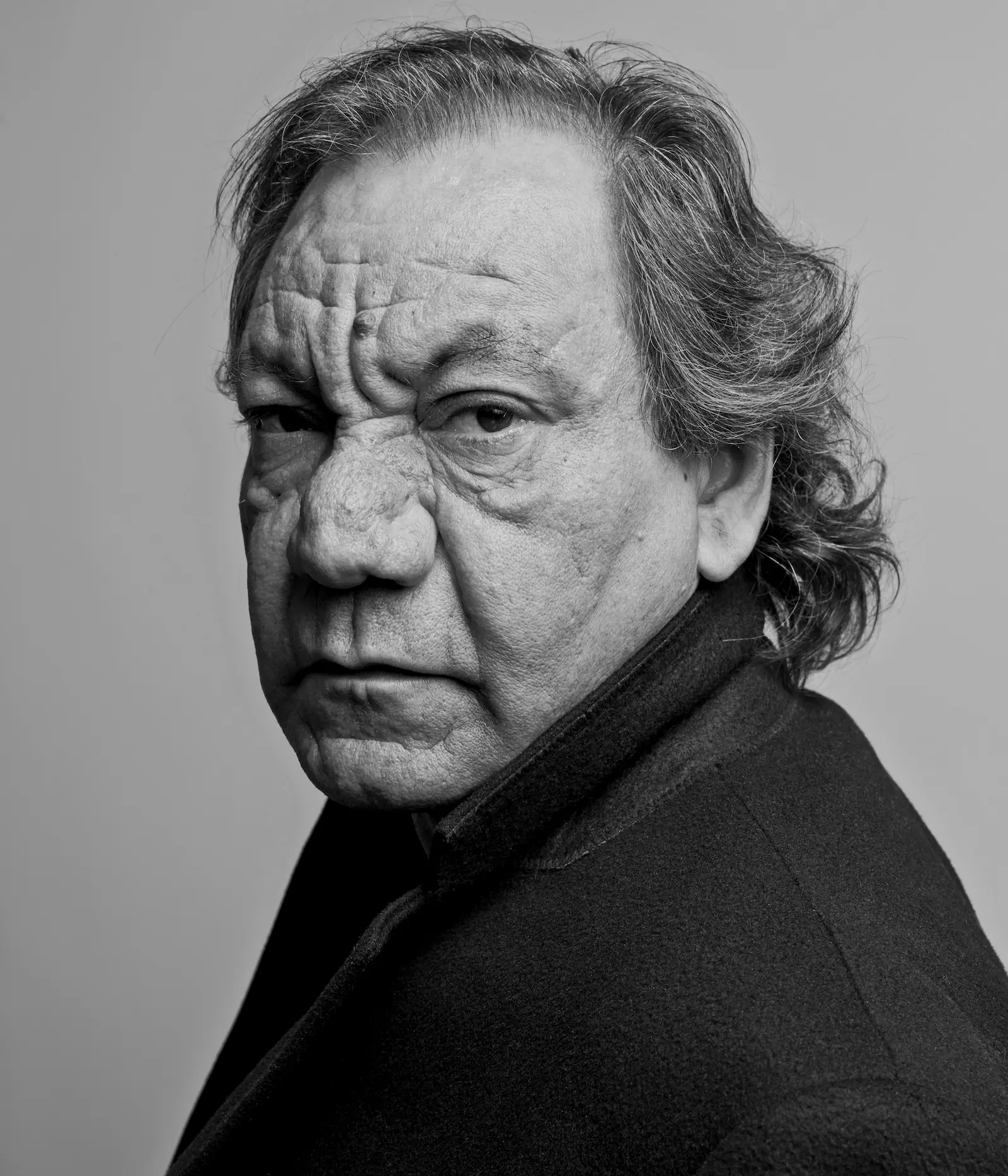
Tony Gatlif (whose real name is Michel Dahmani) was born on September 10, 1948, in the suburbs of Algiers to a family of Andalusian Roma. He discovered cinema during his all-too-brief years at school, as he spent most of his time on the streets. He was illiterate and a budding delinquent, but his memories of the movies never left him. At the age of twelve, to avoid an arranged marriage, he left for Algiers. He distanced himself from his family and worked as a shoeshine boy. He spent his early childhood there until the early 1960s.
Tony Gatlif recounts his memories of his youth:
“There were nearly 500 of us children. We lived in the streets, free. We hated school, its fences, its benches. We didn’t want to be locked up. So the authorities threatened to stop paying family allowances to those who didn’t send their children to school. They failed. Next, they tried a different approach, offering milk and flour to diligent students. Another failure. It was the schoolteacher who found the solution. He bought a 16mm projector, enrolled the school in the Jean Vigo film club, and every week screened a film that served as the basis for the lessons. That’s how I learned about film. I owe my entire career to this teacher, who confessed to me a few years ago that he had supported the FLN at the time.”
(Source: website tonygatlif.free.fr, dedicated to the life and work of Tony Gatlif)
“Music is something vital. Without it, I believe I would be unable to exist, and this has been the case since I was a very young child. Without constituting a religion in the slightest, it represents the only true link between the dead and the living; it carries joy, pain, melancholy, and love to the peaks of emotion.”
(Source: website tonygatlif.free.fr, dedicated to the life and work of Tony Gatlif)
“Music is about sensations, and sensations come first. It’s the soul of the characters… I don’t express myself at all with photos, with visions.”
Tony Gatlif, Libération, 04/09/2026
“I have experienced war, I saw people having their throats slit in the vineyards. It was disgusting and I had nightmares about it. I did not see humanity there. Maybe that conditioned my life as a filmmaker. When you make films, the first thing you have to do is make movies for ordinary people. We are not ‘stars’ and we have no interest in being ‘stars’. We make films because we love the people who love movies. It’s a source of pride to us that people go to our films and get to know us. The people who call themselves ‘stars’ are idiots,” Gatlif said in an interview with www.objectifgard.com.
(Source: romea.cz)
Tony Gatlif, Canta Gitano/Corre Gitano (1981)
Tony Gatlif, Latcho Drom/Safe Journey (1993)
Tony Gatlif, Gadjo Dilo/The Crazy Stranger (1997)
Tony Gatlif, Vengo (2000)
Tony Gatlif, Transylvania (2006)
I will only find peace of mind when I stop making films. When you have peace of mind, you do not need to make films, and cinema will drop away as an unnecessary thing. Can you fancy making a film if you feel inner peace? Nothing is taking place. I could just film a tree all day and night or watch clouds for hours on end. And the audience? It needs feelings, conflicts, and contradictions. All this runs counter to inner peace.
Tony Gatlif (from an interview for the Ukranian newspaper The Day)
Suggested Reading:
Mehdi Benallal, “L’art libertaire de Tony Gatlif”, Le Monde diplomatique: les blogs, 23/02/2010