We formerly shared the archive of the writings of the argentine based Colectivo Situaciones, posted at the online website lobo suelto! The importance of this work for the understanding of events in argentina, and beyond, leads us this time to share a recent english language translation of a text by the Colectivo Situaciones – part of a larger print anthology – and published online by the Ill Will collective (02/05/2023).
This month Minor Compositions is releasing the first English translation of Hypothesis 891: Beyond the Roadblocks, a book length collaboration between the Argentine militant research collective Colectivo Situaciones and the Unemployed Workers’ Movement of Solano (MTD Solano). That English speakers had to wait over two decades to read this work testifies to the difficulties that autonomous thought has faced in leaping over what the Bolivian anarcho-feminist theorist Sylvia Rivera Cusicanqui refers to as the “colonial breach.” It was in an effort to subvert this breach that Ill Will launched Weavings, a series that aims to make available in English a wide range of theoretical and strategic texts from Latin America’s new emancipatory tradition.
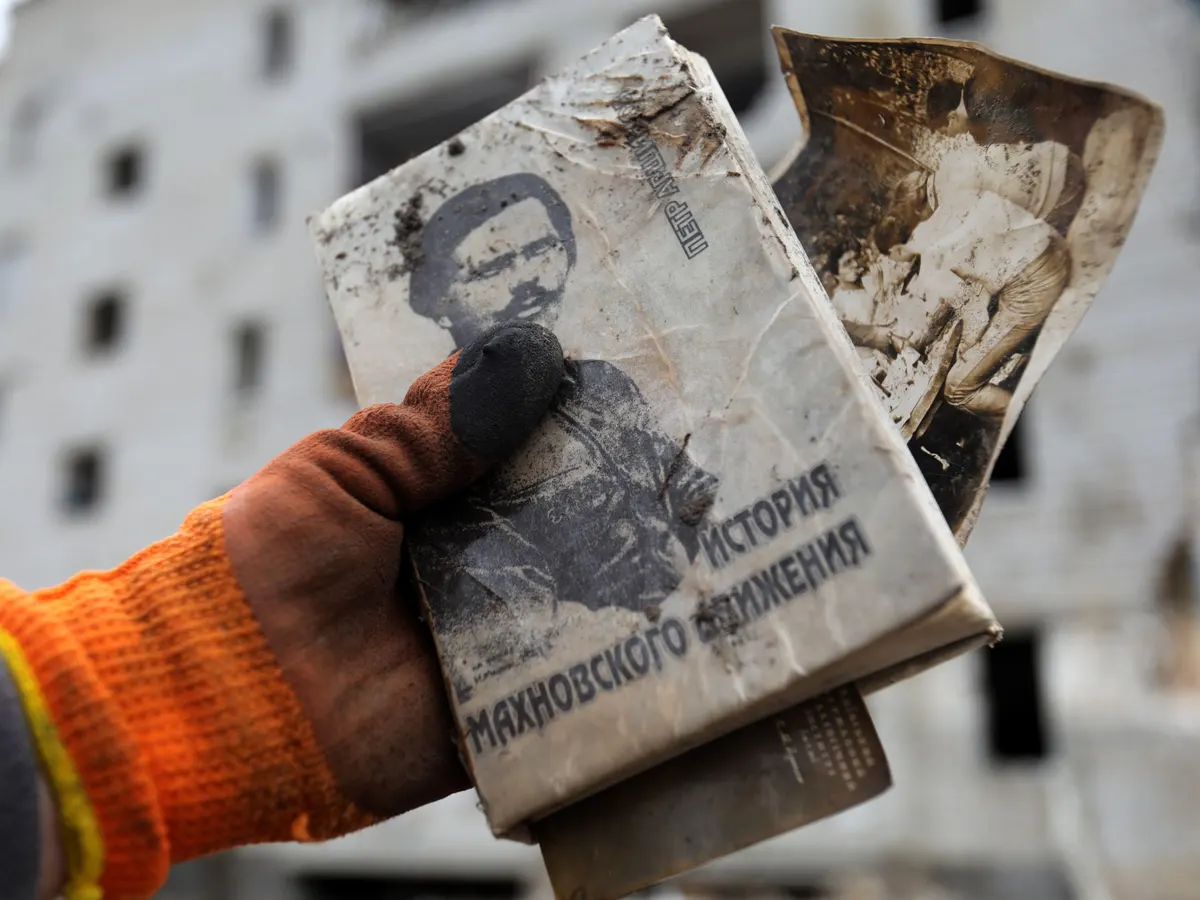
This zine is dedicated to the memories of Yury Samoilenko, Sergey Petrovich, Igor Volohov, Finbar Cafferkey, Tisha, Dmitry ‘Ilya’ Petrov, and Andrew Cooper, may they all rest in power!
On 24 February 2022, one man, acting for his own domestic political purposes, launched what he had hoped would be a quick and easy war. With a barrage of missiles to apartment buildings, power stations, and hospitals, an iron fist of brutality attacked a land that had over the past 200 years been the scene of so much bloodshed and destruction. The Crimean War, World War I, the wars of the late 1910s and early 1920s, Stalin’s artificial famines (the Holodomor) of the 1930s and the terror and purges that followed, World War II – especially the Holocaust, and the first Russian Invasion in 2014.
Serge Duteuil-Graziani came out of a coma, a month after being seriously injured during the demonstration against mega-reservoir in Sainte-Soline on March 25, 2023. But his prognosis remains critical.
We begin with a press release of April 26, from his parents. This is followed by an important critical reflection on the events in Sainte-Soline by one of the collectives directly involved in the protests of March 25, Les Soulèvements de la Terre, and translated from the french by Scott Branson for the Ill Will collective (24/04/2023).
Statement from Serge’s parents
One month after the grenade shot that seriously injured our son Serge in the head on March 25, 2023, during the demonstration against the “megabasins” in Sainte-Soline, uncertainty remains about his future.
According to purely clinical medical criteria, Serge has come out of a coma. This means that he half-opens his eyes, but not that he is awake.
The treatment he has received since his arrival at the hospital has been aimed at controlling various injuries and infections. These were caused by the grenade attack he suffered, but also by the conditions in which he received first aid at the demonstration site: the security forces did not allow the fire brigade or ambulances access to the wounded to serve them.
This treatment contributed to the fact that Serge’s condition, which is still “extremely fragile”, did not deteriorate further. This gives hope that he will regain consciousness, but that is still not the case.
To date, it is impossible to know if Serge will regain his senses and the use of his body (his limbs and senses, his ability to breathe and speak) or to assess the aftermath of his injury, and there are still fears of a relapse of infection.
Therefore, his vital prognosis continues to be in danger. That is why we denounce any use that can be made of the fact that he has come out of a coma: Serge is, unfortunately, far from out of danger. To claim otherwise would be a pure lie.
Every year, since 1974, the portuguese state, through its politicians and institutional “nobility”, commemorates the 24 of April, as the birthday of the country’s democracy. Ignored, forgotten, brushed away, is the “revolution” occasioned by the military coup d’état of that day: factory and land occupations, appropriation of housing estates, the proliferation of “grassroots” artistic-cultural expressions, the refusal of the colonial war, in sum, a sustained and fracturing insurrection against the old, fascist regime, that created and generated experiments of freedom that would only be closed down by another coup, on November 25th of 1975.
Today, it is the revolution that is pushed aside, because among those who hold power, there is fear; the day has even been transformed officially into “Freedom Day”!
However, preceding the events of 1974-75, there was a long and rich tradition of not only anti-fascism, but a much older and radical revolutionary anti-capitalism expressed in the country’s anarchist and revolutionary anarcho-syndicalist movement, a moveemnt that emerged towards the end the 19th century and that found expression above all in the Confederação Geral do Trabalho – CGT.
We share below an excellent testimonial-documentary dedicated to the history of anarchism and syndicalism in portugal, from 1886 to 1975. What we share below however is without subtitles, but a version with english language subtitles can be found here.
And, so as to in some manner contextualise this all too often forgotten history, we begin with the words of the anarchist, Christian Ferrer.
… man must refuse to be his role, and revolution must attack all roles. In other words … revolution acts not only against organizations, institutions, systems, and structures, but also, and concurrently, against each member of this society, his behavior, and his beliefs. Acting at the same time against and for him—to release him from his myths of money, of the nation, of work, of the state, or of socialism—from the chains he worships (gilded perhaps, but still chains).
Jacques Ellul, Autopsy of Revolution (1969)
Anarchists are prone to political idol worship. Though by no means exclusive to anarchists, their/our susceptibility to them does ill. The agitation of a demonstration that develops into a riot; isolated individual and/or collective gestures of rebellion; the riot or the insurrection that promises revolution; the missing philosophy or ideological expression that will make sense of it all; the revelation of the absent revolutionary subject; the creation of the properly radical organisation; revolutions past: each carries a power of seduction and each taken as privileged renders us blind to the uncertainty and contingency of events.
Every revolt engenders a response from the state; every state reform in response to demands for justice risks reinforcing the state and its utilitarian, economic logic; every planned and institutionalised revolution threatens the betrayal of insurrection. This is the tragedy that inescapably haunts all rebellious politics.
Let us take for granted, let us assume, that what characterises anarchy is the refusal of command and the insistence that we are all equal and singular in our capacity to decide how we live together. Any violation of this is a betrayal to the anarchist, whether in the guise of an established society or in that of a “revolutionary means”. This may imply, as Jacques Ellul wrote, that an “anarchist society” is impossible:
The true anarchist thinks that an anarchist society — with no state, no organization, no hierarchy, and no authorities — is possible, livable, and practicable. But I do not. In other words, I believe that the anarchist fight, the struggle for an anarchist society, is essential, but I also think that the realizing of such a society is impossible. (Anarchy and Christianity, 1988)
But whether it is or not – for who can tell, when no one is entirely sure what it would look like -, what fundamentally should, must, characterise the anarchist, as a way of being in the world, is to be a conscientious objector to everything that tramples on our freedom and equality, with lucidity and wisdom.
Those who say that a global revolution is needed if we are not simply to change the government are right.
But does that mean that we are not to act at all? This is what we constantly hear when we advance a radical thesis. As if the only mode of action were political! I believe that anarchy first implies conscientious objection — to everything that constitutes our capitalist (or degenerate socialist) and imperialistic society (whether it be bourgeois, communist, white, yellow, or black). Conscientious objection is objection not merely to military service but to all the demands and obligations imposed by our society … . (Anarchy and Christianity, 1988)
We share below an essay on Jacques Ellul’s work; a work that we are tempted to describe as urgent.
We share a historical-political essay on the war in Ukraine, by Wayne Price, from the latest edition of the Black Flag Anarchist Review.
Lessons for Anarchists About the Ukraine War from Past Revolutions
Wayne Price (BlackFlag Anarchist Review Volume 3 Number 1 – Spring 2023)
The Ukraine-Russia war is shaking the world. Dealing with it, anarchists and other far-left radicals can learn much from contrasting it to previous conflicts. I chose to contrast it to two major wars, the Spanish revolution (because of its importance in anarchist history) and the Vietnam-U.S. war (because I participated in the movement against the war).
Revolutionaries study revolutions. For example, the anarchist Peter Kropotkin wrote a history of the French Revolution. Yet I have seen little discussion of the present-day Ukrainian-Russian war which relates it to past revolutionary wars. (For the purpose of this essay, I am lumping together revolutions, civil wars, and wars of national liberation.)
The Ukrainian conflict is not an internal revolution or civil war – it is a war of national liberation, of an oppressed people against an imperialist invasion. But revolutionary anarchists and other anti-authoritarian radicals need a strategy to deal with it. They need to relate their activities in the war to their goal of an international revolution of the working class and all oppressed, winning a world of freedom, self-determination, and cooperation. This is a matter of general strategy, programme and principles, not of immediate tactics and slogans. Those depend on the specific time and place and only Ukrainians can determine them. Yet general strategies, as developed in reaction to past revolutions, may be relevant to today’s conflicts.
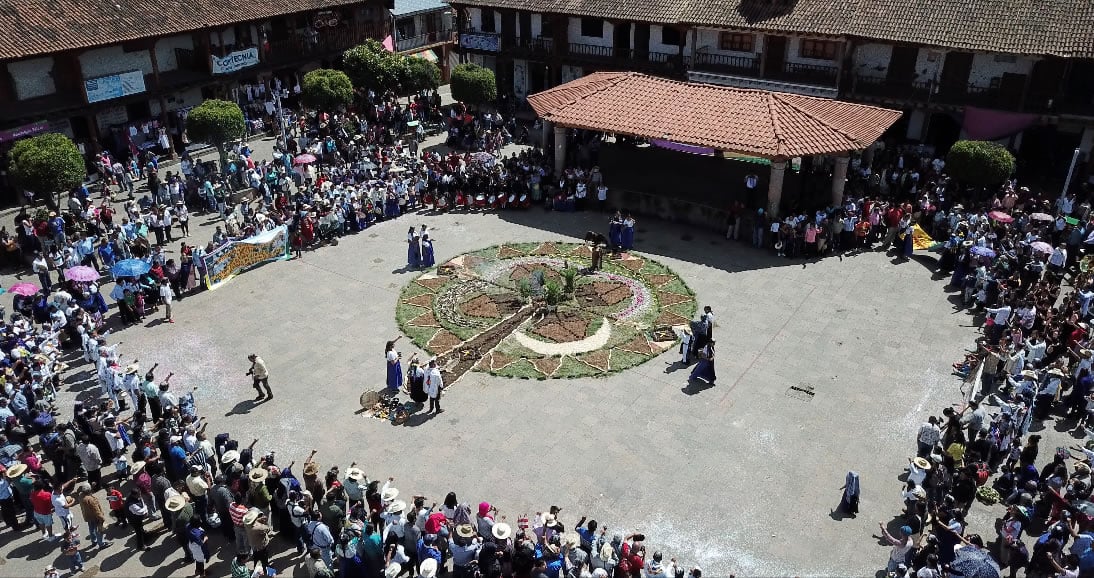
On April 15th, 2011, a popular uprising began in Cherán, involving a process of wagering on a system based on community self-government, communal goods and autonomy; no political parties, no police and no organized crime.
What follows (in text and film) are the reflections of Pedro Chávez, school teacher, revolutionary, indigenous Purépecha and participant in the process of building autonomy in Cherán.
It was on October 20th, 2022, when Alfredo Cospito, during his first hearing in which he had the right to participate, after his transfer to the 41bis isolation regime earlier on May 4th of the same year, that he declared his intention to begin a hunger strike.
The reasons for the protest resided in the harsh criticism made by the anarchist against the 41bis regime and his life imprisonment, without the possibility of any reduction in the sentence.
Since October 20th, 181 days have elapsed, in which Cospito, through an increasingly emaciated and weak body, has revealed what the special detention regime means exactly: illogical privations imposed on prisoners, harsh limitations devoid of any legitimate purpose, sensory deprivation, an Orwellian environment in which one is continuously watched and listened to by cameras and microphones. And not only: the impossibility to read, study and evolve culturally, as well as to receive books and magazines from outside, even when they are sent by the same publishers; elderly prisoners who are prevented for decades from embracing, and not even touching their children, spouses, siblings …
Thanks to Cospito’s protest, to the mobilisations throughout the world of varied extra-parliamentary political activists, to the anarchist movement, to intellectuals who have positioned themselves in support of the reasons for the protest, to the world of the media that has allowed these uncomfortable issues to reach people’s homes, millions of people, including many belonging to younger generations, have understood the incompatibility of 41bis with the principles of humane punishment and, therefore, with the Italian Constitution born of the anti-fascist struggle.
Thanks to Cospito’s story, 41bis is less and less tolerated by a public opinion that in recent months has been called upon to play an active role that would overcome the common indifference to the Other.
To this immediate result, it is necessary to add another: the fact that the appeal proposed by the lawyer Antonella Mascia from Strasbourg and by myself to the European Court of Human Rights, which had as its object, precisely, the specific penitentiary regime of article 41-bis of the Italian Penal Code, has been admitted for judgement.
The appeal, in which the serious violations of the European Convention on Human Rights were denounced, will be evaluated in the next two or three years (normal times for a sentence) and could represent the legal key to eliminate the inhuman instrument that is 41bis, as has happened with unconditional life imprisonment.
Last but not least, we must highlight the objective victory achieved with yesterday’s decision of April 18, 2023, by the Constitutional Court which, as can be read in the official statement, has not simply decided on the fate of the anarchist prisoner, but has made a declaration on the unconstitutionality of the prohibition to apply any type of mitigation, in the case of repeated recidivism, for all crimes whose maximum penalty is fixed and provides exclusively for life imprisonment.
In conclusion, it can be said that the struggle initiated by Cospito has achieved the predetermined objectives. The waiting times for the decision of the ECHR, unlike those of the Constitutional Court, which are much more limited, are not compatible with a hunger strike, although it is worth waiting for the Strasbourg decision.
Thus, Alfredo Cospito, after 180 days of fasting and having put his own life in danger, having lost 50 kilograms and compromising his motor functions as a result of damage to his peripheral nervous system, on April 19, 2023, has decided to put an end to the hunger strike.
In making this decision, Alfredo Cospito thanks everyone who has made this very tenacious and unusual form of protest possible.
The CGT, the CNT and Solidaridad Obrera present an agreement for the unity of action of the three organisations. A historic step for anarcho-syndicalism
Last Monday, April 10, at the premises of the Anselmo Lorenzo Foundation in Madrid, the three anarcho-syndicalist forces of our country jointly presented a shared document that calls for the confluence and unity of action of militant labour unionism.
Thirty years after the division of historical anarcho-syndicalism, the three main organisations in Spain, the General Confederation of Labor (Confederación General del Trabajo-CGT), the National Confederation of Labor (Confederación Nacional del Trabajo-CNT) and the Solidarity Workers Union Confederation (Confederación Sindical Solidaridad Obrera) have presented a joint document entitled To the working class: For mobilisation and confluence. Maribel Ramírez, Secretary of Trade Union Action of the CGT, Antonio Díaz, General Secretary of the CNT and José Luis Carretero, General Secretary of Solidaridad Obrera intervened in the public presentation of the document. The act was held at the headquarters of the historic Anselmo Lorenzo Foundation, linked to the CNT and depositary of the main archive of the libertarian movement in our country.
Thus all you small landowners, whether isolated or joined in communes, are indeed weak against those who try to enslave you—the land grabbers who are after your small plot of land and the authorities who try to take all the income from it. If you do not know how to join together, you will soon share the fate of millions upon millions of men who are already stripped of all rights to sow and reap and who live as wage slaves. They find work when the bosses are interested in giving it to them, and are always obliged to beg in a thousand ways, sometimes asking humbly to be hired, sometimes even holding out their hands to plead for a meager pittance. They have been deprived of land, and you might be among them tomorrow. Is there really such a big difference between their fate and yours? They have already become victims of this threat, while it spares you for a day or two. Unite, all of you, in your misfortune or in your peril! Defend what you still have, and reconquer what you have lost!
Otherwise your fate will be horrible, for we are in an age of science and method, and our rulers, served by an army of chemists and professors, are preparing a social structure for you in which all will be regulated as in a factory. There, the machine controls everything, even men, who are simple cogs to be disposed of when they take it upon themselves to reason and to will.
Élisée Reclus, To My Brother the Peasant
More and more people are giving up on work and modern society in order to live off-grid, and resurrecting ideas long associated with anarcho-primitivism. But, what does this impasse tell us about the state of the left today?
In a 1971 essay on then-rising environmentalist tendencies within the New Left, conservative philosopher Ayn Rand theorized an emergent cosmology that pitted technology against nature in a struggle for the soul of man. “The demand to ’restrict’ technology is the demand to restrict man’s mind,” she wrote in her essay “The Anti-Industrial Revolution,” brusquely dismissing “ecological crusaders and their young activist followers” as “cringing advocates of the status quo in regard to nature.” In Rand’s telling, conservationists of any hue may as well have been calling for wholesale abolition of industrial manufacturing.
The alarm was more than a little caricatured – broadly speaking, the socialist left has always understood industrialization as a necessary precondition for social advancement – and few of her ecologically minded contemporaries employed rhetoric as black-and-white or anti-human as Rand would suggest. Some, however, have proven willing to do so.





Colectivo Situaciones: Twelve Hypotheses about Counter-power
We formerly shared the archive of the writings of the argentine based Colectivo Situaciones, posted at the online website lobo suelto! The importance of this work for the understanding of events in argentina, and beyond, leads us this time to share a recent english language translation of a text by the Colectivo Situaciones – part of a larger print anthology – and published online by the Ill Will collective (02/05/2023).
This month Minor Compositions is releasing the first English translation of Hypothesis 891: Beyond the Roadblocks, a book length collaboration between the Argentine militant research collective Colectivo Situaciones and the Unemployed Workers’ Movement of Solano (MTD Solano). That English speakers had to wait over two decades to read this work testifies to the difficulties that autonomous thought has faced in leaping over what the Bolivian anarcho-feminist theorist Sylvia Rivera Cusicanqui refers to as the “colonial breach.” It was in an effort to subvert this breach that Ill Will launched Weavings, a series that aims to make available in English a wide range of theoretical and strategic texts from Latin America’s new emancipatory tradition.
Continue reading →