
In June of 2014, we posted news about a series of okupations of banks in Catalonia, with the aim of creating social centres. One such okupation was baptised the Banc Expropiat of the Gràcia neighbourhood in Barcelona.
In June of 2014, we posted news about a series of okupations of banks in Catalonia, with the aim of creating social centres. One such okupation was baptised the Banc Expropiat of the Gràcia neighbourhood in Barcelona.

The anarchist collective CrimethInc. initiated in the month of May a critical analysis and discussion of “democracy”, promising a series of reflections. The series gains in significance with events in france around the movement Nuit Debout. What follows is the eighth essay, by Paul Z. Simons, , preceded by the introduction to the series and an introduction to the essay. We have shared earlier the first seven essays, The Party’s Over, From Democracy to Freedom, From 15M to Podemos, Destination Anarchy!, Occupy: Democracy versus Autonomy, “Gotovo Je!”: Reflections on Direct Democracy in Slovenia, Born in Flames, Died in Plenums: The Bosnian Experiment with Direct Democracy …

The anarchist collective CrimethInc. initiated in the month of May a critical analysis and discussion of “democracy”, promising a series of reflections. The series gains in significance with events in france around the movement Nuit Debout. What follows is the seventh essay, by pfm, Born in Flames, Died in Plenums: The Bosnian Experiment with Direct Democracy, preceded by the introduction to the series and an introduction to the essay. We have shared earlier the first six essays, The Party’s Over, From Democracy to Freedom, From 15M to Podemos, Destination Anarchy!, Occupy: Democracy versus Autonomy, “Gotovo Je!”: Reflections on Direct Democracy in Slovenia …
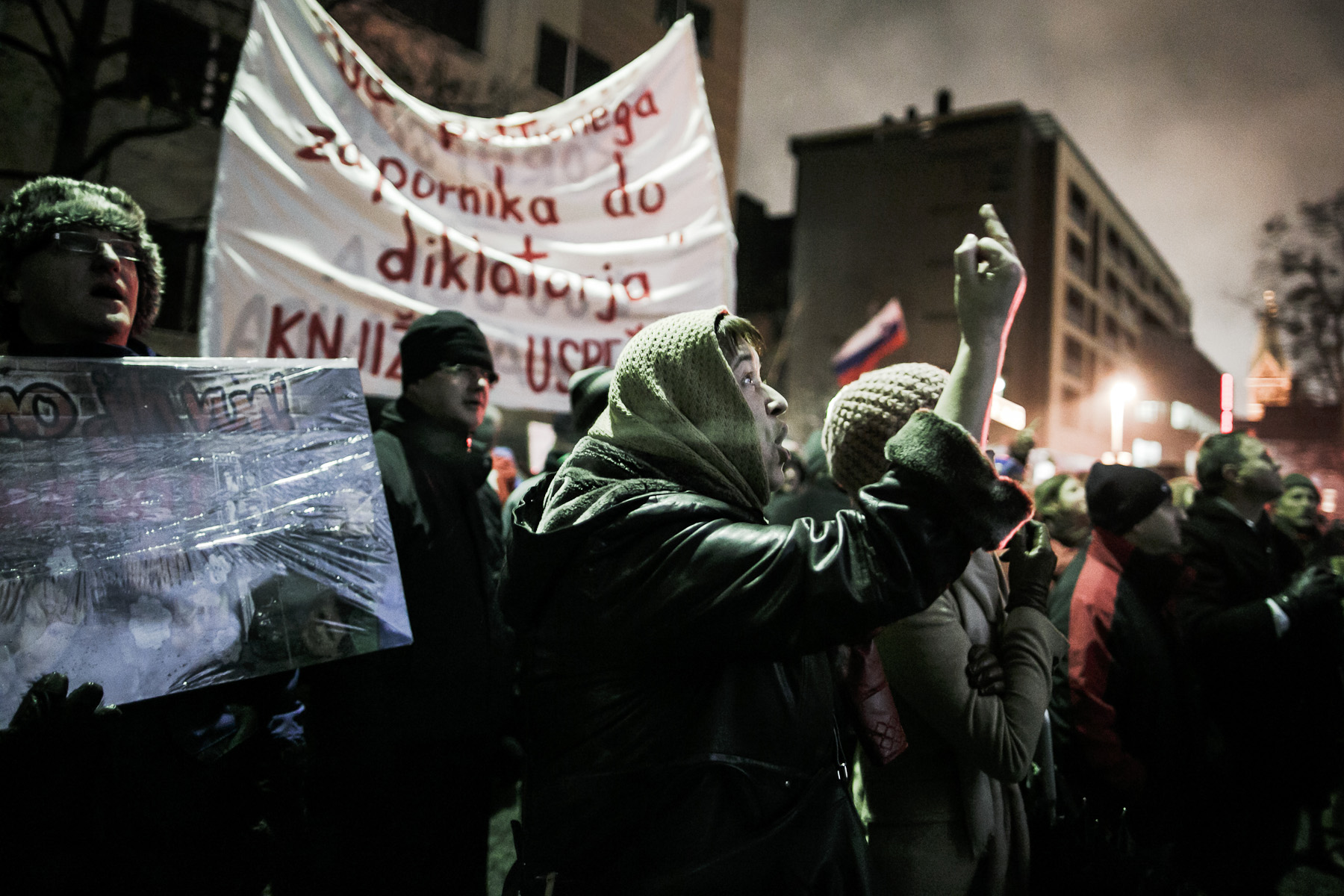
The anarchist collective CrimethInc. initiated in the month of May a critical analysis and discussion of “democracy”, promising a series of reflections. The series gains in significance with events in france around the movement Nuit Debout. What follows is the sixth essay, by pfm, “Gotovo Je!”: Reflections on Direct Democracy in Slovenia, preceded by the introduction to the series. We have shared earlier the first five essays, The Party’s Over, From Democracy to Freedom, From 15M to Podemos, Destination Anarchy!, Occupy: Democracy versus Autonomy …

Le dessin est une arme de combat.
Siné
The art of Siné, or Maurice Albert Sinet, struck like a boxer’s punch to the side of the head. But the dizziness was not intended for a ko, but to wake us up; caricature fitting of a Socrates. His drawings waged war on the police, the army, the clergy, politicians of all ideological strips, in sum the powerful, cutting outrageously to the bone, while never falling into self-righteous moralisms. What drove Siné was a love of life, something which obviously everyone should enjoy, but before which all manner of authorities could think of nothing better to do than to control, administer and destroy. As an anarchist (like his beloved cats), he would make no distinction between life and his political engagements. The latter, always lived with great intensity, would carry him to Algeria, Cuba, a brief flirtation with Maoism, during the height of the revolutions of the “third world”, ending always in disappointment. In france, in May of 1968 and latter in Portugal in 1974, he would throw himself into the tussle of militancy. He would even be the godfather of Malcolm X’s daughter.

On the occasion of the 5th anniversary of spain’s 15th of May movement, we publish a series of reflections on its significance within the context of spain, but also more broadly, for the understanding of revolutionary politics today. This series will compliment our effort to share ongoing reflections on Nuit Debout in france as well as the series being published by Crimethinc, under the title the anarchist critique of democracy. Not all of the texts share the same vision of 15M, but they serve to engage a necessary debate.
Below, we return to a text by Santiago López Petit written in the early days of 15M and published by the Espai en blanc collective on the 3rd of June, 2011. However much the movement may have changed (indeed, for some it no longer exists), the text retains its importance, not only for the understanding of what may have been/can be, but also for the understanding of all of the “occupy” movements of the last five years.

On the occasion of the 5th anniversary of spain’s 15th of May movement, we publish a series of reflections on its significance within the context of spain, but also more broadly, for the understanding of revolutionary politics today. This series will compliment our effort to share ongoing reflections on Nuit Debout in france as well as the series being published by Crimethinc, under the title the anarchist critique of democracy. Not all of the texts share the same vision of 15M, but they serve to engage a necessary debate.
The following essay by Enric Duran, one of the more active voices associated with the movement of integral cooperatives in spain, was originally published in la Directa (09/09/2015) and translated into english and published by x-pressed (26/09/2015), under the title “Spain: Enric Duran on social movements and the institutional path”.
On the occasion of the 5th anniversary of spain’s 15th of May movement, we publish a series of reflections on its significance within the context of spain, but also more broadly, for the understanding of revolutionary politics today. This series will compliment our effort to share ongoing reflections on Nuit Debout in france as well as the series being published by Crimethinc, under the title the anarchist critique of democracy. Not all of the texts share the same vision of 15M, but they serve to engage a necessary debate.
The text that follows is a translation by Cunning Hired Knaves of an essay by Amador Fernández-Savater. It was published on 16th October 2015 in eldiario.es, amid growing anticipation with regard to the Spanish general elections that were held in December. It explores how electoral politics takes shape as a spectacle, and explores the consequences for struggles against neoliberalism, in the wake of movements such as 15M in spain.

Nuit Debout, Place de la République, Paris, is a political space of many voices, where no one view dominates, or can gain dominion, as long as the general assembly which lies at its heart remains an open, horizontal assembly. Reflection and self-reflection are thus a permanent feature of the occupation.
Yet events in france continue to unfold (e.g., protest demonstrations, occupations, strikes) at a pace that makes any such exercise difficult. The choice then of what we have shared and continue do so as regards Nuit Debout is hazardous, yes; but also we believe necessary.
Nuit Debout: To live the commune – To live the revolt
Nuit Debout in Paris and elsewhere in france continues to occupy public squares, after now two months. The “movement’s” resilience testifies to agencies and virtues that are quickly passed over or ignored by far too many. This is of course not to say that Nuit Debout is above criticism. But to criticise the movement from afar, from the distance of intellectual or ideological purity, or simple slavishness to the status quo, does not take one far. And what we continue to share, stubbornly, are reflections from within that exemplify the openness and plurality of Nuit Debout. No one has all of the answers and however much the movement is pulled at and tugged on (by, for example, state authorities, labour unions, political parties, professional revolutionaries), it has remained strikingly cohesive, but cohesive in its plasticity to ever changing expressions and forms.
If the spark for the movement was the proposed labour reform of the current socialist government, now made law, Nuit Debout has since its emergence placed itself in opposition not only to the reform, but to the world that gave rise to it.
What follows is a reflection, in translation, on Nuit Debout published on May 27, in Paris-Luttes …
Continue reading →