From lundimatin #513, 24/03/2026
by Jean Claude Noël
“Ubi solitudinem faciunt, pacem appellant.” – “Where they make a desert [a solitude between people], they call that peace.”[1] Tacitus’s oft-quoted phrase, rarely examined in all its radicality, is neither a moral condemnation nor a mere historical observation. It denotes a structure. It states that, within the Western imperial tradition, peace is never the opposite of violence, but rather its stabilised, enduring and institutionalised form. In other words, the Pax is neither a ceasefire, nor a temporary suspension, nor a moment of harmony, but war transformed, frozen into a lasting structure—an environment in which violence is not abolished but concealed, normalised and brought into order.
America and its allies (including sixteen nations of the Atlantic bloc, as I would remind the committed Zeropeans (sic)) are set to reshape the world during the 21st century. This will come at the cost of a Hundred Years’ War. It will be waged against the UN, against Brussels and its allies; it will be waged against Islamists and against anti-Western racism. It will be waged against eco-pacifists and “cool” neo-Nazis, pop Bolsheviks and trendy nanarchists, against Eurabia and its minions. It will be waged against Zeroeuropa-Land.
Maurice G. Dantec, Le théâtre des opérations 2002–2006. American Book, Albin Michel, 2007, p. 122.
Where war remains an event, imperial peace transforms violence into an environment. It enshrines war in laws, borders and the categories of the conceivable. Peace is no longer what comes after war: it is that through which war becomes invisible. This order unfolds according to a heliocentric architecture: a sovereign centre transfers authority, distributes light, the norm and truth. Everything else is peripheral, deviant, marginal. The barbarian is not merely an opponent but a resistance directed against the centre itself, against its principle of reason. In this way, the Western political horizon is constructed upon the structuralised violence of peace. To call this structure into question is to examine its ontology, its historical permanence and its contemporary crisis.
From Rome to the liberal West, from the legion to the drone, from the legal stele to the algorithmic code, the Pax functions as a political ontology. It presupposes a centre, a norm, a measure. It organises the world around a solar, heliocentric principle: a fixed point that distributes light, meaning and legitimacy.
To name the peace is to name the world. Whoever says “Pax” sets themselves up as the universal standard. That which eludes this naming is not merely hostile: it is deficient, archaic, irrational, behind the times. The barbarian is not, first and foremost, the one who attacks, but the one who does not recognise the centre.
Pax as a concept is, semantically speaking, synonymous with violence and normalisation. The word Pax is a trap. In classical and imperial Latin, pacare means to subdue, to subjugate, to pacify by force. Peace is an act, not a state. It presupposes a prior operation: the annihilation or neutralisation of any capacity for resistance. Pax is therefore never symmetrical. It does not unite equal forces. It stabilises an asymmetry. In this sense, it is not the opposite of war, but its fulfilment.
This semantic shift is fundamental to understanding political modernity. For Pax has never disappeared; it has merely become more or less refined. It has abandoned the brutal vocabulary of conquest in favour of that of law, morality and security. But its structure remains the same: a centre imposes the conditions of stability, then naturalises this imposition as the world order.
Peace thus becomes what Walter Benjamin calls a conservative violence of the law: a violence that no longer strikes spectacularly, but which organises, administers, classifies and excludes. The Pax is reassuring because it endures. It is less shocking than war precisely because it is permanent. This is why empires love peace. Not out of humanism, but for the sake of efficiency. War is costly. Peace is profitable. It enables extraction, circulation and predictability. It transforms violence into yield.
The Pax Romana was a right of conquest and world governance. It can only be understood if read as a total imperial technology. Rome did not merely invent a territorial empire; it invented a way of shaping the world. Military conquest is but the first layer. The true Roman innovation lies in the transformation of violence into duration.
Roman law (ius) plays a central role here. Contrary to a naively legalistic interpretation, it does not limit sovereign violence: it redistributes it, codifies it, and makes it transferable. Roman ius is a stabilising force: it transforms the exception into the rule, conquest into administration, and domination into normality. Roman law elevates warlike sovereignty to the status of a norm. Roman ius was never a check on power, but intrinsically a tool for stabilising and prolonging imperial domination. The Roman monopoly on violence is no longer measured by the fallibility of arms, but by the effectiveness of the law, religion and the integration of peoples. Violence becomes all the more effective the more it is rendered invisible.[2]
Roman citizenship is not an abstract right; it is a technique of asymmetrical integration. To be a citizen is to be counted, registered and mobilised. Thus, the Edict of Caracalla, often presented as a universalist gesture ahead of its time, must be understood as an extension of imperial control. To universalise citizenship is to universalise fiscal and military obligations. This vast expansion of citizenship is not an extension of rights but a broadening of duties, an organisation of taxation, conscription and control.[3] The Pax Romana rests on this tension: inclusion, which is always mobilising, and subordination.
The Pax Romana thus rests on a simple equation: the more the Empire expands, the more peace becomes necessary – not for the subjugated peoples, but for the reproduction of the imperial order itself. Peace here is a condition for rational exploitation. This logic introduces a fundamental division of the world. The limes does not merely mark a geographical boundary; it establishes an ontological boundary. Within it, the world is complete, legally constituted, pacified. Outside it, the world is formless, threatening, ripe for conquest.
Rome thus invents a political cosmology: the centre is not only more powerful, it is more real. The Pax Romana does not abolish war; it relegates it to the margins, whilst still rendering it legitimate. The enemy, within this geography, lies outside the ordered world, ready to be subjugated or exterminated. The limes defines the relationship between the civilised interior and the barbarian exterior, heralding the empire’s binary logic.[4]
This constitution of the solar centre – Rome – is the original paradigm of all political heliocentrism. But one must not misunderstand the term: the imperial sun is a normative sun, not an astronomical one. It determines what is visible, what is real, and what is entitled to political existence. What the limes establishes is not merely a geographical boundary but also an ontological one: on one side, the constituted, ordered, legally intelligible world; on the other, the shadow, the formless, the barbarian – open to conquest, without enforceable rights. Imperial ideology derives all its strength from this dual construction, which is both cosmological and legal: it is because Rome is the centre of the world order that it can claim to be just in the exercise of domination. It is this paradigm that the modern West has perpetuated, in new forms, right up to the present day: the Roman limes becomes a colonial frontier, then a space of migration, then a threshold of algorithmic visibility. What changes is the technology of demarcation; what remains is the ontological function: deciding who belongs to the ordered world and who does not.
With the Christianisation of the Empire, the Pax shifts in character without changing its function. It ceases to be merely legal and military: it becomes theological. If Rome dominates, it is no longer merely because it is strong, but because God willed it so.
This theological shift is decisive in more ways than one. Not only does it enable the imperial structure to survive the political fall of Rome – the institutions collapse, but the theology of order endures – but it also brings about a fundamental transformation in the nature of legitimation: domination no longer needs to be justified by force. It is now justified by divine will. The enemy is no longer merely the one who resists: he is the sinner, the heretic, the one who opposes the order willed by God. This “theologisation” of the Pax permeates medieval Christian universalism – the Crusades were wars of divine peace – and then, through a gradual secularisation, the modern universalism of the Enlightenment, where Reason takes the place of God but plays the same structural role: establishing the legitimacy of the centre, naturalising domination as a vocation. The thread is unbroken, from Constantine to Kant.
Peace thus ceases to be a mere political fact: it becomes a moral good. To reject it is no longer simply to resist a power; it is to oppose the world order. The enemy becomes a sinner, then a heretic, then a barbarian, and later the foreigner, the immigrant, and so on. Christian power is henceforth legitimised by its vocation to embody the divine will. Institutional violence becomes an instrument of sacred justice. Divine peace transcends politics but justifies “just”, sacred war in the name of the moral order.
This moralisation of the Pax is one of Jerusalem’s most enduring legacies to the West. It renders domination virtuous. It makes it possible to wage war in the name of peace. Jerusalem became the moral sanctification of the Roman order, finding a new pillar in Christianity. This reinterpretation dichotomises the enemy as sinner, heretic and barbarian. This reshaped Christian concept of peace imposes a belief in a deliberate and immutable moral order, in which war is a sacred virtue intended to purify the world. The Middle Ages institutionalised this sanctification, just as modernity secularised this imperial virtue in the form of universalism and natural law.[5]
It was this very normative universalism and coercive peace that Kant would champion. His work did not emerge in a vacuum: it was set against the backdrop of a specific historical moment, that of the French Revolution and the dynastic wars that were reshaping Europe. In 1795, the very year Kant published Perpetual Peace: A Philosophical Sketch, revolutionary France signed the Treaty of Basel with Prussia and Spain. This treaty, presented as a peace agreement between European powers, resulted in particular in Spain’s cession of the eastern part of Saint-Domingue to France. France thus gained complete sovereignty over the island, unifying under its control the most productive colony of the time, the one that C.-L.-R. James would call “the pearl of the Antilles”. Peace between Europeans was negotiated at the expense of enslaved populations. This coincidence is more than an irony of history: it reveals a structural pattern.
With Kant, the Pax imperiale changes its status: it becomes the norm. Perpetual Peace does not describe a state of the world, but a rational horizon intended to guide history. Peace is no longer what follows victory; it becomes that towards which everything must strive. This shift is decisive, for it allows the Pax to present itself no longer as a political fact, but as a moral imperative. Kantian universalism rests on a hypothesis that is rarely questioned: that of a single, transhistorical, transcultural reason, of which Europe is both the place of emergence and the model. Cosmopolitan law, intended to pacify relations between states, thus presupposes a normative homogeneity of the world to come.
We must therefore ask the question directly: what kind of peace is Kant referring to in Perpetual Peace? A universal peace, or a peace between European powers? A careful reading of the text – in which Kant implicitly invokes Leibniz and the Abbé de Saint-Pierre – reveals that the Kantian horizon is fundamentally European. Perpetual peace takes shape as a continuation of the Westphalian tradition: it is a matter of pacifying relations between the sovereign states of Europe, stabilising the balance of power amongst the great powers, and replacing dynastic disorder with a rational legal order. The Abbé de Saint-Pierre, from whom Kant directly inherited the fundamental intuition of a European federation, had himself explicitly excluded non-European peoples from his peace project. Leibniz, for his part, had been concerned with the unity of the Christian world in the face of the Ottomans. Neither of these two precursors to Kant conceived of peace as an inclusive universal: they envisaged an intra-European order. Kant radicalised and systematised this project, whilst retaining its fundamental architecture.
Consequently, Kant’s “perpetual peace” is nothing other than the philosophical realisation of the Westphalian Pax – founded on the European balance of power and the sovereignty of states – raised to a higher level of rationality. The 1795 essay in no way calls colonialism into question. Nowhere does it state that Europe cannot export war elsewhere: first to the Americas, then to Africa and Asia. This silence is not an omission: it is constitutive. Kant’s “perpetual peace” is an intra-European peace. What the Treaty of Basel illustrates with brutal clarity is precisely this: the European powers make peace amongst themselves and divide up the non-European world. France secures the whole of Saint-Domingue. Spain yields. Prussia negotiates. And meanwhile, on the island that was to become Haiti, hundreds of thousands of African slaves continue to produce the wealth that finances these pacified states. European peace is built upon perpetual war in the colonies.
This “perpetual peace” is therefore not universal: it is an agreement on the equitable division of spheres of influence and non-European territories, whether already conquered or yet to be conquered. Philosophically, it underpins the idea that relations between civilised states – that is to say, European states – deserve exceptional legal treatment, whilst relations with non-European peoples fall under natural law in its most brutal form: the law of the strongest, conquest and slavery. Kant himself, in his anthropological and geographical writings, explicitly establishes a hierarchy of races and peoples. His physical geography classifies non-Europeans into categories of inferior development. This anthropological hierarchy is inseparable from his political project: perpetual peace is conceivable only for those whom Kant deems capable of legal rationality. The others lie outside the contract. They inhabit the imperial frontier. The Kantian Pax is therefore, in its very structure, a Pax occidentalis which perpetuates and philosophically establishes Eurocentrism as a universal norm. Far from questioning colonialism, it legitimises it by remaining silent on the matter. Kant’s silence on Saint-Domingue, on slavery, and on colonial wars is a philosophical silence, not an oversight: it implies that these realities are not part of the world that “perpetual peace” is meant to organise.
This presupposition has far-reaching political consequences. Anything that does not conform to modern legal rationality is regarded as a deficiency. Difference becomes backwardness. Otherness becomes a problem. War, within this framework, is no longer merely a conflict of interests: it becomes a pedagogical moment in universal history. Kant does not celebrate war, but he tolerates it as a transitional driving force of moral progress. Violence is excused in the name of the end. The Kantian Pax therefore does not abolish coercion: it moralises it. It transforms domination into a duty. Thus, Kantian peace moralises violence, transforming war into a “pedagogical moment for the barbarians”, and naturalises Western domination as a normative model. Perpetual Peace therefore aims solely to perpetuate a European order, described as civilised. By positing “perpetual peace” as the teleological horizon of reason – that is to say, as the necessary endpoint towards which history is directed by the internal logic of rationality – Kant philosophically paves the way for the great Hegelian transformation: the one that will make universal history no longer a succession of contingent events, but the necessary unfolding of the Spirit towards its own realisation. What Hegel would call the Weltgeist, and what Kojève would translate into terms of a universal and homogeneous State, is already contained in embryonic form within Kant’s teleology of peace: the idea that reason carves out a path through history, and that Europe is its provisional and then definitive destination.
This teleological shift paves the way for modern liberal universalism in two respects: on the one hand, by providing domination with a rational foundation rather than merely a military one; on the other, by embedding this domination within a philosophy of history oriented towards an end. Peace thus becomes an imperative that can be enforced. Armed intervention is justified as a means of facilitating entry into rationality. The Pax ceases to be imperial in appearance, whilst remaining so structurally. It is in this sense that Perpetual Peace constitutes further evidence of Kantian Eurocentrism: not only does Kant fail to question colonialism, but he provides its philosophical foundation. By establishing that perpetual peace presupposes the existence of republican states governed by reason, he de facto excludes all peoples whom he deems incapable of attaining this form of political organisation – which, within his own anthropology, encompasses virtually all non-Europeans. What the Treaty of Basel makes clear is that this philosophy of peace functions as a technology for partitioning the world: the European powers pacify one another and negotiate their colonial spheres of influence as one would settle a succession. Saint-Domingue is not a moral issue in this treaty. It is a prize, a compensation, a bargaining chip between rational states. Kant’s perpetual peace envisages the same states, the same actors, the same stage. It is the philosophy underpinning this treaty. It is against this backdrop that the figure of Paul Valéry emerges: not as a break with the imperial philosophical tradition, but as its twilight moment, its unhappy conscience, the point at which the Pax occidentalis acknowledges its own fragility without, however, renouncing it.
Paul Valéry occupies a unique place in this genealogy, and his uniqueness stems from an internal tension that is never resolved. Where Kant prescribes, Valéry observes, laments and groans. Where universalism asserts itself, Valéry seems to doubt and express his resentment. But this doubt remains unfulfilled, trapped. He diagnoses the crisis without perceiving its root cause: that Western civilisation is not merely one form amongst others that is in decline, but a structure of domination revealing itself in its twilight hours. His doubt is still clouded, caught up in the atavistic tropism of the Westerner.
The famous triad – Greece, Rome, Jerusalem – whilst being a humanist celebration, indeed a paean, is also an analysis: Greece provides the form of the mind, the idea that the world is intelligible and measurable; Rome provides organisation, endurance, and the capacity to impose a standard; Jerusalem provides the moral imperative, the idea that this order is just, intended and necessary. This triptych thus provides the framework for a discourse of legitimisation: a whole set of lamentations and “clichés” to justify the Pax Occidentalis. Together, these three matrices constitute the source code of the West. Yet this triptych is not merely a list: it is a dialectical structure. Greece (thesis: formal reason, the logos), Rome (antithesis: organising power, the law), Jerusalem (synthesis: the morality that gives domination its inner necessity). Here, point by point, we recognise the ternary movement of Hegelian dialectics – and this is no coincidence. By reconstructing Western identity according to this Trinitarian schema, Valéry is still thinking in the categories of the philosophy of history that only believes he is lamenting. His triptych is Hegelian in spite of himself: it presupposes that the West is the fulfilment of a logical movement, that its form is necessary, and that its decline would be that of reason itself.[6] It enables Europe to conceive of itself as more than a civilisation: as civilisation itself. The Pax Occidentalis is the political expression of this triptych. It is never presented as domination, but as the union of rationality, legality and morality. Valéry’s triptych is an ideological coup and, in this sense, contains a historical bias whose process involves the elevation of certain traditions at the expense of others. This triptych is thoroughly debunked by the work of the historian Arnaldo Momigliano, notably in his book on the influence of Hellenism.[7]
And even though, in his eschatological elegy, The Crisis of the Mind (1919), he foretells the collapse of the West – “we civilisations now know that we are mortal” – he remains mired in Eurocentrism, reluctantly accepting the contingency of the European universal.
Valéry perceives with bitter lucidity that Europe has conflated its historical structure with the structure of the world. It has mistaken its heliocentrism for a cosmic necessity. When this heliocentrism wavers – under the impact of the Great War and the foreboding of a second catastrophe, of technology, of nascent globalisation – it is not merely a power that is in decline, but a system of meaning that is collapsing. He thus unwittingly offers a “lucid” diagnosis of the Western crisis: the Greece-Rome-Jerusalem triptych lies at the foundation of a civilisation in decline.[8] His view is that we must return to these roots, reactivating them for a regeneration in the theological sense. His perspective remains marked by a Eurocentrism that perpetuates the idea of Western superiority, obscuring the intrinsically violent dimension of the Pax Romana, which became the Pax occidentalis.[9] He is a nostalgic, a conservative – let us simply put it that way. This is why he was incapable of offering a solution or heralding a new universal order. His mind was trapped within the limes and the ius. And it is precisely this that makes him a central figure for reflecting on the current crisis: he is the thinker through whom we can understand the moment when the West must cease to equate itself with the world.
Valéry understood that the European Pax is inseparable from technology, and this is one of his most fruitful insights. Modern domination no longer rests solely on force or law, but on the capacity to produce forms, rhythms and standards – what would later be termed “soft powers”. Those who set technical, aesthetic and scientific standards no longer need to conquer through violence: they conquer through desire. The export of the Western model is, first and foremost, an export of a way of life, a way of counting, measuring and organising time. When these standards cease to be universally desirable – when other powers propose other forms, other rhythms, other models – the Empire loses its symbolic power even before it loses its military power. Valéry senses this moment without drawing its decolonial implications. What disappears with the hegemony of Western norms is not merely military or economic power: it is an entire regime of self-evidence, what we now call “soft power” in its deepest sense – the capacity to make one’s own model desirable. Hollywood, international law, academia, the reserve currency: these are all ways in which the West has made itself indispensable without having to present itself explicitly as imperial.
In Provincialising Europe (2000), Dipesh Chakrabarty specifically criticises this naturalisation of Western history and the obscuring of colonial violence.[10] For Chakrabarty, Western history has universalised its own conception of time – a linear, progressive time, oriented towards a horizon – whilst rendering all other conceptions of time invisible. Europe – the West – thus presents itself as the culmination of all history, and other peoples as laggards on its path. Valéry remains trapped within this logic: even in his melancholy, even in his mourning for the European universal, he does not question what this universality has cost others. He remains blind to the foundational violence inherent in the colonisation of non-European worlds, blind to the fact that the crisis of the West is also – above all – the liberation of the worlds it had subjugated.
Alexandre Kojève, in his Introduction to the Reading of Hegel (1947), heralds the gradual dissolution of political antagonisms within an administrative and police state. His interpretation of the end of history paints a disturbing picture: the ultimate reconciliation of humanity in the form of a universal and homogeneous state, where all contradiction would be absorbed into the technical management of affairs. War, the spectacular form of antagonism, would then disappear as a sovereign act. It would be transformed into a mere police operation, into the technocratic management of residual conflicts. In this vision, the combatant gives way to the armed civil servant. The enemy is no longer recognised as such; he becomes a deviant, a delinquent, a terrorist – categories that fall within the realm of criminality, not politics.[11] Kojève observes, with clinical detachment, that the post-historical Pax would be a violent immobility: the absolute neutralisation of all divergence, the complete bureaucratisation of society. Paradoxically, it would no longer be man who governs his own life, but the administrative structure that governs him. Man becomes a civil servant of his own submission. Kojève lays bare the Machiavellian structure of Hegelianism, the philosophical pinnacle of the Pax occidentalis.
This interpretation foreshadows what the Pax Americana would become in its post-Cold War phase. For whilst Kojève theorises the completion of history, the United States, for its part, will conceive of itself as the concrete agent of this fulfilment. From Fukuyama to the war on terror, American discourse has consistently drawn upon this idea: the end of grand ideologies, the universalisation of market democracy, and the technical management of global risks. The Pax ceases to be a conquest and becomes a process of maintenance.[12] The Pentagon and the International Monetary Fund become the two arms of the same machine, founded on technical and legal instruments. We no longer conquer: we stabilise, we secure, we normalise. This transformation is crucial to understanding the contemporary architecture of domination. It no longer presents itself as a civilisational project – too brutal, too colonial – but as risk management. Military interventions become peacekeeping operations – in other words, operations to maintain the Pax – occupations are termed “reconstruction”, and client regimes are called “emerging democracies”. Technical language conceals structural violence.
The Pax Americana, the American legacy, embodies Western heliocentrism in a new form: control through binding international institutions, economic power and technological dominance. Bretton Woods (1944), NATO (1949), the IMF and the World Bank constitute the institutional pillars of a Washington-centred global governance architecture. Barry Eichengreen describes the role of the dollar as an “exorbitant privilege”, at the heart of the Pax Americana[13]: the US currency, backed by military power, becomes the universal measure of trade. Whoever controls the currency controls capital flows, debt and sanctions. Finance is not merely economic: it is geopolitical. The gradual legalisation of international relations – through human rights, international tribunals and UN resolutions – serves to legitimise widespread violence whilst concealing it under the veil of legality. As Carl Schmitt points out, whoever decides on the exception decides on the law itself.[14] The United States does not violate international law: it redefines it according to its own interests. The “responsibility to protect” thus becomes a euphemism for interference.
But the post-Cold War crises highlight the symbolic fragility of this Pax, which is confronted with its own contradictions. Whilst the unipolar world of the 1990s promised the “end of history” according to Francis Fukuyama, the following decades revealed the failure of such a claim.[15] The Iraq War (2003) exposed the illusion of exporting democracy by force. The occupation generated more chaos than order, more hatred than gratitude. Afghanistan became a symbol of an endless war, a quagmire in which the Empire was being worn down. In Dirty Wars (2013), Jeremy Scahill exposes the boundless militarisation of US politics, the covert operations, the targeted assassinations, the drones striking everywhere, transforming the planet into a vast battlefield[16] and a landscape of ruins. The distinction between war and peace is collapsing: there are now only zones of permanent conflict, continuous surveillance and diffuse violence. The Pax turns out to be perpetual war by another name.
The embargo on Cuba, in place for over sixty years, perfectly illustrates this legal economic and political violence that depoliticises domination. Sanctions do not kill spectacularly like bombs, but they strangle, starve and suffocate. They are a silent but terribly effective weapon. Venezuela, for its part, is deprived of its autonomy through economic sanctions and systemic media blackouts, illustrating the permanence of imperceptible coercion. Caracas is not being bombed, but it is under financial siege; its assets are frozen, its transactions blocked, and its economy destabilised. The American Pax thus operates through exclusion: those who do not bow to the system are marginalised, suffocated and silenced. What is striking is the moral legitimisation of this violence. Sanctions are presented as measures of democratic pressure, as if starving a people could set them free. This humanitarian rhetoric masks a brutal reality: collective punishment, the exercise of violence through deprivation. It is here that Benjamin’s category of the “conservative violence of the law” finds its most contemporary application: the sanctions regime is not an exception to international law; it is its most sophisticated instrument, the one through which the Pax is perpetuated without appearing to wage war, the one through which the centre maintains its discipline over recalcitrant peripheries whilst keeping its hands clean.
Carl Schmitt points out in The Concept of the Political (1932) that the friend/enemy boundary is the very core of the political.[17] Without this fundamental distinction, no sovereign decision is possible. Yet the liberal Pax seeks precisely to repress this constitutive difference. It transforms the political adversary into a criminal or a terrorist, producing a total yet depoliticised war. The enemy is no longer recognised as such: he becomes a moral aberration, a dysfunction to be corrected. This depoliticisation has major consequences. Firstly, it precludes any negotiation: one does not negotiate with terrorists; one eliminates them. Secondly, it extends war to become the ordinary state of affairs, exacerbating institutionalised violence. Since the enemy is everywhere and nowhere, vigilance must be constant, surveillance total, and repression preventive. Schmitt’s fundamental thesis can be summarised as follows: to deny the political nature of war is to render war absolute.[18] By refusing to name the enemy for what he is, we condemn ourselves to boundless and endless violence.
Donald Trump represents both the abrupt return and the symptom of the exhaustion of the Pax Americana – and, by extension, of the Pax Occidentalis. His rise to power in 2016 and 2024 marks a break with imperial rhetoric. Whereas his predecessors cloaked domination in universalist language – democracy, human rights, international order – Trump strips the Empire of its pretences.[19] America First is no longer the defence of a liberal world order, but the crude assertion of territorial and strategic domination. Trumpism thus reveals imperial tension in old and brutal forms, abandoning universal – universalist – pretences in pursuit of pure domination. This apparent discursive regression does not, however, signify a weakening of American power. Rather, it reflects a weariness: that of maintaining the illusion of a benevolent Empire. Trump explicitly states what the liberal order concealed: America is not there to serve the world, but to use the world for its own ends. In this sense, he embodies the millennialist inability to renew its centrality. The centre no longer radiates influence: it is becoming rigid. This is precisely what explains Trumpism’s paranoid obsession with the figure of the foreigner, with the constant agitation over a barbarian invasion that is always imminent. The aim is to impose both physical and legal limes, which are simultaneously defined as ontological limits. It is a war of civilisations – in other words, a war of races.
It is in this context that the “Board of Peace”, proposed by Trump in September 2025 and officially established on 15 January 2026, takes on its full meaning. At first glance, the initiative seems absurd, even grotesque: an international body whose charter grants “President Trump” a permanent right of veto and a seat for life, whose members are selected by Trump himself, whose membership is conditional upon the payment of one billion US dollars per state, and whose charter – distributed to world capitals two months after its partial approval by the UN Security Council – makes no further mention of Gaza, the officially stated founding cause. The Guardian describes it as a “Trump-dominated private club where you have to pay to play”, a global version of his Mar-a-Lago entourage. The Financial Times sees it as a “nascent club of autocrats”, and the Sydney Morning Herald as a “narcissistic project”.[20] After being denied the 2025 Nobel Peace Prize, Trump declared that he no longer “felt obliged to think solely of peace” – a statement which, in itself, sums up a whole way of thinking.
But the apparent absurdity of this structure reveals, on closer inspection, a profound consistency with the underlying logic of the Pax Americana as analysed throughout this text. Far from being an anomaly, Trump’s Peace Council is perhaps its most transparent, most overt, and most honestly imperial manifestation since the founding of the Bretton Woods order. For what is the Pax Americana, if not precisely this: a world order in which a single state – a single man in its crudest form – holds the right to define peace, to set its conditions, and to exclude those who refuse to comply? The only thing new about Trump is his lack of modesty. Whereas his predecessors cloaked this monopoly on defining peace in universalist language – democracy, human rights, “international law” – Trump claims it outright, without any metaphysical justification, as a raw balance of power. In doing so, he is, paradoxically, doing what neither Wilson, nor Roosevelt, nor Clinton, nor Obama dared to do: he is articulating the structural truth of the order they built.
Let us recall the fundamental structure of the Pax as we have reconstructed it. Since Rome – since Tacitus – the Pax has not been a reconciliation: it is a stabilised asymmetry. It presupposes a centre that decides what constitutes “peace” and what constitutes “war”, a centre that holds the monopoly on the legitimate definition of violence. The Pax Romana was not an agreement between equals: it was the submission of the periphery to the centre, the silence of the vanquished called “peace”. The post-1945 Pax Americana did not break with this structure: it refined it, cloaking it in institutions (the UN, the IMF, NATO, the World Bank) that gave it the appearance of multilateralism. But who decided on resolutions, sanctions and interventions? Who defined “rogue states”, the “axes of evil” and “lawless zones”? Always the same centre. Trump’s Peace Council merely removes the veil behind which this monopoly was concealed. It explicitly institutionalises what the liberal Pax Americana institutionalised implicitly: a single actor sets the rules, convenes the members, allocates the seats and passes judgement. Kojève had foreseen it: the end of history is not an agreement between free peoples, but the bureaucratisation of domination. The Peace Council is Kojève’s universal and homogeneous state with its masks removed.
There is more to it than that. The Peace Council’s charter stipulates that Trump sits on it “for life”, and that he alone is “empowered to adopt resolutions or initiatives” on its behalf. This clause bears comparison with what Carl Schmitt identifies as the essence of sovereignty: “he who decides on the exception is sovereign”. The Peace Council is an institution that enshrines the Schmittian principle in its very statutes: there is an absolute sovereign, and he decides. The difference with the UN lies not in structure but in admission. The UN Security Council replicated the same pattern of a single veto and the dominance of the five permanent members; it simply claimed to be “universal”. What Trump is laying bare is the naked logic of imperial sovereignty, without the veil of multilateralism. Universalism was the modest mask of the Pax. Trump is tearing off that mask. And in tearing it off, he reveals, in spite of himself, what critics of the Pax Occidentalis have long sought to demonstrate: that the so-called “liberal” order was, in its very structure, an imperial order. Paradoxically, Trump’s brutality is a contribution to critical lucidity. It lays bare the mechanics of domination that universalist language had managed to render invisible for decades. This is why, from the perspective of a structural analysis of the Pax, the Peace Council is not an aberration: it is a revelation.[21]
Michel Foucault identifies the shift from sovereignty to security as a key transformation in political modernity.[22] In Security, Territory, Population (1977–1978), he shows how modern power is no longer exercised solely through prohibition and punishment, but through the management of flows, populations and risks. War, in the classical sense, has been displaced by the regulation of populations, hierarchised according to their vital power. It is no longer so much a matter of killing as of letting die, of managing the thresholds between life and death. Defenders and those under threat are thus redefined within biopolitics: who deserves protection, and who can be sacrificed? The modern Pax operates through this securitised governmentality. It no longer declares war; it secures zones, pacifies territories and manages crises. The toxicity of this governmentality lies in its capacity to neutralise conflict within life itself, to preclude the political event. Biopower administers life to the point of rendering it docile, predictable and controllable. In We Must Defend Society (1975–1976), Foucault discusses state racism: no longer merely ethnic hatred, but a technique for dividing populations into those who must live and those who may be left to die.[23] The security-based Pax draws invisible boundaries between lives that matter and those that are superfluous.
How, then, can one escape this structural violence? Walter Benjamin proposes a radical transcendence: destituent violence, an unexpected rupture that suspends the vicious circle of founding and conservative violence.[24] In “Critique of Violence” (1921), Benjamin distinguishes three forms of violence: that which establishes the law, that which preserves it, and that which destitutes it. The first two belong to the imperial order: founding and maintaining. The third opens up an “elsewhere”. This interruption is a messianic opening towards a radically different kind of peace, a non-imperial politics. Benjamin does not describe a programme, let alone a method. He points to a gesture: that of suspending the order of law to allow the event of justice to emerge. This line of thought echoes Kafka, whom Benjamin read assiduously. In The Trial, K. is confronted with a Kafkaesque legal system where the law constantly eludes him, where judgement is everywhere and nowhere. The violence of the law, in Kafka, lies not in its brutality, but in its labyrinthine, impersonal, suffocating nature.[25] To dismantle this system would be to refuse to enter it, to refuse to justify oneself before an authority that derives its legitimacy solely from its own self-proclamation. This notion of the dismantling act does not arise in a vacuum: it forms part of a critical tradition of imperial domination, of which Nietzsche, before Benjamin, was the underground pioneer.
Long before Benjamin, Nietzsche was already criticising the death drive that animates imperial monism and advocating its deconstruction. In The Will to Power, he denounces the nihilism that characterises the end of an empire devoid of vital force: defending dead values leads to repression and heightened violence.[26] For Nietzsche, decadence is not weakness, but the stubborn insistence on maintaining that which no longer possesses vitality. A declining empire becomes increasingly rigid and repressive, precisely because it senses its own finitude. On the contrary, Nietzsche advocates the acceptance of multiple forces and of becoming, with a clear call to decentre any absolute truth. There is not one truth, but multiple interpretations and competing perspectives. This stance paves the way for what might be called “spiralism”: a way of thinking that rejects the centre, accepts multiplicity and embraces becoming. For Nietzsche, the affirmation of life involves the destruction of idols, fixed truths and ossified orders. Thus Spoke Zarathustra celebrated not a new dogma, but a perpetual movement of creation and destruction.[27] Life is not order, but creative chaos.
But with artificial intelligence comes a new configuration of the Pax: the Pax Artificialis, the reign of the algorithmic Pax. AI ushers in a new form of governance in which authority is exercised through predictive systems and anticipatory management.[28] Statistical optimisation replaces political decision-making and erases the event. War itself takes the form of ever-increasing surveillance and pre-emptive action. Algorithms detect threats before they materialise and neutralise dissent before it can organise itself. In Minority Report (2002), Philip K. Dick imagines a world where crime is punished before it has been committed.[29] Spielberg’s film adaptation depicts a society where freedom is abolished in the name of total security. This fiction is now our reality. Social credit systems in China, predictive policing algorithms in the United States, mass surveillance systems around the world: these are all manifestations of the Pax Artificialis. This Pax is profoundly apolitical. It governs not by deciding, but by calculating. It does not judge; it optimises. It does not punish; it corrects. Matteo Pasquinelli speaks of governance through metadata, where power is no longer exercised directly over bodies, but over digital traces.[30] We are governed by our data, by our connections, by our encoded behaviours. This Pax fundamentally undermines living politics by replacing it with technical management.
Faced with this exhaustion of Western heliocentrism, the BRICS+ present themselves as an alternative. But is this a genuine alternative or a polycentric façade? Whilst the BRICS present themselves as an alternative to the American order, a careful analysis reveals that China and Russia are pursuing a similar imperial logic.[31] China is building its new Silk Roads (the Belt and Road Initiative) by replicating the patterns of economic domination that the West itself has employed. The debt owed by African and Asian countries to Beijing bears a striking resemblance to the IMF’s structural adjustment policies. Russia, for its part, maintains its sphere of influence through force (Georgia, Ukraine, etc.) and control over energy resources. The other members of the BRICS+ – Brazil, India, South Africa, and the new entrants – play a largely peripheral or buffer role. They give the illusion of a coherent bloc, but serve above all to legitimise Chinese and Russian ambitions. Polycentrism is therefore not a departure from heliocentrism, but rather the proliferation of a multipolar imperial order. Several suns are no better than one if they continue to burn according to the same logic. What is taking shape is not a post-imperial world but a poly-imperial one: the multiplication of centres of hegemony without any challenge to the heliocentric structure itself. The issue is therefore not who will next occupy the centre, but whether the world can learn to conceive of itself without a centre at all.
Spiralism, as both a poetics and a politics, enables us to rethink the world as a multiverse, to transcend and deconstruct the monism of the dying Pax Americana and Pax Occidentalis. Frankétienne, in his Ultravocal: Spirale (1972), develops a spiral mode of thought: neither an identical return nor a straight line, but perpetual motion made up of ruptures and new beginnings.[32] His writing rejects the closed circle of repetition and the linearity of Western progress. It proposes an alternative temporality, a situated, pluralistic mode of thought that seeks not to universalise but to singularise. Frankétienne writes from Haiti, from a history marked by slavery, colonisation, dictatorships and catastrophes. His spiral is not an abstract metaphor: it is the embodiment of a historical experience. In Les Affres d’un défi (1979) and Ultravocal: Spirale (1972), he fragments language, blends Creole and French, and deconstructs syntax to create a text-world in which the violence of history is inscribed in the very form of the writing.[33] This “world-text” rejects the centre, rejects imposed order, and affirms multiplicity as a principle of life.
In Poetics of Relation (1990), Édouard Glissant develops a relational ontology in which creolisation becomes the key paradigm of coexistence and becoming.[34] He sets this conception of relation in stark contrast to the West’s rigid notion of territorial identity. Whereas the West thinks in terms of roots, Glissant proposes the rhizome: not a tree with a single trunk and hierarchically organised branches, but a network of multiple, unpredictable, horizontal connections. Creolisation is not controlled intermingling or harmonious fusion, but an unpredictable encounter, a chaotic blend that produces something new. It is never complete: it is an ongoing process. Glissant speaks of the “Tout-Monde”, not as a closed totality, but as an open totality, where each singularity enters into relation with all the others without dissolving itself.[35] This vision stands in direct opposition to abstract Western universalism, which claims to unify the world by homogenising it. Glissant’s Whole-World/All-World respects differences, preserves them, and connects them without erasing them.
This line of thought is also championed by a Latin American critique of Eurocentric domination, embodied by Enrique Dussel and Walter Mignolo, who advocate for the recognition of political pluriverse. In Philosophy of Liberation (1977), Dussel denounces Eurocentrism as a form of epistemic violence.[36] European modernity, he argues, was built upon the suppression and destruction of other forms of knowledge and other ways of being-in-the-world. The concept of transmodernity that he proposes is not a transcendence of Western modernity, but the affirmation of other, plural modernities, born of the peripheries. Mignolo, for his part, develops the concept of decolonial thought (The Darker Side of Western Modernity, 2011), which aims to dismantle colonial structures of knowledge and power.[37] For Mignolo, decoloniality is not merely political, but also epistemic: it involves decentring the production of knowledge and recognising the validity of the epistemologies of the Global South. From this perspective, the pluriverse is not a form of soft relativism, but a demand for cognitive justice.
As early as the 17th century, Spinoza denounced political monism and called for multiplicity and the dynamic distribution of powers.[38] His Theological-Political Treatise (1677) invites us to conceive of the political not as a fixed power but as a rich and fluid movement of forces. For Spinoza, power (potentia) is never static: it circulates, is composed, and is recomposed. The body politic is not a fixed substance, but an arrangement of relationships. Étienne Balibar, in Spinoza and Politics (1985), shows how this Spinozist conception breaks with the tradition of sovereign power.[39] There is no absolute centre in Spinoza, no single point of command, but a multitude (multitudo) whose collective power cannot be reduced to a sovereign. This conception finds a philosophical echo in spiralism, Nietzsche and Foucault: all share the idea that power is not a substance but a relation, that the political is not a state but a becoming. Antonio Negri and Michael Hardt, in Empire (2000), draw on this Spinozist concept of the multitude to conceptualise new forms of resistance to the global order.[40] The multitude is neither a unified people nor an undifferentiated mass, but a plurality that remains plural whilst acting collectively.
The decline of Western heliocentrism thus appears not as a catastrophe, but as an opportunity and an opening towards the multiverse. The decline of the heliocentric Pax is a cosmological rupture, an opportunity. To cease being a single centre is to accept the multiverse of forces and histories. The imperial Pax is dying; the spiral lives on. This radical transformation upends political ontology: peace will no longer be uniform stability, but the fragile coexistence of differences. Not fusional harmony, but dissonant polyphony. Not imposed order, but precarious equilibrium. In Cosmos, Witold Gombrowicz explores this tension between form and formlessness, order and chaos.[41] For Gombrowicz, the cosmos is not a given: it is constructed by the gaze, by interpretation. There is no stable meaning, only provisional configurations that unravel and reassemble. This instability is not a flaw: it is the very condition of life.
This radical transformation is both the great challenge and the great opportunity of the 21st century. This text is based on a simple yet weighty premise: the current crisis in the world order is not merely geopolitical or economic. It is cosmological. What is faltering is not merely Western dominance, but the heliocentric structure that allowed it to be conceived as natural. The rise of non-Western powers, the assertiveness of the Global South, and the emergence of the BRICS+ do not constitute a classic imperial shift. They usher in a world without a single centre, a plurality of trajectories – a configuration that the West, historically, has never been able to conceive of as anything other than chaos. Yet chaos is only chaos from the perspective of a single order. Seen from elsewhere, it is simply multiplicity in motion. In Blade Runner 2049 (2017), Denis Villeneuve depicts a post-imperial world where the old power structures are crumbling without any new order truly replacing them.[42] What remains are ruins, fragments, and vestiges. But there are also possibilities: the possibility of not replicating the old model, and of inventing something else.
Does this emerging polycentrism herald the end of heliocentrism? Certainly not, for China and Russia, as central members, share the same imperial logic as the West, refusing to regard them as equals. The other partners serve mainly to mask the shadow play of a struggle to perpetuate a centre. Is the transition from BRICS to BRICS+ not a mere ploy? Might it not be the renewal of the imperial stage under new guises? The question remains open. It is possible that we are witnessing not the end of the Empire, but its metamorphosis. It is also possible that the internal contradictions within these new powers will prevent the consolidation of a single new order. Be that as it may, the horizon taking shape is no longer that of a world unified under a single banner. The single Pax – be it Roman, American (Western) or Chinese – seems to belong to the past.
Against the backdrop of this upheaval, another image emerges: no longer the closed circle of the Pax, nor the straight line of progress, but the spiral; a symbol of return without identity, of multiplicity without synthesis, of movement without a centre. The spiral does not go round in circles: it returns without returning to the same point; it moves forward without advancing in a linear fashion. It is at once memory and invention, continuity and rupture. In One Hundred Years of Solitude, Gabriel García Márquez describes time as a spiral in which events repeat themselves without ever being identical.[43] The Buendías are condemned to relive the same passions, the same mistakes, the same acts of violence, but each time in a new configuration. This spiral-like time is that of Latin America (the Caribbean and Africa), marked by cycles of conquest, revolt, dictatorship and liberation. But it may also be the time of the world to come: a time when history no longer progresses linearly towards a teleological horizon, but unfolds in multiple spirals, divergent trajectories and plural futures. To conceive of the spiral is to conceive of a world without an absolute master, without a despotic centre, without a single truth. It is to accept fragmentation not as defeat, but as the condition for a vibrant politics. The Imperial Pax is in its death throes. It remains to be seen whether we will be able to inhabit the ruins without rebuilding a new Empire, whether we will be able to conceive of the many without reducing it to the One, whether we will be able to live within the spiral without nostalgia for the circle. This, perhaps, is the great political challenge of our age.
The question this text leaves open is not that of the end of the West, but that of the capacity to think outside its structure. Moving beyond heliocentrism is not simply a matter of changing the centre – replacing Washington with Beijing, the dollar with the yuan, liberal democracy with market authoritarianism. It means accepting the absence of a centre. It means learning to conceive of politics not as radiating out from a single focal point, but as the coexistence of divergent trajectories, plural temporalities and multiple forms of legitimacy. The legacy of Frankétienne, Glissant, Spinoza and Benjamin is not a programme. It is a direction: to resist the imperial temptation of the final word, of the centre re-establishing itself, of the norm re-establishing itself under new guises. For at the end of every rupture, the same threat remains:
“Is it not, once again, Rome that prevails over the Revolution?”[44]
Jean Claude Noël
[1] Tacitus, Agricola, XXX, 31.
[2] P. Garnsey et R. Saller, The Roman Empire : Economy, Society and Culture, Duckworth, 1987.
[3] A.H.M. Jones, The Later Roman Empire, I, Basil Blackwell, 1964.
[4] P. Grimal, La civilisation romaine, Arthaud, 1960 ; A. Momigliano, Essays in Ancient and Modern Historiography, Blackwell, 1977. Le Quarto contributo alla storia degli studi classici e del mondo antico (Edizioni di Storia e Letteratura, 1969). This last work, often cited in this context, has not been translated into French or English.
[5] Roland Bainton, The Horizon History of Christianity, American Heritage Publishing Co., 1964.
[6] The parallel between Valery’s triptych and Hegel’s dialectical structure is not merely formal. In The Philosophy of History (lectures from 1822–1828), Hegel organises the development of the Spirit according to a ternary movement in which the Greek world (the beautiful ethical totality), the Roman world (the legal division of the subject) and the Christian-Germanic world (the reconciliation of freedom and the State) constitute precisely the three stages of a dialectic culminating in Europe. Greece, Rome and Jerusalem are already the three poles of this teleology. Valéry adopts this framework without realising it – or by adopting it in an elegiac form, which amounts to the same thing: in both cases, the triptych presupposes that the West is the consummate form of universal history. This is precisely what the decolonisation and provincialisation of Europe (Chakrabarty) call into question.
[7] Arnaldo Momigliano, Sagesses barbares, les limites de l’hellénisation (1976), Maspéro, 1979.
[8] Paul Valéry, La crise de l’esprit, 1919 ; repris dans Variété I, Gallimard, 1924.
[9] Paul Valéry, Regards sur le monde actuel, Gallimard, 1931.
[10] Dipesh Chakrabarty, Provincializing Europe, Princeton University Press, 2000.
[11] Alexandre Kojève, Introduction to the Reading of Hegel, 1947. Kojève’s interpretation of the “end of history” extends and radicalises Kantian teleology: whereas Kant posited perpetual peace as the regulative horizon of practical reason, Kojève sees in it the actual fulfilment of the Spirit in the form of a universal and homogeneous state. See also Raymond Aron, Introduction to the Philosophy of History,1938, which situates this line of thought within the French philosophical tradition.
[12] On the transformation of war into technical maintenance, see in particular Grégoire Chamayou, Théorie du drone, La Fabrique, 2013. [Grégoire Chamayou, A Theory of the Drone, The New Press, 2015.]
[13] Barry Eichengreen, Exorbitant Privilege : The Rise and Fall of the Dollar and the Future of the International Monetary System, Oxford University Press, 2011.
[14] Carl Schmitt, La Notion de politique, Flammarion, 1992. [Carl Schmitt, The Concept of the Political [1932], University of Chicago Press, 2007.]
[15] Francis Fukuyama, The End of History and the Last Man, Free Press, 1992.
[16] Jeremy Scahill, Dirty Wars : The World is a Battlefield, Nation Books, 2013.
[17] Carl Schmitt, La Notion de politique, Flammarion, 1992, op. cit. [Carl Schmitt, The Concept of the Political, [1932], University of Chicago Press, 2007.]
[18] Carl Schmitt, Théorie du partisan, Flammarion, 1972. [Carl Schmitt, Theory of the Partisan, 1962.]
[19] On Trump’s imperial rhetoric, see the analysis of the The New York Times, 2016-2020; as well as Pankaj Mishra, Age of Anger: A History of the Present, Farrar, Straus and Giroux, 2017; and for the ideological architecture of the Trump-shift, see Sheldon Wolin, Democracy Incorporated : Managed Democracy and the Specter of Inverted Totalitarianism, Princeton University Press, 2008.
[20] The Board of Peace, proposed by Trump in September 2025 and established on 15 January 2026. The charter, circulated to national capitals in December 2025, no longer mentions Gaza and presents the board as a permanent global institution, with Trump as “president for life”. See the full text of the charter published by the Times of Israel, 18 January 2026; see also Wikipedia, entry “Board of Peace”, January 2026. Canada refused to pay the one-billion-dollar membership fee; Norway and Brazil expressed serious reservations …
[21] The expression is borrowed from the Trump administration’s national strategy for security (December 2025), which explicitly calls for a “Pax Americana” reconfigured on the basis of brute force. See: C.J. Polychroniou, “Trump’s National Security Strategy Is Pax Americana With a MAGA Twist”; Truthout, December 2025; and Jahara Matisek et James Farwell, “Trump’s national security strategy: from Pax Americana to Pact Americana“, The Strategist, Australian Strategic Policy Institute, May 2025.
[22] Michel Foucault, Sécurité, territoire, population. Cours au Collège de France (1977-1978), Gallimard/Seuil, 2004.
[23] Michel Foucault, Il faut défendre la société. Cours au Collège de France (1975-1976), Gallimard/Seuil, 1997.
[24] Walter Benjamin, “Critique of Violence”, 1921.
[25] Franz Kafka, The Trial, 1925.
[26] Friedrich Nietzsche, The Will to Power, 1901.
[27] Friedrich Nietzsche, Thus Spoke Zarathustra, 1883.
[28] See: Matteo Pasquinelli, “How a Machine Learns and Fails”, Spheres, n° 5, 2019.
[29] Philip K. Dick, The Minority Report, 1956; adapted to film by Steven Spielberg, 2002.
[30] Matteo Pasquinelli, « The Automation of General Intelligence », Journal of Cultural Analytics, 2019.
[31] See the dossiers dedicated to geopolitics in Foreign Affairs, 2023-2025.
[32] Frankétienne, Ultravocal: Spirale, Fardin, 1972.
[33] Frankétienne, Ultravocal: Spirale, Fardin, 1972; Les Affres d’un défi, Fardin, 1979.
[34] Édouard Glissant, Poétique de la relation, Gallimard, 1990. [Édouard Glissant, Poetics of Relation, Penguin Books, 2025.]
[35] Édouard Glissant, Tout-Monde, Gallimard, 1993. [Édouard Glissant, Treatise on the Whole-World, Liverpool University Press, 2020.]
[36] Enrique Dussel, Philosophie de la libération (1977), L’Harmattan, 2014. [Enrique Dussel, Philosophy of Liberation, Orbis Books, 1985.]
[37] Walter Mignolo, The Darker Side of Western Modernity: Global Futures, Decolonial Options, Duke University Press, 2011.
[38] Baruch Spinoza, Tractatus Politicus (1677), Flammarion, 1966. [Baruch Spinoza, Theological-Political Treatise, 1677.]
[39] Étienne Balibar, Spinoza et la politique, PUF, 1985. [Étienne Balibar, Spinoza and Politics, Verso Books, 2008.]
[40] Antonio Negri and Michael Hardt, Empire, Harvard University Press, 2000.
[41] Witold Gombrowicz, Cosmos, Denoël, 1966. [Witold Gombrowicz, Cosmos [1965], Yale University Press, 2005]
[42] Denis Villeneuve, Blade Runner 2049, 2017.
[43] Gabriel García Márquez, Cent ans de solitude, Seuil, 1968. [Gabriel García Márquez, One Hundred Years of Solitude [1967], Harper and Row, 1970.]
[44] Michel Foucault, Il faut défendre la société, leçon du 28 janvier 1976.
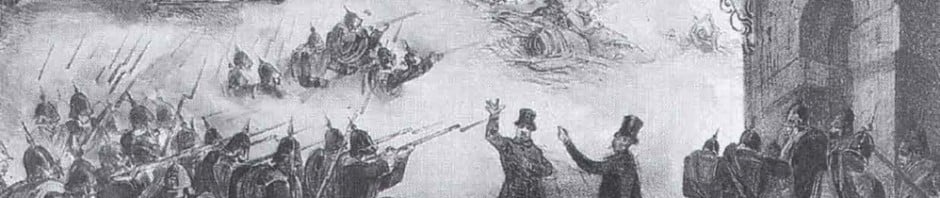
Pax, violence and plural worlds: The Spiral against the Empire
From lundimatin #513, 24/03/2026
by Jean Claude Noël
“Ubi solitudinem faciunt, pacem appellant.” – “Where they make a desert [a solitude between people], they call that peace.”[1] Tacitus’s oft-quoted phrase, rarely examined in all its radicality, is neither a moral condemnation nor a mere historical observation. It denotes a structure. It states that, within the Western imperial tradition, peace is never the opposite of violence, but rather its stabilised, enduring and institutionalised form. In other words, the Pax is neither a ceasefire, nor a temporary suspension, nor a moment of harmony, but war transformed, frozen into a lasting structure—an environment in which violence is not abolished but concealed, normalised and brought into order.
Where war remains an event, imperial peace transforms violence into an environment. It enshrines war in laws, borders and the categories of the conceivable. Peace is no longer what comes after war: it is that through which war becomes invisible. This order unfolds according to a heliocentric architecture: a sovereign centre transfers authority, distributes light, the norm and truth. Everything else is peripheral, deviant, marginal. The barbarian is not merely an opponent but a resistance directed against the centre itself, against its principle of reason. In this way, the Western political horizon is constructed upon the structuralised violence of peace. To call this structure into question is to examine its ontology, its historical permanence and its contemporary crisis.
From Rome to the liberal West, from the legion to the drone, from the legal stele to the algorithmic code, the Pax functions as a political ontology. It presupposes a centre, a norm, a measure. It organises the world around a solar, heliocentric principle: a fixed point that distributes light, meaning and legitimacy.
To name the peace is to name the world. Whoever says “Pax” sets themselves up as the universal standard. That which eludes this naming is not merely hostile: it is deficient, archaic, irrational, behind the times. The barbarian is not, first and foremost, the one who attacks, but the one who does not recognise the centre.
Pax as a concept is, semantically speaking, synonymous with violence and normalisation. The word Pax is a trap. In classical and imperial Latin, pacare means to subdue, to subjugate, to pacify by force. Peace is an act, not a state. It presupposes a prior operation: the annihilation or neutralisation of any capacity for resistance. Pax is therefore never symmetrical. It does not unite equal forces. It stabilises an asymmetry. In this sense, it is not the opposite of war, but its fulfilment.
This semantic shift is fundamental to understanding political modernity. For Pax has never disappeared; it has merely become more or less refined. It has abandoned the brutal vocabulary of conquest in favour of that of law, morality and security. But its structure remains the same: a centre imposes the conditions of stability, then naturalises this imposition as the world order.
Peace thus becomes what Walter Benjamin calls a conservative violence of the law: a violence that no longer strikes spectacularly, but which organises, administers, classifies and excludes. The Pax is reassuring because it endures. It is less shocking than war precisely because it is permanent. This is why empires love peace. Not out of humanism, but for the sake of efficiency. War is costly. Peace is profitable. It enables extraction, circulation and predictability. It transforms violence into yield.
The Pax Romana was a right of conquest and world governance. It can only be understood if read as a total imperial technology. Rome did not merely invent a territorial empire; it invented a way of shaping the world. Military conquest is but the first layer. The true Roman innovation lies in the transformation of violence into duration.
Roman law (ius) plays a central role here. Contrary to a naively legalistic interpretation, it does not limit sovereign violence: it redistributes it, codifies it, and makes it transferable. Roman ius is a stabilising force: it transforms the exception into the rule, conquest into administration, and domination into normality. Roman law elevates warlike sovereignty to the status of a norm. Roman ius was never a check on power, but intrinsically a tool for stabilising and prolonging imperial domination. The Roman monopoly on violence is no longer measured by the fallibility of arms, but by the effectiveness of the law, religion and the integration of peoples. Violence becomes all the more effective the more it is rendered invisible.[2]
Roman citizenship is not an abstract right; it is a technique of asymmetrical integration. To be a citizen is to be counted, registered and mobilised. Thus, the Edict of Caracalla, often presented as a universalist gesture ahead of its time, must be understood as an extension of imperial control. To universalise citizenship is to universalise fiscal and military obligations. This vast expansion of citizenship is not an extension of rights but a broadening of duties, an organisation of taxation, conscription and control.[3] The Pax Romana rests on this tension: inclusion, which is always mobilising, and subordination.
The Pax Romana thus rests on a simple equation: the more the Empire expands, the more peace becomes necessary – not for the subjugated peoples, but for the reproduction of the imperial order itself. Peace here is a condition for rational exploitation. This logic introduces a fundamental division of the world. The limes does not merely mark a geographical boundary; it establishes an ontological boundary. Within it, the world is complete, legally constituted, pacified. Outside it, the world is formless, threatening, ripe for conquest.
Rome thus invents a political cosmology: the centre is not only more powerful, it is more real. The Pax Romana does not abolish war; it relegates it to the margins, whilst still rendering it legitimate. The enemy, within this geography, lies outside the ordered world, ready to be subjugated or exterminated. The limes defines the relationship between the civilised interior and the barbarian exterior, heralding the empire’s binary logic.[4]
This constitution of the solar centre – Rome – is the original paradigm of all political heliocentrism. But one must not misunderstand the term: the imperial sun is a normative sun, not an astronomical one. It determines what is visible, what is real, and what is entitled to political existence. What the limes establishes is not merely a geographical boundary but also an ontological one: on one side, the constituted, ordered, legally intelligible world; on the other, the shadow, the formless, the barbarian – open to conquest, without enforceable rights. Imperial ideology derives all its strength from this dual construction, which is both cosmological and legal: it is because Rome is the centre of the world order that it can claim to be just in the exercise of domination. It is this paradigm that the modern West has perpetuated, in new forms, right up to the present day: the Roman limes becomes a colonial frontier, then a space of migration, then a threshold of algorithmic visibility. What changes is the technology of demarcation; what remains is the ontological function: deciding who belongs to the ordered world and who does not.
With the Christianisation of the Empire, the Pax shifts in character without changing its function. It ceases to be merely legal and military: it becomes theological. If Rome dominates, it is no longer merely because it is strong, but because God willed it so.
This theological shift is decisive in more ways than one. Not only does it enable the imperial structure to survive the political fall of Rome – the institutions collapse, but the theology of order endures – but it also brings about a fundamental transformation in the nature of legitimation: domination no longer needs to be justified by force. It is now justified by divine will. The enemy is no longer merely the one who resists: he is the sinner, the heretic, the one who opposes the order willed by God. This “theologisation” of the Pax permeates medieval Christian universalism – the Crusades were wars of divine peace – and then, through a gradual secularisation, the modern universalism of the Enlightenment, where Reason takes the place of God but plays the same structural role: establishing the legitimacy of the centre, naturalising domination as a vocation. The thread is unbroken, from Constantine to Kant.
Peace thus ceases to be a mere political fact: it becomes a moral good. To reject it is no longer simply to resist a power; it is to oppose the world order. The enemy becomes a sinner, then a heretic, then a barbarian, and later the foreigner, the immigrant, and so on. Christian power is henceforth legitimised by its vocation to embody the divine will. Institutional violence becomes an instrument of sacred justice. Divine peace transcends politics but justifies “just”, sacred war in the name of the moral order.
This moralisation of the Pax is one of Jerusalem’s most enduring legacies to the West. It renders domination virtuous. It makes it possible to wage war in the name of peace. Jerusalem became the moral sanctification of the Roman order, finding a new pillar in Christianity. This reinterpretation dichotomises the enemy as sinner, heretic and barbarian. This reshaped Christian concept of peace imposes a belief in a deliberate and immutable moral order, in which war is a sacred virtue intended to purify the world. The Middle Ages institutionalised this sanctification, just as modernity secularised this imperial virtue in the form of universalism and natural law.[5]
It was this very normative universalism and coercive peace that Kant would champion. His work did not emerge in a vacuum: it was set against the backdrop of a specific historical moment, that of the French Revolution and the dynastic wars that were reshaping Europe. In 1795, the very year Kant published Perpetual Peace: A Philosophical Sketch, revolutionary France signed the Treaty of Basel with Prussia and Spain. This treaty, presented as a peace agreement between European powers, resulted in particular in Spain’s cession of the eastern part of Saint-Domingue to France. France thus gained complete sovereignty over the island, unifying under its control the most productive colony of the time, the one that C.-L.-R. James would call “the pearl of the Antilles”. Peace between Europeans was negotiated at the expense of enslaved populations. This coincidence is more than an irony of history: it reveals a structural pattern.
With Kant, the Pax imperiale changes its status: it becomes the norm. Perpetual Peace does not describe a state of the world, but a rational horizon intended to guide history. Peace is no longer what follows victory; it becomes that towards which everything must strive. This shift is decisive, for it allows the Pax to present itself no longer as a political fact, but as a moral imperative. Kantian universalism rests on a hypothesis that is rarely questioned: that of a single, transhistorical, transcultural reason, of which Europe is both the place of emergence and the model. Cosmopolitan law, intended to pacify relations between states, thus presupposes a normative homogeneity of the world to come.
We must therefore ask the question directly: what kind of peace is Kant referring to in Perpetual Peace? A universal peace, or a peace between European powers? A careful reading of the text – in which Kant implicitly invokes Leibniz and the Abbé de Saint-Pierre – reveals that the Kantian horizon is fundamentally European. Perpetual peace takes shape as a continuation of the Westphalian tradition: it is a matter of pacifying relations between the sovereign states of Europe, stabilising the balance of power amongst the great powers, and replacing dynastic disorder with a rational legal order. The Abbé de Saint-Pierre, from whom Kant directly inherited the fundamental intuition of a European federation, had himself explicitly excluded non-European peoples from his peace project. Leibniz, for his part, had been concerned with the unity of the Christian world in the face of the Ottomans. Neither of these two precursors to Kant conceived of peace as an inclusive universal: they envisaged an intra-European order. Kant radicalised and systematised this project, whilst retaining its fundamental architecture.
Consequently, Kant’s “perpetual peace” is nothing other than the philosophical realisation of the Westphalian Pax – founded on the European balance of power and the sovereignty of states – raised to a higher level of rationality. The 1795 essay in no way calls colonialism into question. Nowhere does it state that Europe cannot export war elsewhere: first to the Americas, then to Africa and Asia. This silence is not an omission: it is constitutive. Kant’s “perpetual peace” is an intra-European peace. What the Treaty of Basel illustrates with brutal clarity is precisely this: the European powers make peace amongst themselves and divide up the non-European world. France secures the whole of Saint-Domingue. Spain yields. Prussia negotiates. And meanwhile, on the island that was to become Haiti, hundreds of thousands of African slaves continue to produce the wealth that finances these pacified states. European peace is built upon perpetual war in the colonies.
This “perpetual peace” is therefore not universal: it is an agreement on the equitable division of spheres of influence and non-European territories, whether already conquered or yet to be conquered. Philosophically, it underpins the idea that relations between civilised states – that is to say, European states – deserve exceptional legal treatment, whilst relations with non-European peoples fall under natural law in its most brutal form: the law of the strongest, conquest and slavery. Kant himself, in his anthropological and geographical writings, explicitly establishes a hierarchy of races and peoples. His physical geography classifies non-Europeans into categories of inferior development. This anthropological hierarchy is inseparable from his political project: perpetual peace is conceivable only for those whom Kant deems capable of legal rationality. The others lie outside the contract. They inhabit the imperial frontier. The Kantian Pax is therefore, in its very structure, a Pax occidentalis which perpetuates and philosophically establishes Eurocentrism as a universal norm. Far from questioning colonialism, it legitimises it by remaining silent on the matter. Kant’s silence on Saint-Domingue, on slavery, and on colonial wars is a philosophical silence, not an oversight: it implies that these realities are not part of the world that “perpetual peace” is meant to organise.
This presupposition has far-reaching political consequences. Anything that does not conform to modern legal rationality is regarded as a deficiency. Difference becomes backwardness. Otherness becomes a problem. War, within this framework, is no longer merely a conflict of interests: it becomes a pedagogical moment in universal history. Kant does not celebrate war, but he tolerates it as a transitional driving force of moral progress. Violence is excused in the name of the end. The Kantian Pax therefore does not abolish coercion: it moralises it. It transforms domination into a duty. Thus, Kantian peace moralises violence, transforming war into a “pedagogical moment for the barbarians”, and naturalises Western domination as a normative model. Perpetual Peace therefore aims solely to perpetuate a European order, described as civilised. By positing “perpetual peace” as the teleological horizon of reason – that is to say, as the necessary endpoint towards which history is directed by the internal logic of rationality – Kant philosophically paves the way for the great Hegelian transformation: the one that will make universal history no longer a succession of contingent events, but the necessary unfolding of the Spirit towards its own realisation. What Hegel would call the Weltgeist, and what Kojève would translate into terms of a universal and homogeneous State, is already contained in embryonic form within Kant’s teleology of peace: the idea that reason carves out a path through history, and that Europe is its provisional and then definitive destination.
This teleological shift paves the way for modern liberal universalism in two respects: on the one hand, by providing domination with a rational foundation rather than merely a military one; on the other, by embedding this domination within a philosophy of history oriented towards an end. Peace thus becomes an imperative that can be enforced. Armed intervention is justified as a means of facilitating entry into rationality. The Pax ceases to be imperial in appearance, whilst remaining so structurally. It is in this sense that Perpetual Peace constitutes further evidence of Kantian Eurocentrism: not only does Kant fail to question colonialism, but he provides its philosophical foundation. By establishing that perpetual peace presupposes the existence of republican states governed by reason, he de facto excludes all peoples whom he deems incapable of attaining this form of political organisation – which, within his own anthropology, encompasses virtually all non-Europeans. What the Treaty of Basel makes clear is that this philosophy of peace functions as a technology for partitioning the world: the European powers pacify one another and negotiate their colonial spheres of influence as one would settle a succession. Saint-Domingue is not a moral issue in this treaty. It is a prize, a compensation, a bargaining chip between rational states. Kant’s perpetual peace envisages the same states, the same actors, the same stage. It is the philosophy underpinning this treaty. It is against this backdrop that the figure of Paul Valéry emerges: not as a break with the imperial philosophical tradition, but as its twilight moment, its unhappy conscience, the point at which the Pax occidentalis acknowledges its own fragility without, however, renouncing it.
Paul Valéry occupies a unique place in this genealogy, and his uniqueness stems from an internal tension that is never resolved. Where Kant prescribes, Valéry observes, laments and groans. Where universalism asserts itself, Valéry seems to doubt and express his resentment. But this doubt remains unfulfilled, trapped. He diagnoses the crisis without perceiving its root cause: that Western civilisation is not merely one form amongst others that is in decline, but a structure of domination revealing itself in its twilight hours. His doubt is still clouded, caught up in the atavistic tropism of the Westerner.
The famous triad – Greece, Rome, Jerusalem – whilst being a humanist celebration, indeed a paean, is also an analysis: Greece provides the form of the mind, the idea that the world is intelligible and measurable; Rome provides organisation, endurance, and the capacity to impose a standard; Jerusalem provides the moral imperative, the idea that this order is just, intended and necessary. This triptych thus provides the framework for a discourse of legitimisation: a whole set of lamentations and “clichés” to justify the Pax Occidentalis. Together, these three matrices constitute the source code of the West. Yet this triptych is not merely a list: it is a dialectical structure. Greece (thesis: formal reason, the logos), Rome (antithesis: organising power, the law), Jerusalem (synthesis: the morality that gives domination its inner necessity). Here, point by point, we recognise the ternary movement of Hegelian dialectics – and this is no coincidence. By reconstructing Western identity according to this Trinitarian schema, Valéry is still thinking in the categories of the philosophy of history that only believes he is lamenting. His triptych is Hegelian in spite of himself: it presupposes that the West is the fulfilment of a logical movement, that its form is necessary, and that its decline would be that of reason itself.[6] It enables Europe to conceive of itself as more than a civilisation: as civilisation itself. The Pax Occidentalis is the political expression of this triptych. It is never presented as domination, but as the union of rationality, legality and morality. Valéry’s triptych is an ideological coup and, in this sense, contains a historical bias whose process involves the elevation of certain traditions at the expense of others. This triptych is thoroughly debunked by the work of the historian Arnaldo Momigliano, notably in his book on the influence of Hellenism.[7]
And even though, in his eschatological elegy, The Crisis of the Mind (1919), he foretells the collapse of the West – “we civilisations now know that we are mortal” – he remains mired in Eurocentrism, reluctantly accepting the contingency of the European universal.
Valéry perceives with bitter lucidity that Europe has conflated its historical structure with the structure of the world. It has mistaken its heliocentrism for a cosmic necessity. When this heliocentrism wavers – under the impact of the Great War and the foreboding of a second catastrophe, of technology, of nascent globalisation – it is not merely a power that is in decline, but a system of meaning that is collapsing. He thus unwittingly offers a “lucid” diagnosis of the Western crisis: the Greece-Rome-Jerusalem triptych lies at the foundation of a civilisation in decline.[8] His view is that we must return to these roots, reactivating them for a regeneration in the theological sense. His perspective remains marked by a Eurocentrism that perpetuates the idea of Western superiority, obscuring the intrinsically violent dimension of the Pax Romana, which became the Pax occidentalis.[9] He is a nostalgic, a conservative – let us simply put it that way. This is why he was incapable of offering a solution or heralding a new universal order. His mind was trapped within the limes and the ius. And it is precisely this that makes him a central figure for reflecting on the current crisis: he is the thinker through whom we can understand the moment when the West must cease to equate itself with the world.
Valéry understood that the European Pax is inseparable from technology, and this is one of his most fruitful insights. Modern domination no longer rests solely on force or law, but on the capacity to produce forms, rhythms and standards – what would later be termed “soft powers”. Those who set technical, aesthetic and scientific standards no longer need to conquer through violence: they conquer through desire. The export of the Western model is, first and foremost, an export of a way of life, a way of counting, measuring and organising time. When these standards cease to be universally desirable – when other powers propose other forms, other rhythms, other models – the Empire loses its symbolic power even before it loses its military power. Valéry senses this moment without drawing its decolonial implications. What disappears with the hegemony of Western norms is not merely military or economic power: it is an entire regime of self-evidence, what we now call “soft power” in its deepest sense – the capacity to make one’s own model desirable. Hollywood, international law, academia, the reserve currency: these are all ways in which the West has made itself indispensable without having to present itself explicitly as imperial.
In Provincialising Europe (2000), Dipesh Chakrabarty specifically criticises this naturalisation of Western history and the obscuring of colonial violence.[10] For Chakrabarty, Western history has universalised its own conception of time – a linear, progressive time, oriented towards a horizon – whilst rendering all other conceptions of time invisible. Europe – the West – thus presents itself as the culmination of all history, and other peoples as laggards on its path. Valéry remains trapped within this logic: even in his melancholy, even in his mourning for the European universal, he does not question what this universality has cost others. He remains blind to the foundational violence inherent in the colonisation of non-European worlds, blind to the fact that the crisis of the West is also – above all – the liberation of the worlds it had subjugated.
Alexandre Kojève, in his Introduction to the Reading of Hegel (1947), heralds the gradual dissolution of political antagonisms within an administrative and police state. His interpretation of the end of history paints a disturbing picture: the ultimate reconciliation of humanity in the form of a universal and homogeneous state, where all contradiction would be absorbed into the technical management of affairs. War, the spectacular form of antagonism, would then disappear as a sovereign act. It would be transformed into a mere police operation, into the technocratic management of residual conflicts. In this vision, the combatant gives way to the armed civil servant. The enemy is no longer recognised as such; he becomes a deviant, a delinquent, a terrorist – categories that fall within the realm of criminality, not politics.[11] Kojève observes, with clinical detachment, that the post-historical Pax would be a violent immobility: the absolute neutralisation of all divergence, the complete bureaucratisation of society. Paradoxically, it would no longer be man who governs his own life, but the administrative structure that governs him. Man becomes a civil servant of his own submission. Kojève lays bare the Machiavellian structure of Hegelianism, the philosophical pinnacle of the Pax occidentalis.
This interpretation foreshadows what the Pax Americana would become in its post-Cold War phase. For whilst Kojève theorises the completion of history, the United States, for its part, will conceive of itself as the concrete agent of this fulfilment. From Fukuyama to the war on terror, American discourse has consistently drawn upon this idea: the end of grand ideologies, the universalisation of market democracy, and the technical management of global risks. The Pax ceases to be a conquest and becomes a process of maintenance.[12] The Pentagon and the International Monetary Fund become the two arms of the same machine, founded on technical and legal instruments. We no longer conquer: we stabilise, we secure, we normalise. This transformation is crucial to understanding the contemporary architecture of domination. It no longer presents itself as a civilisational project – too brutal, too colonial – but as risk management. Military interventions become peacekeeping operations – in other words, operations to maintain the Pax – occupations are termed “reconstruction”, and client regimes are called “emerging democracies”. Technical language conceals structural violence.
The Pax Americana, the American legacy, embodies Western heliocentrism in a new form: control through binding international institutions, economic power and technological dominance. Bretton Woods (1944), NATO (1949), the IMF and the World Bank constitute the institutional pillars of a Washington-centred global governance architecture. Barry Eichengreen describes the role of the dollar as an “exorbitant privilege”, at the heart of the Pax Americana[13]: the US currency, backed by military power, becomes the universal measure of trade. Whoever controls the currency controls capital flows, debt and sanctions. Finance is not merely economic: it is geopolitical. The gradual legalisation of international relations – through human rights, international tribunals and UN resolutions – serves to legitimise widespread violence whilst concealing it under the veil of legality. As Carl Schmitt points out, whoever decides on the exception decides on the law itself.[14] The United States does not violate international law: it redefines it according to its own interests. The “responsibility to protect” thus becomes a euphemism for interference.
But the post-Cold War crises highlight the symbolic fragility of this Pax, which is confronted with its own contradictions. Whilst the unipolar world of the 1990s promised the “end of history” according to Francis Fukuyama, the following decades revealed the failure of such a claim.[15] The Iraq War (2003) exposed the illusion of exporting democracy by force. The occupation generated more chaos than order, more hatred than gratitude. Afghanistan became a symbol of an endless war, a quagmire in which the Empire was being worn down. In Dirty Wars (2013), Jeremy Scahill exposes the boundless militarisation of US politics, the covert operations, the targeted assassinations, the drones striking everywhere, transforming the planet into a vast battlefield[16] and a landscape of ruins. The distinction between war and peace is collapsing: there are now only zones of permanent conflict, continuous surveillance and diffuse violence. The Pax turns out to be perpetual war by another name.
The embargo on Cuba, in place for over sixty years, perfectly illustrates this legal economic and political violence that depoliticises domination. Sanctions do not kill spectacularly like bombs, but they strangle, starve and suffocate. They are a silent but terribly effective weapon. Venezuela, for its part, is deprived of its autonomy through economic sanctions and systemic media blackouts, illustrating the permanence of imperceptible coercion. Caracas is not being bombed, but it is under financial siege; its assets are frozen, its transactions blocked, and its economy destabilised. The American Pax thus operates through exclusion: those who do not bow to the system are marginalised, suffocated and silenced. What is striking is the moral legitimisation of this violence. Sanctions are presented as measures of democratic pressure, as if starving a people could set them free. This humanitarian rhetoric masks a brutal reality: collective punishment, the exercise of violence through deprivation. It is here that Benjamin’s category of the “conservative violence of the law” finds its most contemporary application: the sanctions regime is not an exception to international law; it is its most sophisticated instrument, the one through which the Pax is perpetuated without appearing to wage war, the one through which the centre maintains its discipline over recalcitrant peripheries whilst keeping its hands clean.
Carl Schmitt points out in The Concept of the Political (1932) that the friend/enemy boundary is the very core of the political.[17] Without this fundamental distinction, no sovereign decision is possible. Yet the liberal Pax seeks precisely to repress this constitutive difference. It transforms the political adversary into a criminal or a terrorist, producing a total yet depoliticised war. The enemy is no longer recognised as such: he becomes a moral aberration, a dysfunction to be corrected. This depoliticisation has major consequences. Firstly, it precludes any negotiation: one does not negotiate with terrorists; one eliminates them. Secondly, it extends war to become the ordinary state of affairs, exacerbating institutionalised violence. Since the enemy is everywhere and nowhere, vigilance must be constant, surveillance total, and repression preventive. Schmitt’s fundamental thesis can be summarised as follows: to deny the political nature of war is to render war absolute.[18] By refusing to name the enemy for what he is, we condemn ourselves to boundless and endless violence.
Donald Trump represents both the abrupt return and the symptom of the exhaustion of the Pax Americana – and, by extension, of the Pax Occidentalis. His rise to power in 2016 and 2024 marks a break with imperial rhetoric. Whereas his predecessors cloaked domination in universalist language – democracy, human rights, international order – Trump strips the Empire of its pretences.[19] America First is no longer the defence of a liberal world order, but the crude assertion of territorial and strategic domination. Trumpism thus reveals imperial tension in old and brutal forms, abandoning universal – universalist – pretences in pursuit of pure domination. This apparent discursive regression does not, however, signify a weakening of American power. Rather, it reflects a weariness: that of maintaining the illusion of a benevolent Empire. Trump explicitly states what the liberal order concealed: America is not there to serve the world, but to use the world for its own ends. In this sense, he embodies the millennialist inability to renew its centrality. The centre no longer radiates influence: it is becoming rigid. This is precisely what explains Trumpism’s paranoid obsession with the figure of the foreigner, with the constant agitation over a barbarian invasion that is always imminent. The aim is to impose both physical and legal limes, which are simultaneously defined as ontological limits. It is a war of civilisations – in other words, a war of races.
It is in this context that the “Board of Peace”, proposed by Trump in September 2025 and officially established on 15 January 2026, takes on its full meaning. At first glance, the initiative seems absurd, even grotesque: an international body whose charter grants “President Trump” a permanent right of veto and a seat for life, whose members are selected by Trump himself, whose membership is conditional upon the payment of one billion US dollars per state, and whose charter – distributed to world capitals two months after its partial approval by the UN Security Council – makes no further mention of Gaza, the officially stated founding cause. The Guardian describes it as a “Trump-dominated private club where you have to pay to play”, a global version of his Mar-a-Lago entourage. The Financial Times sees it as a “nascent club of autocrats”, and the Sydney Morning Herald as a “narcissistic project”.[20] After being denied the 2025 Nobel Peace Prize, Trump declared that he no longer “felt obliged to think solely of peace” – a statement which, in itself, sums up a whole way of thinking.
But the apparent absurdity of this structure reveals, on closer inspection, a profound consistency with the underlying logic of the Pax Americana as analysed throughout this text. Far from being an anomaly, Trump’s Peace Council is perhaps its most transparent, most overt, and most honestly imperial manifestation since the founding of the Bretton Woods order. For what is the Pax Americana, if not precisely this: a world order in which a single state – a single man in its crudest form – holds the right to define peace, to set its conditions, and to exclude those who refuse to comply? The only thing new about Trump is his lack of modesty. Whereas his predecessors cloaked this monopoly on defining peace in universalist language – democracy, human rights, “international law” – Trump claims it outright, without any metaphysical justification, as a raw balance of power. In doing so, he is, paradoxically, doing what neither Wilson, nor Roosevelt, nor Clinton, nor Obama dared to do: he is articulating the structural truth of the order they built.
Let us recall the fundamental structure of the Pax as we have reconstructed it. Since Rome – since Tacitus – the Pax has not been a reconciliation: it is a stabilised asymmetry. It presupposes a centre that decides what constitutes “peace” and what constitutes “war”, a centre that holds the monopoly on the legitimate definition of violence. The Pax Romana was not an agreement between equals: it was the submission of the periphery to the centre, the silence of the vanquished called “peace”. The post-1945 Pax Americana did not break with this structure: it refined it, cloaking it in institutions (the UN, the IMF, NATO, the World Bank) that gave it the appearance of multilateralism. But who decided on resolutions, sanctions and interventions? Who defined “rogue states”, the “axes of evil” and “lawless zones”? Always the same centre. Trump’s Peace Council merely removes the veil behind which this monopoly was concealed. It explicitly institutionalises what the liberal Pax Americana institutionalised implicitly: a single actor sets the rules, convenes the members, allocates the seats and passes judgement. Kojève had foreseen it: the end of history is not an agreement between free peoples, but the bureaucratisation of domination. The Peace Council is Kojève’s universal and homogeneous state with its masks removed.
There is more to it than that. The Peace Council’s charter stipulates that Trump sits on it “for life”, and that he alone is “empowered to adopt resolutions or initiatives” on its behalf. This clause bears comparison with what Carl Schmitt identifies as the essence of sovereignty: “he who decides on the exception is sovereign”. The Peace Council is an institution that enshrines the Schmittian principle in its very statutes: there is an absolute sovereign, and he decides. The difference with the UN lies not in structure but in admission. The UN Security Council replicated the same pattern of a single veto and the dominance of the five permanent members; it simply claimed to be “universal”. What Trump is laying bare is the naked logic of imperial sovereignty, without the veil of multilateralism. Universalism was the modest mask of the Pax. Trump is tearing off that mask. And in tearing it off, he reveals, in spite of himself, what critics of the Pax Occidentalis have long sought to demonstrate: that the so-called “liberal” order was, in its very structure, an imperial order. Paradoxically, Trump’s brutality is a contribution to critical lucidity. It lays bare the mechanics of domination that universalist language had managed to render invisible for decades. This is why, from the perspective of a structural analysis of the Pax, the Peace Council is not an aberration: it is a revelation.[21]
Michel Foucault identifies the shift from sovereignty to security as a key transformation in political modernity.[22] In Security, Territory, Population (1977–1978), he shows how modern power is no longer exercised solely through prohibition and punishment, but through the management of flows, populations and risks. War, in the classical sense, has been displaced by the regulation of populations, hierarchised according to their vital power. It is no longer so much a matter of killing as of letting die, of managing the thresholds between life and death. Defenders and those under threat are thus redefined within biopolitics: who deserves protection, and who can be sacrificed? The modern Pax operates through this securitised governmentality. It no longer declares war; it secures zones, pacifies territories and manages crises. The toxicity of this governmentality lies in its capacity to neutralise conflict within life itself, to preclude the political event. Biopower administers life to the point of rendering it docile, predictable and controllable. In We Must Defend Society (1975–1976), Foucault discusses state racism: no longer merely ethnic hatred, but a technique for dividing populations into those who must live and those who may be left to die.[23] The security-based Pax draws invisible boundaries between lives that matter and those that are superfluous.
How, then, can one escape this structural violence? Walter Benjamin proposes a radical transcendence: destituent violence, an unexpected rupture that suspends the vicious circle of founding and conservative violence.[24] In “Critique of Violence” (1921), Benjamin distinguishes three forms of violence: that which establishes the law, that which preserves it, and that which destitutes it. The first two belong to the imperial order: founding and maintaining. The third opens up an “elsewhere”. This interruption is a messianic opening towards a radically different kind of peace, a non-imperial politics. Benjamin does not describe a programme, let alone a method. He points to a gesture: that of suspending the order of law to allow the event of justice to emerge. This line of thought echoes Kafka, whom Benjamin read assiduously. In The Trial, K. is confronted with a Kafkaesque legal system where the law constantly eludes him, where judgement is everywhere and nowhere. The violence of the law, in Kafka, lies not in its brutality, but in its labyrinthine, impersonal, suffocating nature.[25] To dismantle this system would be to refuse to enter it, to refuse to justify oneself before an authority that derives its legitimacy solely from its own self-proclamation. This notion of the dismantling act does not arise in a vacuum: it forms part of a critical tradition of imperial domination, of which Nietzsche, before Benjamin, was the underground pioneer.
Long before Benjamin, Nietzsche was already criticising the death drive that animates imperial monism and advocating its deconstruction. In The Will to Power, he denounces the nihilism that characterises the end of an empire devoid of vital force: defending dead values leads to repression and heightened violence.[26] For Nietzsche, decadence is not weakness, but the stubborn insistence on maintaining that which no longer possesses vitality. A declining empire becomes increasingly rigid and repressive, precisely because it senses its own finitude. On the contrary, Nietzsche advocates the acceptance of multiple forces and of becoming, with a clear call to decentre any absolute truth. There is not one truth, but multiple interpretations and competing perspectives. This stance paves the way for what might be called “spiralism”: a way of thinking that rejects the centre, accepts multiplicity and embraces becoming. For Nietzsche, the affirmation of life involves the destruction of idols, fixed truths and ossified orders. Thus Spoke Zarathustra celebrated not a new dogma, but a perpetual movement of creation and destruction.[27] Life is not order, but creative chaos.
But with artificial intelligence comes a new configuration of the Pax: the Pax Artificialis, the reign of the algorithmic Pax. AI ushers in a new form of governance in which authority is exercised through predictive systems and anticipatory management.[28] Statistical optimisation replaces political decision-making and erases the event. War itself takes the form of ever-increasing surveillance and pre-emptive action. Algorithms detect threats before they materialise and neutralise dissent before it can organise itself. In Minority Report (2002), Philip K. Dick imagines a world where crime is punished before it has been committed.[29] Spielberg’s film adaptation depicts a society where freedom is abolished in the name of total security. This fiction is now our reality. Social credit systems in China, predictive policing algorithms in the United States, mass surveillance systems around the world: these are all manifestations of the Pax Artificialis. This Pax is profoundly apolitical. It governs not by deciding, but by calculating. It does not judge; it optimises. It does not punish; it corrects. Matteo Pasquinelli speaks of governance through metadata, where power is no longer exercised directly over bodies, but over digital traces.[30] We are governed by our data, by our connections, by our encoded behaviours. This Pax fundamentally undermines living politics by replacing it with technical management.
Faced with this exhaustion of Western heliocentrism, the BRICS+ present themselves as an alternative. But is this a genuine alternative or a polycentric façade? Whilst the BRICS present themselves as an alternative to the American order, a careful analysis reveals that China and Russia are pursuing a similar imperial logic.[31] China is building its new Silk Roads (the Belt and Road Initiative) by replicating the patterns of economic domination that the West itself has employed. The debt owed by African and Asian countries to Beijing bears a striking resemblance to the IMF’s structural adjustment policies. Russia, for its part, maintains its sphere of influence through force (Georgia, Ukraine, etc.) and control over energy resources. The other members of the BRICS+ – Brazil, India, South Africa, and the new entrants – play a largely peripheral or buffer role. They give the illusion of a coherent bloc, but serve above all to legitimise Chinese and Russian ambitions. Polycentrism is therefore not a departure from heliocentrism, but rather the proliferation of a multipolar imperial order. Several suns are no better than one if they continue to burn according to the same logic. What is taking shape is not a post-imperial world but a poly-imperial one: the multiplication of centres of hegemony without any challenge to the heliocentric structure itself. The issue is therefore not who will next occupy the centre, but whether the world can learn to conceive of itself without a centre at all.
Spiralism, as both a poetics and a politics, enables us to rethink the world as a multiverse, to transcend and deconstruct the monism of the dying Pax Americana and Pax Occidentalis. Frankétienne, in his Ultravocal: Spirale (1972), develops a spiral mode of thought: neither an identical return nor a straight line, but perpetual motion made up of ruptures and new beginnings.[32] His writing rejects the closed circle of repetition and the linearity of Western progress. It proposes an alternative temporality, a situated, pluralistic mode of thought that seeks not to universalise but to singularise. Frankétienne writes from Haiti, from a history marked by slavery, colonisation, dictatorships and catastrophes. His spiral is not an abstract metaphor: it is the embodiment of a historical experience. In Les Affres d’un défi (1979) and Ultravocal: Spirale (1972), he fragments language, blends Creole and French, and deconstructs syntax to create a text-world in which the violence of history is inscribed in the very form of the writing.[33] This “world-text” rejects the centre, rejects imposed order, and affirms multiplicity as a principle of life.
In Poetics of Relation (1990), Édouard Glissant develops a relational ontology in which creolisation becomes the key paradigm of coexistence and becoming.[34] He sets this conception of relation in stark contrast to the West’s rigid notion of territorial identity. Whereas the West thinks in terms of roots, Glissant proposes the rhizome: not a tree with a single trunk and hierarchically organised branches, but a network of multiple, unpredictable, horizontal connections. Creolisation is not controlled intermingling or harmonious fusion, but an unpredictable encounter, a chaotic blend that produces something new. It is never complete: it is an ongoing process. Glissant speaks of the “Tout-Monde”, not as a closed totality, but as an open totality, where each singularity enters into relation with all the others without dissolving itself.[35] This vision stands in direct opposition to abstract Western universalism, which claims to unify the world by homogenising it. Glissant’s Whole-World/All-World respects differences, preserves them, and connects them without erasing them.
This line of thought is also championed by a Latin American critique of Eurocentric domination, embodied by Enrique Dussel and Walter Mignolo, who advocate for the recognition of political pluriverse. In Philosophy of Liberation (1977), Dussel denounces Eurocentrism as a form of epistemic violence.[36] European modernity, he argues, was built upon the suppression and destruction of other forms of knowledge and other ways of being-in-the-world. The concept of transmodernity that he proposes is not a transcendence of Western modernity, but the affirmation of other, plural modernities, born of the peripheries. Mignolo, for his part, develops the concept of decolonial thought (The Darker Side of Western Modernity, 2011), which aims to dismantle colonial structures of knowledge and power.[37] For Mignolo, decoloniality is not merely political, but also epistemic: it involves decentring the production of knowledge and recognising the validity of the epistemologies of the Global South. From this perspective, the pluriverse is not a form of soft relativism, but a demand for cognitive justice.
As early as the 17th century, Spinoza denounced political monism and called for multiplicity and the dynamic distribution of powers.[38] His Theological-Political Treatise (1677) invites us to conceive of the political not as a fixed power but as a rich and fluid movement of forces. For Spinoza, power (potentia) is never static: it circulates, is composed, and is recomposed. The body politic is not a fixed substance, but an arrangement of relationships. Étienne Balibar, in Spinoza and Politics (1985), shows how this Spinozist conception breaks with the tradition of sovereign power.[39] There is no absolute centre in Spinoza, no single point of command, but a multitude (multitudo) whose collective power cannot be reduced to a sovereign. This conception finds a philosophical echo in spiralism, Nietzsche and Foucault: all share the idea that power is not a substance but a relation, that the political is not a state but a becoming. Antonio Negri and Michael Hardt, in Empire (2000), draw on this Spinozist concept of the multitude to conceptualise new forms of resistance to the global order.[40] The multitude is neither a unified people nor an undifferentiated mass, but a plurality that remains plural whilst acting collectively.
The decline of Western heliocentrism thus appears not as a catastrophe, but as an opportunity and an opening towards the multiverse. The decline of the heliocentric Pax is a cosmological rupture, an opportunity. To cease being a single centre is to accept the multiverse of forces and histories. The imperial Pax is dying; the spiral lives on. This radical transformation upends political ontology: peace will no longer be uniform stability, but the fragile coexistence of differences. Not fusional harmony, but dissonant polyphony. Not imposed order, but precarious equilibrium. In Cosmos, Witold Gombrowicz explores this tension between form and formlessness, order and chaos.[41] For Gombrowicz, the cosmos is not a given: it is constructed by the gaze, by interpretation. There is no stable meaning, only provisional configurations that unravel and reassemble. This instability is not a flaw: it is the very condition of life.
This radical transformation is both the great challenge and the great opportunity of the 21st century. This text is based on a simple yet weighty premise: the current crisis in the world order is not merely geopolitical or economic. It is cosmological. What is faltering is not merely Western dominance, but the heliocentric structure that allowed it to be conceived as natural. The rise of non-Western powers, the assertiveness of the Global South, and the emergence of the BRICS+ do not constitute a classic imperial shift. They usher in a world without a single centre, a plurality of trajectories – a configuration that the West, historically, has never been able to conceive of as anything other than chaos. Yet chaos is only chaos from the perspective of a single order. Seen from elsewhere, it is simply multiplicity in motion. In Blade Runner 2049 (2017), Denis Villeneuve depicts a post-imperial world where the old power structures are crumbling without any new order truly replacing them.[42] What remains are ruins, fragments, and vestiges. But there are also possibilities: the possibility of not replicating the old model, and of inventing something else.
Does this emerging polycentrism herald the end of heliocentrism? Certainly not, for China and Russia, as central members, share the same imperial logic as the West, refusing to regard them as equals. The other partners serve mainly to mask the shadow play of a struggle to perpetuate a centre. Is the transition from BRICS to BRICS+ not a mere ploy? Might it not be the renewal of the imperial stage under new guises? The question remains open. It is possible that we are witnessing not the end of the Empire, but its metamorphosis. It is also possible that the internal contradictions within these new powers will prevent the consolidation of a single new order. Be that as it may, the horizon taking shape is no longer that of a world unified under a single banner. The single Pax – be it Roman, American (Western) or Chinese – seems to belong to the past.
Against the backdrop of this upheaval, another image emerges: no longer the closed circle of the Pax, nor the straight line of progress, but the spiral; a symbol of return without identity, of multiplicity without synthesis, of movement without a centre. The spiral does not go round in circles: it returns without returning to the same point; it moves forward without advancing in a linear fashion. It is at once memory and invention, continuity and rupture. In One Hundred Years of Solitude, Gabriel García Márquez describes time as a spiral in which events repeat themselves without ever being identical.[43] The Buendías are condemned to relive the same passions, the same mistakes, the same acts of violence, but each time in a new configuration. This spiral-like time is that of Latin America (the Caribbean and Africa), marked by cycles of conquest, revolt, dictatorship and liberation. But it may also be the time of the world to come: a time when history no longer progresses linearly towards a teleological horizon, but unfolds in multiple spirals, divergent trajectories and plural futures. To conceive of the spiral is to conceive of a world without an absolute master, without a despotic centre, without a single truth. It is to accept fragmentation not as defeat, but as the condition for a vibrant politics. The Imperial Pax is in its death throes. It remains to be seen whether we will be able to inhabit the ruins without rebuilding a new Empire, whether we will be able to conceive of the many without reducing it to the One, whether we will be able to live within the spiral without nostalgia for the circle. This, perhaps, is the great political challenge of our age.
The question this text leaves open is not that of the end of the West, but that of the capacity to think outside its structure. Moving beyond heliocentrism is not simply a matter of changing the centre – replacing Washington with Beijing, the dollar with the yuan, liberal democracy with market authoritarianism. It means accepting the absence of a centre. It means learning to conceive of politics not as radiating out from a single focal point, but as the coexistence of divergent trajectories, plural temporalities and multiple forms of legitimacy. The legacy of Frankétienne, Glissant, Spinoza and Benjamin is not a programme. It is a direction: to resist the imperial temptation of the final word, of the centre re-establishing itself, of the norm re-establishing itself under new guises. For at the end of every rupture, the same threat remains:
“Is it not, once again, Rome that prevails over the Revolution?”[44]
Jean Claude Noël
[1] Tacitus, Agricola, XXX, 31.
[2] P. Garnsey et R. Saller, The Roman Empire : Economy, Society and Culture, Duckworth, 1987.
[3] A.H.M. Jones, The Later Roman Empire, I, Basil Blackwell, 1964.
[4] P. Grimal, La civilisation romaine, Arthaud, 1960 ; A. Momigliano, Essays in Ancient and Modern Historiography, Blackwell, 1977. Le Quarto contributo alla storia degli studi classici e del mondo antico (Edizioni di Storia e Letteratura, 1969). This last work, often cited in this context, has not been translated into French or English.
[5] Roland Bainton, The Horizon History of Christianity, American Heritage Publishing Co., 1964.
[6] The parallel between Valery’s triptych and Hegel’s dialectical structure is not merely formal. In The Philosophy of History (lectures from 1822–1828), Hegel organises the development of the Spirit according to a ternary movement in which the Greek world (the beautiful ethical totality), the Roman world (the legal division of the subject) and the Christian-Germanic world (the reconciliation of freedom and the State) constitute precisely the three stages of a dialectic culminating in Europe. Greece, Rome and Jerusalem are already the three poles of this teleology. Valéry adopts this framework without realising it – or by adopting it in an elegiac form, which amounts to the same thing: in both cases, the triptych presupposes that the West is the consummate form of universal history. This is precisely what the decolonisation and provincialisation of Europe (Chakrabarty) call into question.
[7] Arnaldo Momigliano, Sagesses barbares, les limites de l’hellénisation (1976), Maspéro, 1979.
[8] Paul Valéry, La crise de l’esprit, 1919 ; repris dans Variété I, Gallimard, 1924.
[9] Paul Valéry, Regards sur le monde actuel, Gallimard, 1931.
[10] Dipesh Chakrabarty, Provincializing Europe, Princeton University Press, 2000.
[11] Alexandre Kojève, Introduction to the Reading of Hegel, 1947. Kojève’s interpretation of the “end of history” extends and radicalises Kantian teleology: whereas Kant posited perpetual peace as the regulative horizon of practical reason, Kojève sees in it the actual fulfilment of the Spirit in the form of a universal and homogeneous state. See also Raymond Aron, Introduction to the Philosophy of History,1938, which situates this line of thought within the French philosophical tradition.
[12] On the transformation of war into technical maintenance, see in particular Grégoire Chamayou, Théorie du drone, La Fabrique, 2013. [Grégoire Chamayou, A Theory of the Drone, The New Press, 2015.]
[13] Barry Eichengreen, Exorbitant Privilege : The Rise and Fall of the Dollar and the Future of the International Monetary System, Oxford University Press, 2011.
[14] Carl Schmitt, La Notion de politique, Flammarion, 1992. [Carl Schmitt, The Concept of the Political [1932], University of Chicago Press, 2007.]
[15] Francis Fukuyama, The End of History and the Last Man, Free Press, 1992.
[16] Jeremy Scahill, Dirty Wars : The World is a Battlefield, Nation Books, 2013.
[17] Carl Schmitt, La Notion de politique, Flammarion, 1992, op. cit. [Carl Schmitt, The Concept of the Political, [1932], University of Chicago Press, 2007.]
[18] Carl Schmitt, Théorie du partisan, Flammarion, 1972. [Carl Schmitt, Theory of the Partisan, 1962.]
[19] On Trump’s imperial rhetoric, see the analysis of the The New York Times, 2016-2020; as well as Pankaj Mishra, Age of Anger: A History of the Present, Farrar, Straus and Giroux, 2017; and for the ideological architecture of the Trump-shift, see Sheldon Wolin, Democracy Incorporated : Managed Democracy and the Specter of Inverted Totalitarianism, Princeton University Press, 2008.
[20] The Board of Peace, proposed by Trump in September 2025 and established on 15 January 2026. The charter, circulated to national capitals in December 2025, no longer mentions Gaza and presents the board as a permanent global institution, with Trump as “president for life”. See the full text of the charter published by the Times of Israel, 18 January 2026; see also Wikipedia, entry “Board of Peace”, January 2026. Canada refused to pay the one-billion-dollar membership fee; Norway and Brazil expressed serious reservations …
[21] The expression is borrowed from the Trump administration’s national strategy for security (December 2025), which explicitly calls for a “Pax Americana” reconfigured on the basis of brute force. See: C.J. Polychroniou, “Trump’s National Security Strategy Is Pax Americana With a MAGA Twist”; Truthout, December 2025; and Jahara Matisek et James Farwell, “Trump’s national security strategy: from Pax Americana to Pact Americana“, The Strategist, Australian Strategic Policy Institute, May 2025.
[22] Michel Foucault, Sécurité, territoire, population. Cours au Collège de France (1977-1978), Gallimard/Seuil, 2004.
[23] Michel Foucault, Il faut défendre la société. Cours au Collège de France (1975-1976), Gallimard/Seuil, 1997.
[24] Walter Benjamin, “Critique of Violence”, 1921.
[25] Franz Kafka, The Trial, 1925.
[26] Friedrich Nietzsche, The Will to Power, 1901.
[27] Friedrich Nietzsche, Thus Spoke Zarathustra, 1883.
[28] See: Matteo Pasquinelli, “How a Machine Learns and Fails”, Spheres, n° 5, 2019.
[29] Philip K. Dick, The Minority Report, 1956; adapted to film by Steven Spielberg, 2002.
[30] Matteo Pasquinelli, « The Automation of General Intelligence », Journal of Cultural Analytics, 2019.
[31] See the dossiers dedicated to geopolitics in Foreign Affairs, 2023-2025.
[32] Frankétienne, Ultravocal: Spirale, Fardin, 1972.
[33] Frankétienne, Ultravocal: Spirale, Fardin, 1972; Les Affres d’un défi, Fardin, 1979.
[34] Édouard Glissant, Poétique de la relation, Gallimard, 1990. [Édouard Glissant, Poetics of Relation, Penguin Books, 2025.]
[35] Édouard Glissant, Tout-Monde, Gallimard, 1993. [Édouard Glissant, Treatise on the Whole-World, Liverpool University Press, 2020.]
[36] Enrique Dussel, Philosophie de la libération (1977), L’Harmattan, 2014. [Enrique Dussel, Philosophy of Liberation, Orbis Books, 1985.]
[37] Walter Mignolo, The Darker Side of Western Modernity: Global Futures, Decolonial Options, Duke University Press, 2011.
[38] Baruch Spinoza, Tractatus Politicus (1677), Flammarion, 1966. [Baruch Spinoza, Theological-Political Treatise, 1677.]
[39] Étienne Balibar, Spinoza et la politique, PUF, 1985. [Étienne Balibar, Spinoza and Politics, Verso Books, 2008.]
[40] Antonio Negri and Michael Hardt, Empire, Harvard University Press, 2000.
[41] Witold Gombrowicz, Cosmos, Denoël, 1966. [Witold Gombrowicz, Cosmos [1965], Yale University Press, 2005]
[42] Denis Villeneuve, Blade Runner 2049, 2017.
[43] Gabriel García Márquez, Cent ans de solitude, Seuil, 1968. [Gabriel García Márquez, One Hundred Years of Solitude [1967], Harper and Row, 1970.]
[44] Michel Foucault, Il faut défendre la société, leçon du 28 janvier 1976.