
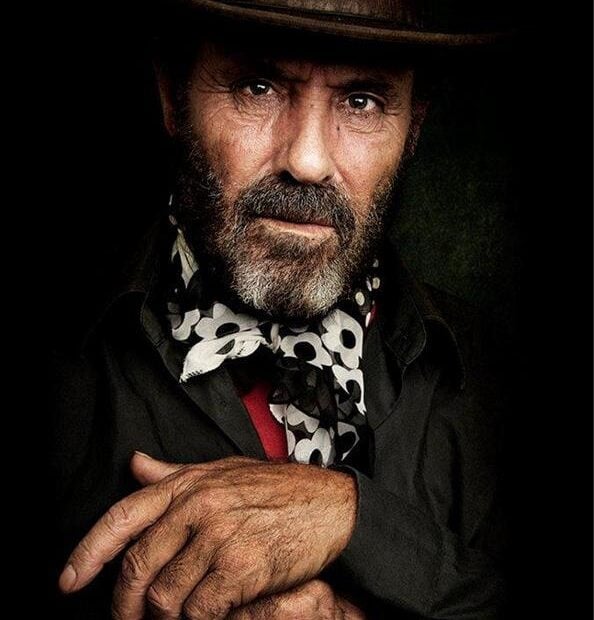
I am not the animal
that stays silent for a meal
I am not that animal
because I have within me
a discontent
that nourishes me.
The sea boasts of its depth
and time of its wisdom
the wind, of its power
the sea boasts of its depth
the earth of its stature
and man, I don’t know of what.
They call me the black sheep
I’ve always been called the black sheep in the flock
for not sharing the mess
with others in the filth
when the common lands are so clean.
My homeland is Freedom
the Universe my god
my homeland is Freedom
my flag, reason
my path, truth
that’s how I think.
I’ve sung about almost everything
that has given me pause
I’ve sung about almost everything
and now I’m going to sing
to the one that never existed
The Dove of Peace.
Sheep leave wool on the wires when they pass by,
sheep leave wool on the wires,
and men, when they hunt,
leave indelible marks
on those of their own kind.
I’ve spent half my life
arguing with my donkey,
and the animal would say to me, “Look at the world, you’re always riding on top of me.”
I’m looking around and I don’t see
the shepherd of the flock,
I only see the dogs
that silently lead them
to the slaughterhouse.
Andalusia is my mother,
and I love her like a son.
Andalusia is my mother,
I venerate her with all my heart,
but I am like the air,
my homeland is the whole world.
From here,
to those who wage wars,
I’m going to say one thing:
go underground
so the world can smell like roses
because it smells so much like shit.
Don’t try to lull me to sleep with stories
don’t try to lull me to sleep
with time I’ve learned
where the winds blow from
and I don’t even trust the wind.
Many get annoyed
when they hear me sing
they still get annoyed
they’re falling behind me
because I’m climbing the hill
of discontent.
The man with a mace
tried to stop the wind
the man with a mace
also tried to stop time
and it was no use
that’s where talents crash.
I grab hold of the soleá
and shout with the seguiriya
I grab hold of the soleá
but when I get to the fandango
I’m a squashed ant
that has to die accusing.
El Cabrero, Una disconformidad
Flamenco singer José Domínguez, known as El Cabrero, passed away in Seville on Tuesday morning at the age of 81. A charismatic, free-spirited figure, he was admired in the world of flamenco for decades.
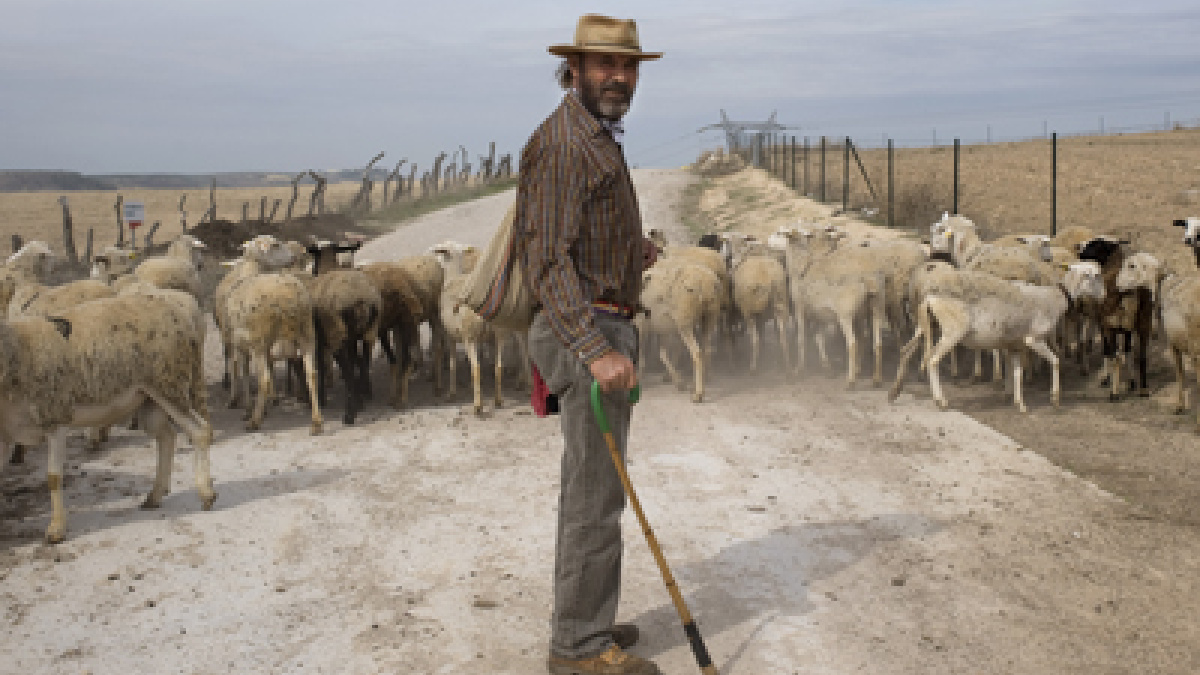
From childhood and for much of his adult life, he was a goat herder, having only acquired a presence on social media in the final phase of his artistic career. Herding gave him ample time to “think and look to the future,” serving as “a refuge.”
…
El Cabrero had been away from the spotlight for several years. In 2020, he retired from the stage and the public due to “diaphragmatic pain,” after interrupting his farewell tour in May 2019 due to a stroke. A legendary figure, José Domínguez was the subject of a fictionalized biography by journalist Eduardo Izquierdo, entitled “I must be very good prey when I have so many rifles pointed at me.” He was a unique figure in Spanish popular music, distinguished by his strong yet humble personality and his status as a poet of the people.
His beginnings as a flamenco singer were inspired by the album Canta Jerez, with Tío Borrico, Terremoto, El Sernita, El Sordera, Romerito, El Mono, El Indio, and Morao on guitar.
A cultural emblem of the Transition, his first album, in 1975, was Así canta el Cabrero (Thus Sings the Goat Herder). He achieved international fame, and the French broadcaster La Sept dedicated a documentary to him in 1988: El Cabrero. El canto de la Sierra. In his golden years, flamenco clubs vied for his services even more than for icons like Camarón or El Lebrijano.
Passionate about tango
A flamenco singer passionate about tango presented the classics “Volver”, “Ventarrón”, “Cuesta abajo” and “El último organito” at the Granada International Tango Festival, accompanied by the trio Tango al Sur. El Cabrero received thunderous applause as a tango singer.
The success he achieved on the Granada stages led him to make an unprecedented decision: to record an album entirely dedicated to tango, without any fusion or reference to flamenco. The album, Sin Remache, produced by Daniel Giraudo, received the same acclaim as his live performances, both in Spain and Argentina.
In 1988, the singer received an invitation to participate in the Buenos Aires Tango Festival, an unexpected honor that he had to decline for professional reasons.
In the 1990s, he participated in music festivals around the world and even joined Peter Gabriel’s Secret World Tour in 1993. He collaborated with the rock group Reincidentes, and another band, Marea, covered his song “Como el viento de Poniente” for the album Besos de perro (2002), which brought him to a wider audience.
An anarchist affiliated with the CNT, his songs portray manual laborers, fishermen, and farmers. His verses expose perverse social hierarchies, the emptiness of politicians, and the machinations of the powerful, while simultaneously exalting the dignity of humanity.
Flamenco was born in the poverty of Lower Andalusia. Many of its most representative lyrics and melodies are a perfect expression of suffering. Therefore, this art is and continues to be an instrument of awareness, a banner that El Cabrero raised like no other; may he rest in peace.
Cristina Pérez, rtve, 13/05/2026
El Cabrero’s first album, Así canta El Cabrero (guit. José Cala el Poeta), 1975.
A documentary film dedicated to El Cabrero.
El Cabrero – Como todo mortal/Luz de Luna [Spanish/English]
Como todo mortal,
me pregunto quién soy
y a dar con la verdad no acierto;
me aseguran que soy
criatura de Dios,
mas yo como un retoño
de la tierra me siento;
como todo mortal.
En los pechos de los montes
me amamanto
y en la cornisa de los riscos
me sostengo:
por eso esta noche
les voy a decir de dónde vengo.
Vengo del ronco tambor de la luna
en la memoria del puro animal,
soy una astilla de tierra que vuelve
hacia su antigua raíz mineral.
Vengo de adentro del hombre dormío
bajo la tierra gredosa y carnal;
rama de sangre, florezco en el vino
y el amor bárbaro del carnaval.
Hembra se llama
y no admite a los hombres
ni en pura llama;
porque la luna
hace hombres valientes
como ninguna.
Yo quiero luz de luna
para mi noche triste,
para pensar divina
la ilusión que me trajiste;
para sentirte mía…
mía tú como ninguna,
desde que tú te fuiste
no he tenío luz de luna.
Como todo mortal,
me pregunto quién soy
y a dar con la verdad no acierto;
me aseguran que soy
criatura de Dios,
mas yo como un retoño
de la tierra me siento;
como todo mortal.
Yo siento tus amarras
como lazos, como garras
que me ahogan en la playa
de la farra y del dolor;
si llevo tus cadenas
a rastras en la noche callada,
que sea plenilunada,
azul como ninguna,
desde que tú te fuiste
no he tenío luz de luna.
Like every mortal,
I wonder who I am,
and I can’t quite grasp the truth;
they assure me I am
a creature of God,
but I feel like a shoot
of the earth;
like every mortal.
In the breasts of the mountains
I nurse,
and on the ledge of the cliffs
I find my footing:
that’s why tonight
I’m going to tell you where I come from.
I come from the moon’s hoarse drum,
in the memory of the pure animal,
I am a splinter of earth returning
to its ancient mineral root.
I come from within the sleeping man,
beneath the clayey, carnal earth;
a branch of blood, I blossom in the wine
and the barbaric love of carnival.
She is called Female,
and she doesn’t admit men
even in pure flame;
because the moon
makes men brave
like no other.
I want moonlight
for my sad night,
to contemplate the divine
illusion you brought me;
to feel you mine…
mine like no other,
since you left
I haven’t had moonlight.
Like every mortal,
I wonder who I am
and I can’t find the truth;
they assure me I am
a creature of God,
but I feel like a sprout
of the earth;
like every mortal.
I feel your bonds
like ties, like claws
that drown me on the shore
of revelry and pain;
if I drag your chains
through the silent night,
let it be a full moon,
blue like no other,
since you left
I haven’t had moonlight.
Deja el fandango volar
Que no es pájaro de jaula
Deja el fandango volar
Porque es el mejor reclamo
Llamando a la libertad
Esa que nunca encontramos.
El Cabrero, “Deja el fandango volar”
For an English language obituary, at World Music Central , click here. In Spanish, at Redes Libertarias, click here and at El Salto Diario, click here.
Pingback: Andalucía: Homenaje al Cabrero, el canto compañero | Red Latina sin fronteras