Often, in the widespread awareness that we are living through the end of a culture, arises the demand—or the hope—for a new beginning, that is, that after the collapse of a long tradition, a new and more vibrant one will sooner or later come into being. Against this naive expectation, it is worth remembering that we do not need a new beginning, but a way out. Even assuming that a new beginning were possible, everything would then start anew as before, perhaps with different ideas and projects, but always within the framework of a historical epoch and a tradition somehow homogeneous with the previous one. After the collapse of Western history, the last thing we can desire is a new historical epoch; rather, we want to put an end to epochs once and for all, to leave forever and not simply begin again. Leave for what? We cannot say it, but this is good: our silence is more precious than the chatter about the features of an improbable future, which betrays its solidarity with the past by repeating stale formulas like “new or post- or transhumanism.” As the ape in [Franz Kafka’s] “A Report for an Academy”, who has become something radically different, says: “I didn’t want freedom, just a way out.”
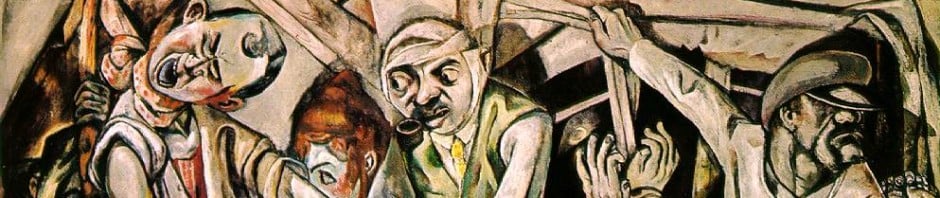
Giorgio Agamben: A way out
Often, in the widespread awareness that we are living through the end of a culture, arises the demand—or the hope—for a new beginning, that is, that after the collapse of a long tradition, a new and more vibrant one will sooner or later come into being. Against this naive expectation, it is worth remembering that we do not need a new beginning, but a way out. Even assuming that a new beginning were possible, everything would then start anew as before, perhaps with different ideas and projects, but always within the framework of a historical epoch and a tradition somehow homogeneous with the previous one. After the collapse of Western history, the last thing we can desire is a new historical epoch; rather, we want to put an end to epochs once and for all, to leave forever and not simply begin again. Leave for what? We cannot say it, but this is good: our silence is more precious than the chatter about the features of an improbable future, which betrays its solidarity with the past by repeating stale formulas like “new or post- or transhumanism.” As the ape in [Franz Kafka’s] “A Report for an Academy”, who has become something radically different, says: “I didn’t want freedom, just a way out.”
Quodlibet, July 6, 2026