
Attention is the rarest and purest form of generosity.
Simone Weil, Grace and Gravity
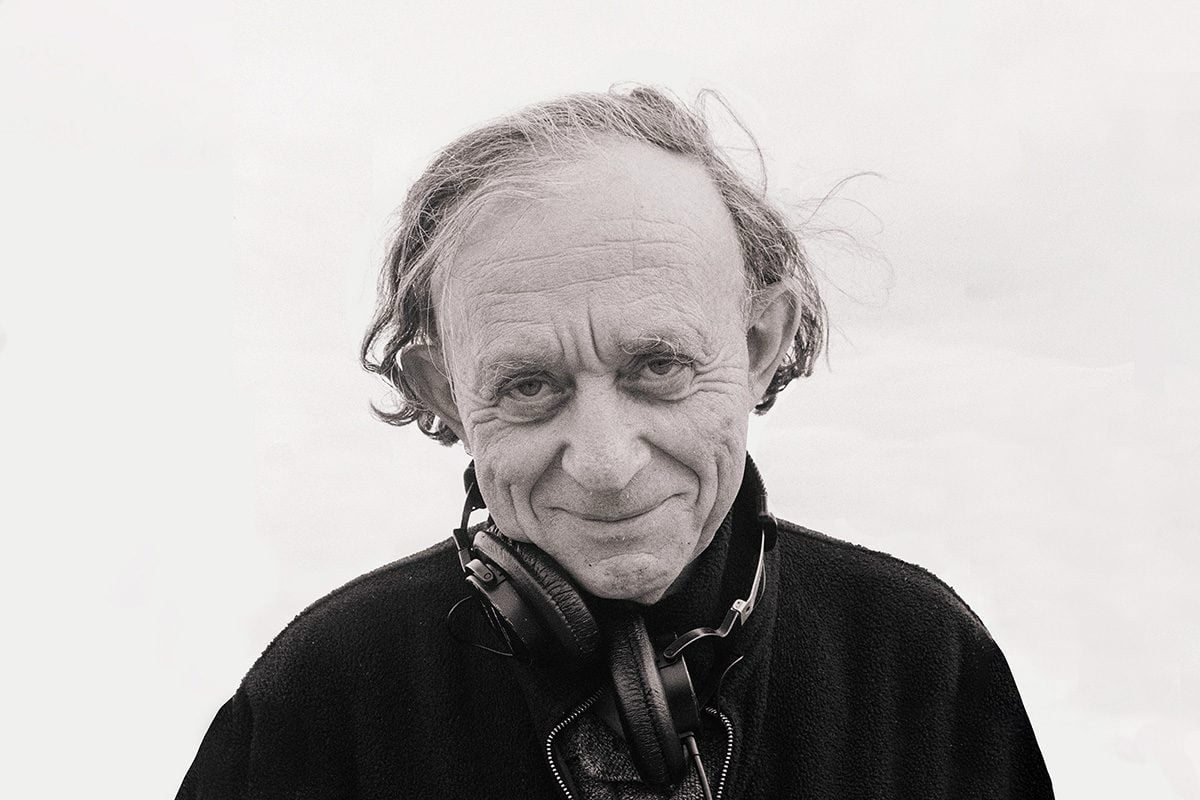
Frederick Wiseman died this last Monday, February 16, and whatever words we could share to celebrate his work we thought should be his. And as for his films, his “reality-fictions”, their greatness lies in their care in expressing that perspective which never ignores the experience of those filmed, even when they are so overly and burdensomely determined and framed by the institutional worlds in which they find themselves.
The generosity that Wiseman brought to his film subjects is the ethical fibre of his art. What politics can be read off it must be read off it, for he refuses the openly didactic and ideological role of the film maker, or even the artist more broadly.
There is a lesson here for the understanding of politics. If the latter is the collective and ongoing activity of free and equal of “citizens” in the shaping of a common life (Hannah Arendt), art, in contrast, is a making of something, a poiesis, which presupposes no equality. That art should be political in any direct sense is therefore problematic. Where the two however do meet is in an ethical engagement with others; in the ethical openness to others.
Frederick Wiseman’s films are “lessons” in the ethics necessary for any real politics.
… if you analyze our institutions carefully, they are in a way microcosms – they show the bones of our society in sort of naked ways, which you can’t see if you are out there amongst them. And to me, Titicut Follies is not just about that particular institution for the criminally insane; it’s like us. The guards are not just like cops, but like authorities. And the inmates, just that fact that men are walking around naked – it strips society to the relationships of forces.
Haskell Wexler, Film Quarterly, Spring, 1968.
The burden of Wiseman’s vision is the challenge to conscience, the authority of a film language which is, in Orwell’s phrase, the “first step toward political regeneration.” Wiseman puts his audience too close to America’s institutional realities to allow for euphoric affirmations that the oppressive system will be destroyed by the results of “Consciousness III.” In the current debate – change people or change systems? – Wiseman gives his primary support to changing the system, which has the power and defines the roles and thereby the consciousness for most in the society. Wiseman’s films are mandates for change, reminders that America’s dream is becoming a visible collective nightmare.
Not that the nightmare should overwhelm the audience. Instead, the effect of the films is to generate moral resolve and reasoned indignation. One credits to Wiseman’s sophisticated intelligence the balanced and humanizing presentations of people, predicaments, and polemics, all of which shows us the absence of and the need for a “common life.” We are less self-absorbed, self-indulgent, and less self-effacing too after having watched a Wiseman film. As the documentary genre expands and diversifies itself, no practitioner proves himself more analytically profound or less pretentious then Frederick Wiseman.
Patrick J. Sullivan, “What’s All the Cryin’ about?” The Films of Frederick Wiseman, The Massachusetts Review, Vol. 13, No. 3 (Summer, 1972)
I’m interested in normal behavior, what passes for normal behavior. I’m interested in how the institutions reflect the larger cultural hues, so that, in a sense, it’s like tracking the abominable snowman; in the sense that you’re looking for cultural spoors wherever you go. You find traces of them in the institutions. High School is a reflection of some of the values in the society. So is Titicut Follies. They are. They have to be.
___
I have always been interested in my assessment of what is going on. What interested me in documentary was the fact that you could make films about what was happening or even a view of what was going on as opposed to the typical Hollywood films which were people’s backlot fantasies. That’s what got me interested in OSTI.[1] I was concerned to find out what was going on in particular kinds of social settings like public housing, police-those kinds of issues-and OSTI was a way of educating myself and also trying to figure out ways some of those things might be changed.
___
I am interested in social change but I’m not really sure I know what it means; nor am I sure of the use of films in social change because I’m not really interested in propaganda films. In a sense the films are more like natural history. There is an awful lot of bullshit about to the typical Hollywood films which were social change and effecting social change. It’s kind of in the air. One of the current forms of language is to talk about innovation and change or to be a change agent and similar such clichés. The thing is I really don’t know what all that means except that you start with the very simple-minded view that there are things you don’t like and would like to bring about a greater correspondence between things you don’t like and things you do like; but when you get into these things, you realize how infinitely complicated they are, and how they are tied into so many other aspects of the society. Frequently, the kind of intervention – which is another one of the words that is used – is one that could make the situation worse, because you really do not have any kind of comprehensive view of the whole scene. This brings you into the whole systems analysis business which obviously has problems in space technology. It can be well structured, but when you try to apply the same kind of thinking to social problems, it hasn’t been demonstrated that it works with any degree of sophistication. I think if you are going to talk about films in terms of social change, you’ve got to have more modest goals. In my view, the films I’ve been trying to make are my view of the particular situation I’ve gone into and the final film – apart from any considerations of whether it’s art or sociology or whatever it may be – the film represents a report on what I’ve found, a very subjective report, I must tell you; for I wouldn’t know how you’d make an objective film, that’s all bullshit.
So then, what does the film do? You cast the film out into the world, arrange for its distribution, maybe on television, maybe 16mm, occasionally through threatrical distribution; but you can’t really – and you don’t want to – control how people respond to your films. So if the film does anything, it initially conveys information, which many people have in some degree already, but the final film is a theory about the event, about the subject in the film. So that you’re throwing out your theory to compete with millions of theories before, at least the other theories that exist on the same kind of subject matter. So you’re competing in that other great old bromide, the market place of ideas. And if the film does anything at all, it contributes to a sharing and then a process of discussion about the issues, out of which different people will evolve different solutions. Some people may not evolve any solutions, any alternatives, because they may not think anything is wrong. I think that one of the things that happens when one is dealing with films that are based on reality, on real people in unstaged situations, is that there is ambiguity, or there is some aspect to them that is ambiguous; because the audience’s attitude is very dependent on the values with which they assess the subject matter. For example, all the scenes with the dean of discipline in High School: if you think that’s the way to handle those kinds of problems with students, you think that the dean of discipline is doing a tough and difficult job, that he’s representing the kind of values you want upheld. If you disagree with these kind of values you think differently about the dean of discipline. That’s not to say the film doesn’t have a point of view -because I think that the film has a very definite point of view-the reaction of different audiences will be different both to the total film and specific scenes in it.
___
I’m interested in the change consequences as a product of the film, but one of the temptations I try and resist is being an expert in the instant solution, so I don’t have any particular bromide for that. I can conceive of all kinds of solutions, but my view of the institutions and their problems is really expressed in the films and I just think it’s really not appropriate for me to say, ‘If you only did this…’ That’s where my interest as a natural historian parts with my social change interest.
___
A Wiseman film, therefore is a document of one man’s discovery, a highly subjective document…
Sure, they have to be, they’re subjective. That’s a real phoney-baloney argument, this subjectivity-objectivity argument, but it is one that some people get very agitated about… I think nothing matters unless the film works as a film, because I’ve a horror of propaganda and I’ve a horror of didactic films. If as a conse quence of making a good film, you bring about social change-great! But I would hate to make a lousy movie about the city council because my formal sense and my interest in film would be somehow diminished by this.
___
I like the final film to represent my experience of making the film and not my prior stereotype. I didn’t start off Law and Order with say, ‘I want to build a bridge between the community and the police.’ In fact I probably started off with the view, ‘What a great chance to get the cops. I’ve been given permission to run around with the cops for however long I want and I’m really going to show what bastards they are.’ But the experience was very different than that. I have as little information as the general public. I don’t have any special knowledge about police or hospitals or anything; but I have an idea, a theory and the theory may be a cliché. What I try and do is set down my initial thinking, my initial point of view about the subject, which I generally do with about a three- or four-page outline. This I don’t mind because the people I’m asking permission from to make the film want a statement of it, for you still have to deal in words! This may have no relationship to the final film because, particularly in documentary, you don’t know what you are going to find out there; all you can do is give your illustrative examples. So what I do is set out a theory and give illustrations of the kind of material I expect to find, but in no way commit myself to finding out; for God knows – you don’t know what’s going to happen in advance; …
In your outline you might say, ‘activities of the vice squad’ or ‘faculty meetings.’ So that’s what I do. But then really, from the moment you actually begin to have contact with the people who are going to be in the film, your views change. For then your theory and little stereotype about the events begin to butt against the reality as you experience it and it’s really out of the tension – that’s too dramatic a word – out of the working out of the contrast between what you felt before and what you observe and your attempt to make that conscious to yourself that you initially begin to change your view of the material, assess what’s going on, figure out what to shoot and ultimately how to cut it together. The process reaches its ultimate kind of intensity, where it gets very intense, in the course of the editing. The editing generally takes me anywhere from four to six months; but the last three months some film-makers film riots, Wiseman concentrates on person-to-person relationships; for the are really, you know, seven days a week, 12 to 15 hours a day – mainly because I like to work that way and because you get very involved in the material. You’re really thinking your way through the material and you’re beginning to see connections and relationships and development of themes that you only kind of half-sensed before.
___
… because life would be much too simple if it were all one way and I think what makes the films work, when they work, is the fact that there is that kind of ambiguity which exists in all our lives. Why should you make pictures about real people if you made them one-sided? The film-maker in my view becomes suspect if he doesn’t find any ambiguity. The structure of Law and Order is a circle for when the guy runs off at the end of the film he’s running off to the beginning of the film…
This series of passages are the words of Frederick Wiseman, as quoted by Donald E. McWilliams, in the article, “Frederick Wiseman”, Film Quarterly, Vol. 24, No. 1 (Autumn, 1970)
[1] OSTI (Organisation for Social and Technical Innovation) was founded in 1966, as a non-profit research and consulting corporation which works to bring about social and institutional change. Frederick Wiseman: “OSTI got started when a friend of mine, Donald Schon, and I talked over the idea of setting up a new kind of company concerned with what was going on in society; and in some way trying to figure out ways of not just doing reports, but getting involved and intervening in some of the problems in a way that might be useful to make some contribution to their understanding at least, and in some measure to their solution.”
INTERVIEWER
Your whole life you’ve been considered and labeled and put into the category of documentary filmmaker, and that has limitations.
WISEMAN
Well, that’s because documentary films have always been considered second class. I mean, even today, with all of the documentary films being made, that’s the case. Documentary films carry the unnecessary burden of being thought too educational. They’re meant to serve the same function as Ex-Lax—films that are supposed to be good for you and purge your foolish thoughts. There’s no reason that a so-called documentary film has to be didactic. It can be as complex as a fiction film or a novel. It’s only recently that the major film festivals have begun to show documentaries in competition.
INTERVIEWER
They’re supposed to teach you a moral lesson.
WISEMAN
I try to avoid that, because if you do that, there’s no ambiguity, there’s no complexity, and it’s too simpleminded.
INTERVIEWER
Is there a favorite film or a specific influence or moment that changed your way of thinking about cinema?
WISEMAN
My favorite movie is Duck Soup. I’m one of the few people in the world who recognizes that Duck Soup is a documentary.
INTERVIEWER
How? In what way?
WISEMAN
Think of the Trump presidency, and then Groucho in Freedonia?…
“Frederick Wiseman, The Art of Documentary No. 1”; Interviewed by Lola Peploe, The Paris Review, Issue 226, Fall 2018
The Laws of My Administration, song lyrics
Lyrics: Bert Kalmar
Music: Harry Ruby
From the script of the Marx Brothers 1933 movie, Duck Soup; Screenplay by Harry Ruby, Bert Kalmar and Grover Jones
(A woman, first line talking, then the rest singing, asking the question):
If it’s not asking too much,
For our information, just for illustration,
Tell us how you intend to run the nation.
(All singing done by the character Rufus T. Firefly, played by Groucho Marx, unless otherwise noted):
These are the laws of my administration:
No one’s allowed to smoke,
Or tell a dirty joke,
And whistling is forbidden.
(Ensemble):
We’re not allowed to tell a dirty joke.
HAIL, HAIL, FREEDONIA
If chewing gum is chewed,
The chewer is pursued,
And in the hoosegow hidden(4).
(Ensemble):
If we should choose to chew,
We’ll be pursued.
If any form of pleasure is exhibited,
Report to me and it will be prohibited.
I’ll put my foot down; So shall it be
This is the land of the free.
The last man nearly ruined this place,
He didn’t know what to do with it.
If you think this country’s bad off now,
Just wait ’till I get through with it.
The treasury is low on dough;
The last man went and flew with it.
If you think we’re short of money now
Just wait ’till I get through with it.*
The country’s taxes must be fixed,
And I know what to do with it,
If you think you’re paying too much now,
Just wait ’till I get through with it.
(Dignitary):
In our midst you stand The ruler of this land,
A man who’ll govern with an iron hand.
If anyone gets fresh with me,
I’ll show him who’s the boss;
I’ll stand upon my dignity,
and toss him for a loss.
And this will be the penalty,
For those who doublecross,
We’ll stand ’em up against the wall,
and Pop goes the Weasel!
(Ensemble):
If you should make him cross,
He’ll toss you for a loss.
If anyone gets fresh with him,
He’ll show him who’s the boss.
I will not stand for anything,
That’s crooked or unfair;
I’m strictly on the up and up,
So everyone beware.
If anyone’s caught taking graft,
And I don’t get my share,
We’ll stand ’em up against the wall,
And pop goes the weasel!
(Ensemble):
So everyone beware,
Who’s crooked or unfair;
No one must take a bit of graft,
Unless he gets his share.
If any man should come between,
A husband and his bride,
We find out which one she prefers,
By letting her decide.
If she prefers the other man,
The husband steps outside;
We stand him up against the wall,
and Pop goes the Weasel!
(Ensemble):
The husband steps outside;
Relinquishes his bride;
We stand him up against the wall
And take him for a ride.
The population must increase,
With great rapidity.
We give a couple seven years,
To raise a family.
If, by that time, there is
No branch upon the family tree,
We stand ’em up against the wall,
and Pop goes the Weasel.
* All verses in italics are original verses in the script, which were removed for the movie.
(Source: www.protestsonglyrics.net )
Suggested Readings:
Claire Armitstead, Interview: “Frederick Wiseman: ‘I’m not a fly on the wall. I’m at least 2% conscious’”, The Guardian, 06/07/2018
Mark Binelli, “What if the Great American Novelist Doesn’t Write Novels?”, The New York Times, 15/12/2020
See also the website dedicated to Frederick Wiseman’s films, Zipporah Films.